

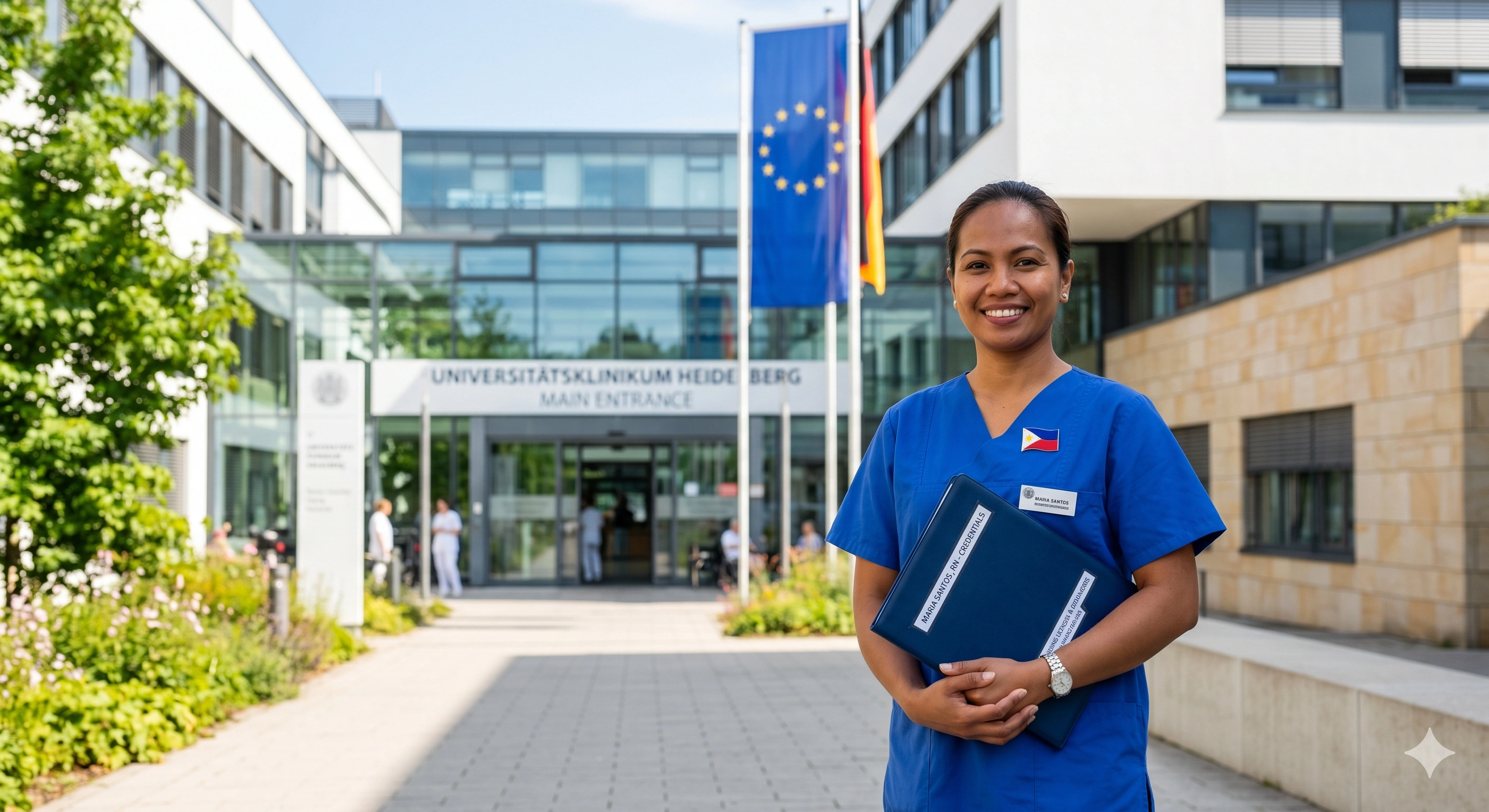
The Philippines has long been one of the world's top sources of skilled overseas workers, and Europe is quickly becoming one of the most sought-after destinations. From nursing roles in Germany to hotel jobs in the UK, there are genuine jobs in Europe for Filipinos with visa sponsorship available right now — and the numbers are growing every year. Whether you are a registered nurse, a trained chef, a certified engineer, or a hospitality professional, European employers are actively looking for Filipino talent. In this comprehensive guide, you will learn which countries are hiring, which sectors offer the best opportunities, how visa sponsorship works, and how to apply the right way from the Philippines.
Why Europe Is Increasingly Hiring Filipino Workers
Europe is facing a well-documented labour shortage across multiple industries. Ageing populations, low birth rates, and post-pandemic workforce disruptions have left millions of positions unfilled. The European Commission itself has acknowledged that healthcare, agriculture, hospitality, and construction sectors need urgent workforce reinforcement from outside the EU.
Filipino workers are in high demand for several specific reasons:
English proficiency: The Philippines is the third-largest English-speaking nation in the world, which removes one major hiring barrier for European employers.
Professional training: Filipino nurses, caregivers, engineers, and IT workers meet international qualification standards.
Work ethic and adaptability: Filipino OFWs (Overseas Filipino Workers) are known globally for their reliability, dedication, and ability to adjust to new environments.
Cultural compatibility: Many Filipinos are already experienced working in multicultural settings in the Middle East, Asia, and North America.
These qualities make Filipino applicants preferred candidates when European companies post sponsored visa roles.
Top European Countries Offering Jobs for Filipinos with Visa Sponsorship
1. Germany
Germany is currently one of the most aggressive European nations when it comes to recruiting skilled workers from outside the EU. The German government introduced the Skilled Immigration Act (Fachkraefteeinwanderungsgesetz), which specifically opens doors for non-EU nationals with recognised qualifications. Filipino nurses, healthcare workers, engineers, and IT specialists are among the most recruited nationalities.
Key sectors hiring from the Philippines:
Healthcare and elderly care nursing
Mechanical and electrical engineering
Information technology
Hotel and restaurant management
Germany also offers a job-seeker visa, allowing qualified Filipinos to travel to Germany and look for work directly before being sponsored.
2. United Kingdom
Even after Brexit, the UK has opened new immigration routes through its Health and Care Worker Visa and the Skilled Worker Visa scheme. The UK actively recruits Filipino nurses and care workers through the NHS and private health providers. Visa sponsorship is typically arranged by the employer, and the process is well-established for Filipino medical professionals.
NHS hospitals sponsoring Filipino nurses directly
Care homes offering visa sponsorship and relocation packages
Hospitality sector roles in hotels and restaurants
3. Malta
Malta is a small but highly accessible EU member state that has long maintained strong ties with Filipino workers. The country regularly hires Filipinos in hospitality, healthcare, and domestic services. Malta offers a streamlined work permit process and is considered one of the easiest EU countries to access for Filipino workers.
4. Germany, Netherlands, and Scandinavia for Nurses
The Netherlands and Nordic countries like Denmark, Sweden, and Norway all have significant nursing shortages. While language requirements vary, many roles in international hospital chains and care facilities operate in English. Several Dutch and Scandinavian employers offer sponsored visa packages that include language training as part of the onboarding process.
5. Ireland
Ireland shares a similar healthcare crisis with the rest of Europe. The Health Service Executive (HSE) in Ireland has an active overseas nursing recruitment programme. Filipino nurses registered with the Philippine Nursing Board regularly qualify under this scheme with visa sponsorship included.
6. Poland and Eastern Europe
Countries like Poland, Romania, and the Czech Republic are emerging hiring hubs for Filipino workers, particularly in manufacturing, logistics, and agriculture. While salaries are lower compared to Western Europe, the cost of living is also significantly lower, making the net financial gain attractive for many OFWs.
Best Job Sectors for Filipinos in Europe with Visa Sponsorship
Healthcare and Nursing
This is by far the largest opportunity sector. Europe's ageing population means that demand for nurses, caregivers, midwives, and medical technologists is not slowing down. Germany alone needs an estimated 500,000 additional care workers by 2030. Filipino nurses and healthcare professionals are consistently among the top sponsored nationalities across the UK, Ireland, Germany, Malta, and the Netherlands.
What employers typically cover:
Work visa and permit fees
One-way or return airfare
Initial accommodation support
Language training for non-English countries
Pension contributions and health insurance
Hospitality and Tourism
Filipino workers have a strong international reputation in the hospitality industry. European hotels, cruise liners docked at European ports, resorts, and restaurants actively seek Filipino chefs, waitstaff, housekeeping staff, and front desk managers. Countries like Spain, Italy, Malta, and Austria have high demand in this sector, especially during peak tourism seasons.
Information Technology
The EU has a significant IT skills gap. Filipino software developers, data analysts, cybersecurity professionals, and systems engineers are increasingly being sponsored by European tech companies. Countries like the Netherlands, Germany, and Ireland — which host major tech firm European headquarters — are particularly active in recruiting from the Philippines.
Engineering and Construction
Civil engineers, structural engineers, welders, pipefitters, and electricians from the Philippines are in demand in Germany, Norway, and the Netherlands. Many of these roles come with full visa sponsorship and are often found through international recruitment agencies that work directly with Philippine Overseas Employment Administration (POEA)-accredited partners.
Agriculture and Seasonal Work
Seasonal farm work and agricultural roles in Spain, Poland, France, and the Netherlands offer visa sponsorship for short-term contracts of three to six months. While these are not high-skill roles, they provide an entry point into Europe for first-time OFWs who later transition to more permanent positions.
Understanding Visa Sponsorship: What It Means for Filipino Applicants
Visa sponsorship means a European employer formally agrees to support your application for a work visa. The employer registers as a licensed sponsor with the national immigration authority and then issues you a Certificate of Sponsorship (or equivalent) that you use to apply for your work permit.
What Sponsored Employers Typically Provide
Certificate of Sponsorship: A unique reference number tied to a specific job offer that enables you to apply for a work visa.
Visa application support: Many sponsored employers hire immigration lawyers or use HR teams that guide applicants through the process.
Relocation assistance: Some employers offer flights, initial accommodation, or a relocation allowance.
Language support: For non-English-speaking countries, employers often fund language courses before or after arrival.
What You Are Responsible For
Meeting the qualification and experience requirements
Paying your own biometric and visa application fees in some countries
Passing police clearance and medical health checks
Credential evaluation by the relevant European professional body
For jobs in non-English-speaking countries, you may need to get your nursing, engineering, or teaching qualification recognised under that country's national system. Germany, for example, requires credential recognition through the relevant Landesbehorde (state authority) before a work visa can be processed.
Free Visa and Air Ticket Jobs: What Filipino Applicants Should Know
Job listings that advertise "free visa and air ticket" for Filipino applicants in Europe are common on job portals and social media. While many legitimate employers do offer to cover airfare and visa fees as part of a relocation package, this phrasing is also frequently used in fraudulent job postings.
Here is how to tell the difference:
Legitimate Free Visa and Ticket Offers
The employer is a verified hospital, hotel chain, or registered company
The job was posted through a POEA-accredited recruitment agency
You are never asked to pay processing fees upfront
The offer comes with a formal employment contract before you depart
You can verify the company on the relevant European business registry
Red Flags to Avoid
The recruiter asks for money to "process" your visa
The job offer arrives via Facebook Messenger or WhatsApp from an unknown sender
There is no verifiable company name, address, or registration number
The salary or benefits seem far too good for the role described
You are asked to travel to another country first before going to Europe
Important: Always verify recruitment agencies through the POEA official website before submitting documents or paying any fees. Legitimate European employers and POEA-registered agencies will never ask you to pay money to secure a job abroad.
How to Apply for Jobs in Europe from the Philippines
Step 1: Assess and Certify Your Qualifications
Before applying, check whether your Philippine qualification is recognised in your target European country. For nurses applying to Germany, this means credential recognition through the state health authority. For engineers in the UK, this means registration with relevant professional bodies like the Engineering Council.
Step 2: Build a European-Standard CV
A Philippine-format resume will not always be suitable for European applications. You need a CV that follows European conventions — typically a clean, reverse-chronological format with no photo, no date of birth, and no marital status (especially for UK and Germany applications). Use the EuroStaffs Free CV Builder to create a properly formatted, ATS-friendly CV designed specifically for European job markets. It is completely free and optimised for the types of roles European employers are posting.
Step 3: Search for Jobs Through Trusted Platforms
Look for visa-sponsored roles on verified platforms. You can find European job listings across multiple countries and sectors at EuroStaffs Jobs. Filter by country, industry, and visa sponsorship status to find opportunities that match your qualifications.
Step 4: Apply Through POEA-Accredited Agencies
If applying through a recruitment agency, always verify the agency's POEA accreditation status. This protects you legally under the Migrant Workers and Overseas Filipinos Act. Your agency must have a job order approved by POEA before you sign any contract.
Step 5: Prepare Your Documents
Standard documents required for European work visa applications include:
Passport valid for at least 12 months beyond your intended stay
Authenticated educational certificates and professional licences
NBI clearance and police clearance certificate
Medical certificate from an accredited clinic
Certificate of Sponsorship or formal job offer letter from the European employer
Proof of accommodation in the destination country
Step 6: Submit Your Visa Application
Submit your application at the embassy or consulate of the destination country in Manila or Cebu. Processing times vary from two weeks to three months depending on the country and visa category. Always apply well in advance of your intended departure date.
Salary Expectations for Filipino Workers in Europe
Salaries in Europe vary significantly by country, sector, and experience level. Here is a general overview:
Healthcare and Nursing
Germany: EUR 2,500 to EUR 3,800 per month for registered nurses
UK: GBP 28,000 to GBP 40,000 per year for NHS Band 5-6 nurses
Ireland: EUR 32,000 to EUR 48,000 per year for staff nurses
Malta: EUR 20,000 to EUR 28,000 per year
Hospitality
UK: GBP 22,000 to GBP 30,000 per year for supervisory hotel staff
Germany: EUR 22,000 to EUR 32,000 per year
Malta: EUR 18,000 to EUR 24,000 per year
IT and Engineering
Netherlands: EUR 40,000 to EUR 70,000 per year for software developers
Germany: EUR 45,000 to EUR 75,000 per year for senior engineers
UK: GBP 35,000 to GBP 65,000 per year for IT professionals
These figures are pre-tax. European countries have progressive income tax systems, but most also provide strong social benefits including free or subsidised healthcare, pension contributions, and paid leave.
Practical Tips to Increase Your Chances of Getting Hired
Learn the basics of the local language: Even for English-speaking roles in Germany or the Netherlands, showing basic German or Dutch language effort significantly improves your interview performance and employer impression.
Get your credentials authenticated early: Authentication through the Philippine Regulatory Commission (PRC) and the Department of Foreign Affairs (DFA) can take weeks. Start this process before you even apply.
Use a CV tailored for the European market: The EuroStaffs CV Builder is designed to help Filipino job seekers format their experience in a way that European ATS systems and hiring managers respond to positively.
Network in Filipino OFW communities: Many Filipinos already working in Europe share active job leads, referrals, and insider knowledge in community groups and forums.
Be patient with timelines: European hiring processes move more slowly than in the Philippines or the Middle East. It can take six months from first application to visa issuance. Stay consistent and follow up professionally.
Planning to Study in Europe First? That Can Open More Doors
Some Filipino professionals choose to pursue a postgraduate degree or professional course in Europe as a pathway to long-term employment and residency. European universities actively recruit international students, and many graduates transition directly to employer-sponsored work visas after completing their studies.
EuroStaffs offers a full university admissions support service for Filipinos interested in studying in Europe. Visit EuroStaffs University Admissions to explore programmes, country options, and the application process. Study-to-work pathways are available in Germany, France, Netherlands, and several other EU countries.
Conclusion
Europe is not just a dream destination for Filipino workers anymore — it is a real and growing opportunity market. With genuine visa sponsorship available across healthcare, hospitality, IT, engineering, and seasonal work, there has never been a better time for qualified Filipinos to pursue a European career. The key is to prepare properly: get your qualifications authenticated, build a strong European-format CV, apply only through legitimate channels, and stay informed about the specific requirements of your target country.
Start your European job search today at EuroStaffs Jobs and create your professional CV for free at the EuroStaffs CV Builder. For more guidance on working and studying in Europe, browse the EuroStaffs Blog.
Frequently Asked Questions (FAQ)
Q1: Can Filipino workers apply for jobs in Europe without a recruitment agency?
Yes. Filipinos can apply directly to European employers through verified job portals like EuroStaffs, LinkedIn, and company career pages. However, if you are using a recruitment agency, it must be POEA-accredited to protect you legally under Philippine law.
Q2: Which European country is easiest for Filipinos to get a work visa?
Malta and the UK are generally considered among the most accessible for Filipino applicants due to English as the working language and well-established Filipino worker communities. Germany is slightly more complex due to credential recognition requirements, but offers among the best salaries and long-term residency prospects.
Q3: Do European employers pay for flights and visa fees?
Many do, particularly in healthcare and hospitality. However, always confirm this in your employment contract before signing. Never pay upfront fees to a recruiter claiming to process your visa. Legitimate sponsoring employers will not ask you for money.
Q4: How long does a European work visa take to process for Filipinos?
Processing times vary. The UK Skilled Worker Visa typically takes three to eight weeks. German work visas can take two to four months. Irish work permits for nurses can take three to six months from application to arrival. Always apply early and keep all documents ready.
Q5: Is the EuroStaffs CV Builder suitable for European job applications?
Yes. The EuroStaffs CV Builder is specifically designed for international job seekers targeting European employers. It follows ATS-compatible formatting standards, supports professional European CV layouts, and is completely free to use.
Q6: Are there jobs in Europe for Filipinos without experience?
Yes, but they are largely in seasonal work, agriculture, housekeeping, and basic hospitality roles. These are legitimate entry-level pathways that sometimes transition into longer-term employment. For higher-paying sponsored roles, relevant qualifications and at least some professional experience are typically required.



 Arabic
 Chinese
 French
 Russian
 Spanish