


How to Get a Job Abroad from Bangladesh?
Getting a job abroad from Bangladesh means securing legal, verified overseas employment through proper visa channels, skill certification, and trusted recruitment, not shortcuts or middlemen.
Every year, hundreds of thousands of Bangladeshis leave home chasing a better salary, a better title, or simply a shot at something more stable. Some of them land in Riyadh with a contract that actually matches what they were promised. Others land in a labour camp outside Doha, working twelve-hour shifts for half the pay they were told about back in Dhaka. The difference between those two outcomes almost never comes down to luck. It comes down to how the job search was actually done.
I have spent years inside the SEO and recruitment content space, reading through hundreds of client cases – genuine ones, not the polished success stories agencies put on their websites. The pattern is almost always the same. People who research the process, verify their agent, and prepare their documents properly get through cleanly. People who rush because a "seat" is closing tomorrow usually pay for it later, sometimes literally.
This guide walks through what actually works right now, in 2026, for Bangladeshis trying to work abroad, whether that's a factory job in Malaysia, a construction contract in Qatar, or a skilled-visa route into Europe.
Why So Many Bangladeshis Are Looking for Work Abroad Right Now
Bangladesh is not short on reasons to look elsewhere for work abroad. Wages at home haven't kept pace with the cost of living in Dhaka or Chattogram, and for many tradespeople – electricians, welders, drivers, and carers – the pay difference abroad isn't marginal; it's several times higher.
Bangladesh is the sixth largest migrant-sending country globally and the eighth largest remittance-receiving country in the world, and that isn't a small statistic buried in a government report; it shapes entire districts. Walk through parts of Comilla, Noakhali, or Munshiganj and you'll notice the houses that were clearly rebuilt with money sent from Saudi Arabia or the UAE. Of the more than 7.4 million Bangladeshi migrants abroad recorded in 2020, roughly 1.3 million were in Saudi Arabia alone and 1.1 million in the UAE.
The money flowing back confirms just how central this has become to the national economy. Bangladesh received $3.42 billion in remittances in May 2026, a figure roughly 15 percent higher than the same month a year earlier, and that wasn't a one-off spike either. Remittance inflows have crossed $3 billion for months in a row. That kind of consistent demand tells you something the news headlines don't always spell out: employers abroad still want Bangladeshi labour, badly, across skill levels.
"Clients ask me why Gulf countries keep hiring from Bangladesh over other countries. It's simple reliability and cost. Employers know what they're getting," a recruitment consultant I worked with in Dhaka once told me over tea, half-joking but mostly serious.
Know Your Route Before You Start
This is where most job seekers go wrong before they've even sent a single application. They treat "going abroad" as one single process, when in reality there are at least three distinct routes, each with different requirements, costs, and risks.
Skilled Migration vs Semi-Skilled and Unskilled Labor Contracts
Skilled migration, think engineers, IT professionals, nurses, and accountants, usually runs through direct employer sponsorship or government-to-government (G2G) programmes, and the visa categories are built around your qualifications, not your agent's connections. Semi-skilled and unskilled contracts, on the other hand, still dominate the numbers. Bangladeshi workers have taken nearly 16.1 million short-term labour contracts across 164 countries from 1976 through 2023, and the overwhelming majority of those were exactly this category: construction, cleaning, driving, and factory work.
Knowing which category you fall into changes everything downstream: which agencies you should even be talking to, what documents you need first, and how long the whole process realistically takes.
Middle East vs Europe vs Other Destinations
The Gulf remains the default destination for most Bangladeshi job seekers, and for good reason: Saudi Arabia, Oman, Qatar, the UAE, and Kuwait together accounted for 86 per cent of Bangladeshi migrant workers who secured jobs abroad in FY25. It's fast and familiar, and the recruitment infrastructure is well established, even if it's flooded with scam agents.
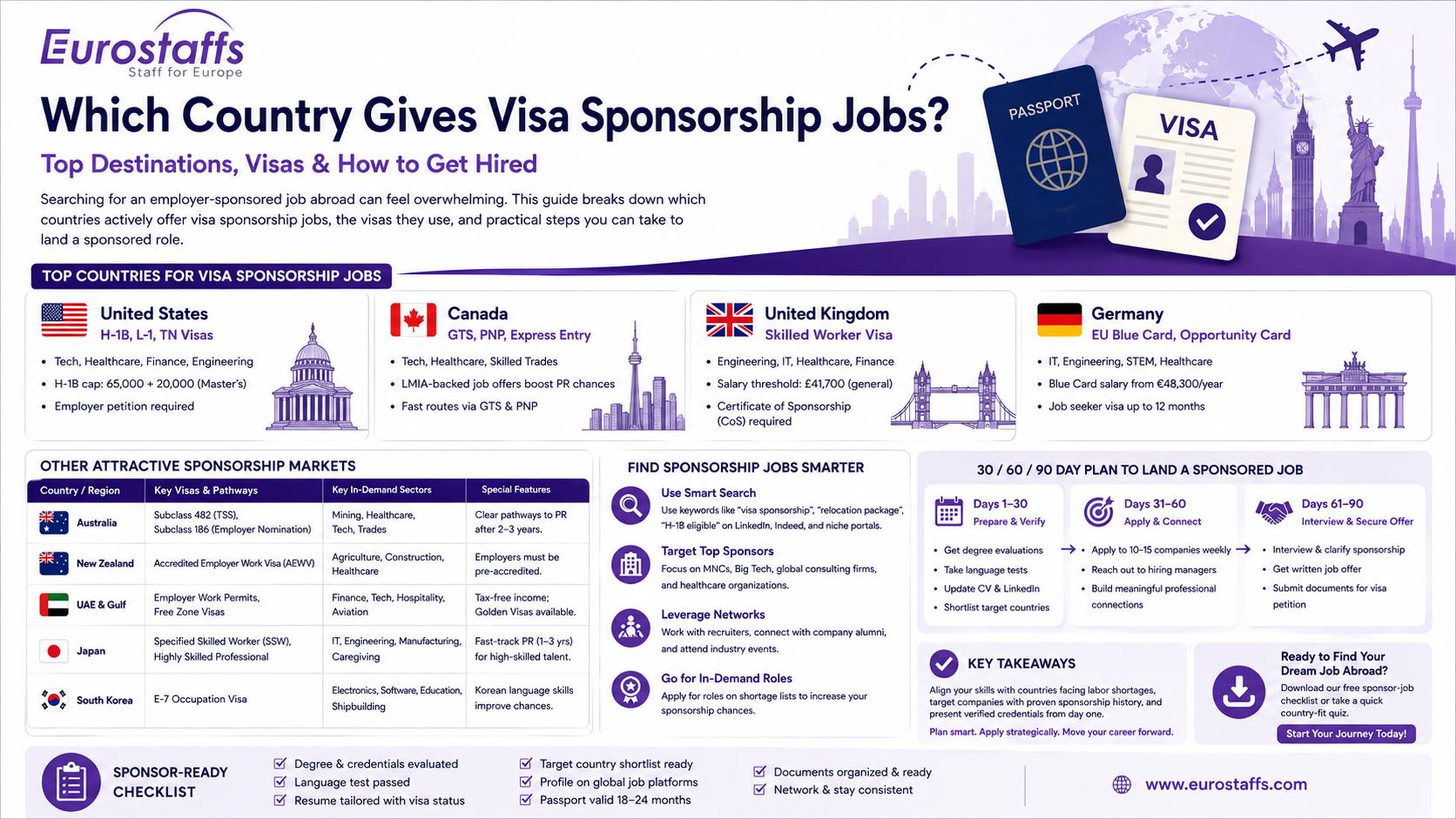
Europe is a different animal entirely. Countries like Germany, Portugal, and Romania have opened targeted labour and skill-shortage visa routes over the last few years, and the EU Blue Card pathway has genuinely become viable for Bangladeshi professionals in IT, healthcare, and engineering. It's slower, the paperwork is heavier, but the pay, legal protection, and long-term residency prospects are usually far better. Malaysia and Singapore sit somewhere in between decent pay and shorter processing times, but their labour markets shift policy frequently, so what worked last year might not apply today.
Government vs Private Recruitment Channels
BOESL (Bangladesh Overseas Employment and Services Limited) handles government-to-government placements, which tend to be cheaper and safer, though slots are limited and competition is high. Private recruiting agencies licensed under BMET handle the bulk of placements, and this is exactly where the risk concentrates because for every properly licensed agency doing honest work, there are unlicensed brokers operating in the same neighbourhood, sometimes literally the next office door down.
Step-by-Step Process to Land a Job Abroad
Once you've picked a route, the actual mechanics of getting hired follow a fairly consistent sequence, regardless of destination.
Building a Job-Ready Profile
Start with a skills passport, not just a CV. Many destination countries now require formal skill certification, a certificate proving you can actually do the plumbing, welding, or driving job you're claiming. The Bangladesh Technical Education Board and various NSDA-accredited centres issue these, and skipping this step is one of the most common reasons applications get rejected outright.
Medical fitness is non-negotiable too. GAMCA-approved medical centres handle this for most Gulf-bound applicants, and failing a medical test after you've already paid recruitment fees is a financial disaster that happens more often than people admit publicly.
Where to Actually Find Legitimate Job Offers
BMET's own database lists verified overseas job circulars, and it's underused simply because it isn't flashy. Licensed recruiting agencies check their licence number against the BMET public list before paying anyone anything; they are the next legitimate channel. For skilled and professional roles, direct applications through company career pages or platforms like LinkedIn increasingly bypass agencies altogether, which is often safer and cheaper in the long run.
I worked with a client last year, a diesel mechanic from Bogura, who spent nearly two months applying through Facebook groups promising "guaranteed UAE visas" before he found a properly licensed agency through the BMET portal instead. Same job, same salary range, but this time with a real contract, real medical clearance, and no upfront "processing fee" demanded in cash.
Visa, Medical, and Documentation Process
The standard sequence runs: job offer or demand letter, then medical test, then visa stamping (or e-visa approval for some destinations), then BMET smart card registration, then pre-departure orientation, which is mandatory for most Gulf-bound workers and genuinely useful, not just a formality. Skipping or rushing any single step in this chain is where most delays and rejections happen.
Common Mistakes That Cost Bangladeshi Job Seekers Time and Money
Falling for Fake Recruiting Agents
This is not about being careless; it's about how convincing these operations have become. Fake agents now run polished Facebook pages, fake office setups, and even fake BMET licence numbers. Anyone who tells you a quick WhatsApp forward is enough due diligence is oversimplifying a genuinely risky decision. Always verify the licence number directly on BMET's website; never take a phone screenshot as proof.
Ignoring Contract Details
A contract in Arabic or English that you haven't had translated and read carefully is a contract you're agreeing to blind. Salary, working hours, overtime terms, and accommodation – all of it should be spelt out, not promised verbally "once you arrive".
Skipping Skill Certification
Workers without proper certification often get placed in lower-paying, less protected job categories even when their actual skill level is higher. It's an avoidable loss of income that follows you for the entire length of the contract.
How to Increase Your Chances of Getting Selected
Language and Communication Skills
Basic English fluency dramatically widens your options beyond the Gulf, and for European routes it's often mandatory. Arabic phrases help too for Gulf-based roles, particularly in customer-facing or supervisory positions.
Building a Strong CV/Resume for Overseas Employers
Overseas employers, especially in Europe and Southeast Asia, expect a CV format very different from what's common in Bangladesh: concise, achievement-focused, and with no unnecessary personal details like religion or marital status. This alone disqualifies otherwise strong candidates before an interview even happens.
Using LinkedIn and Professional Networks
For skilled and semi-skilled professionals, LinkedIn has quietly become one of the most effective free channels for direct employer contact, bypassing agency fees entirely. Recruiters actively search for candidates with relevant keywords in their profile, so a well-optimised profile does real work here.
Frequently Asked Questions
Is it safe to go abroad through a private recruiting agency? It can be, provided the agency is licensed by BMET and you verify that licence number independently on the BMET website before making any payment.
How much does it typically cost to get a job abroad from Bangladesh? Costs vary significantly by destination and route. G2G placements through BOESL are generally cheapest, while private agency placements for Gulf countries can range from a few thousand to over a lakh taka depending on the role and destination.
Can I go to Europe for work without a college degree? Yes, particularly through skill-shortage labour visas in countries like Germany, Romania, and Portugal, though a recognised trade certificate significantly improves your chances.
What documents do I need before applying for an overseas job? At minimum: a valid passport, skill certification where applicable, medical fitness clearance, and BMET smart card registration once a job offer is confirmed.
How long does the whole process usually take? Gulf-bound placements can move in as little as one to three months for straightforward cases; European visa routes often take four to eight months due to additional documentation and language requirements.
Final Thoughts
Getting a job abroad from Bangladesh isn't complicated once you understand the actual sequence, but it is unforgiving of shortcuts. The people who get burnt aren't usually careless; they're just in a hurry, and hurry is exactly what fake agents count on.
Take the time to verify your agency, get your documents in order, and treat the process as a series of checkpoints rather than a race.
If you're serious about working abroad and want the process handled properly from day one, EuroStaffs can walk you through verified job opportunities and visa pathways built specifically for Bangladeshi professionals.
The best time to start preparing for a job abroad was six months ago. The second-best time is today.



 Arabic
 Chinese
 French
 Russian
 Spanish