

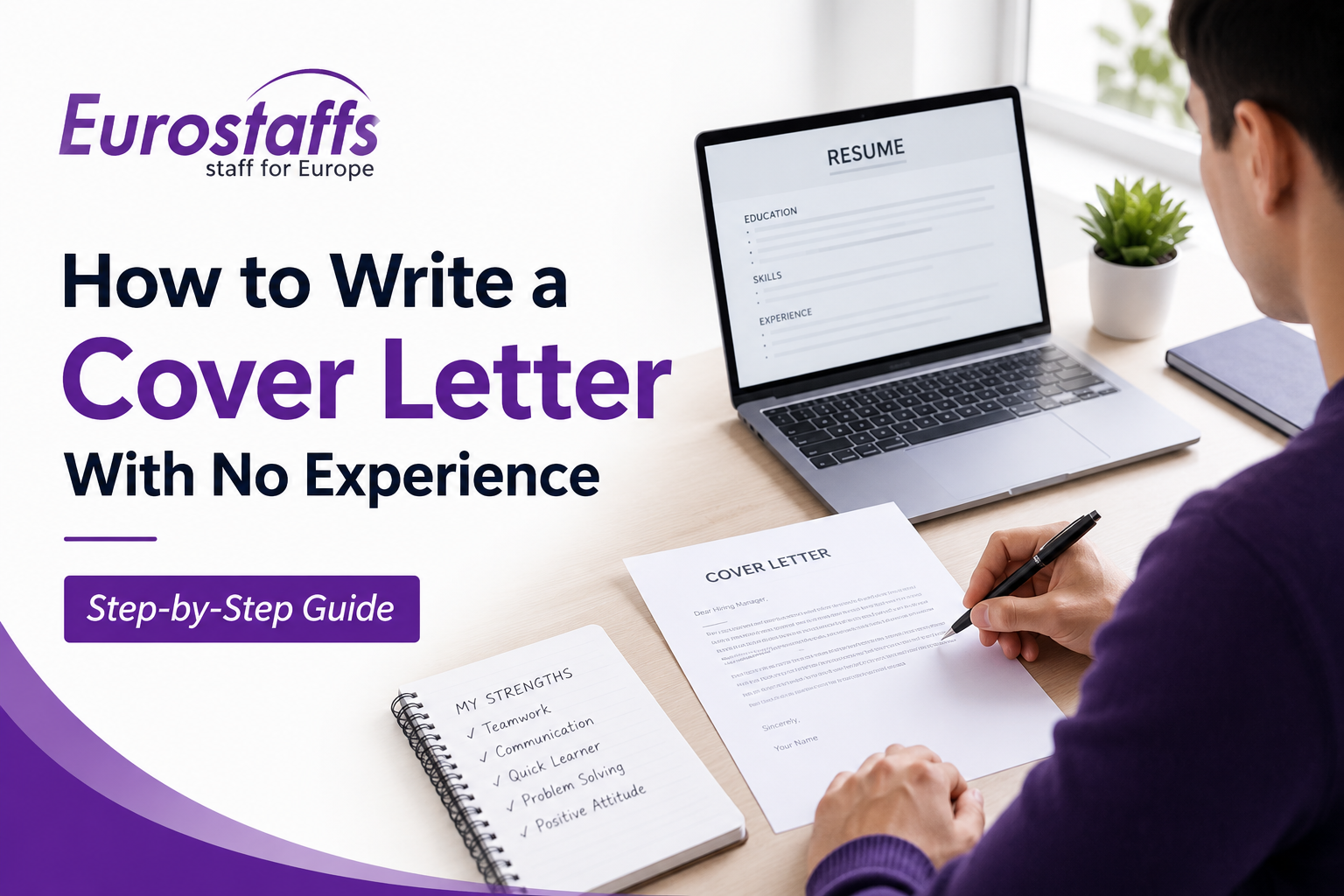
How to Write a Cover Letter With No Experience (Step-by-Step Guide)
So you want a job. But you have zero work experience. And now you're stuck staring at a blank page, wondering how to write a cover letter with no experience at all.
Take a breath. You're not alone here.
Every worker, every manager, and every CEO once had zero experience too. They all had to start somewhere. And guess what? Many of them got hired because of a great cover letter, not a long resume.
This guide will walk you through the whole thing. Step by step. No confusing words, no stiff advice, just real help you can use today.
Why a Cover Letter Still Matters
So many people skip this step. But that's a big mistake.
A cover letter is your chance to talk directly to the hiring manager. It's not just a boring form. It's your voice on paper.
Think of your resume as a list. It shows facts, dates, and skills in a plain way. But your cover letter tells a story instead.
And when you have no job experience, that story matters even more. So use it to show who you are. Show your energy, your goals, and your reasons for wanting the job.
Employers know beginners exist. They're not shocked by a blank work history. What they want to see is potential.
What to Do Before You Start Writing
Before you write a single word, do some quick homework first. This part makes everything else easier.
Research the Company
So look up the company online. Check their website, their social media, and recent news. What do they care about? What's their tone like?
This helps you match their vibe. And it shows you actually care about the job.
Study the Job Posting
Read the job listing twice. Circle or highlight the key skills they want.
Do they mention teamwork? Communication? Being a fast learner? Use those exact words later in your letter.
List Your Own Strengths
Grab a notebook. Write down everything you're good at, even small things.
Maybe you led a school project. Maybe you volunteered somewhere. Or maybe you just have great people skills. All of that counts.
The Basic Cover Letter Structure
So a cover letter isn't random. It follows a simple, clear structure that works.
Here's what it usually includes:
Header with your contact info
Greeting to the hiring manager
Opening paragraph that grabs attention
Body paragraph(s) showing your value
Closing paragraph with a call to action
Sign-off
That's it. Nothing scary about that list at all.
How to Write Each Part (With Examples)
Let's go section by section now. And we'll build a full letter together.
1. The Header
Keep this part simple. Include your name, email, phone number, and the date.
Example:
Alex Rahman
(123) 456-7890
July 27, 2026
Nothing fancy needed here. Just clean and clear.
2. The Greeting
So try to find the hiring manager's name. A quick search on LinkedIn often works.
If you can't find it, that's fine too. Use something friendly instead.
Good examples:
Dear Ms. Chowdhury
Dear Hiring Manager
Dear Marketing Team
Avoid "To Whom It May Concern." It sounds stiff and outdated.
3. The Opening Paragraph
This part matters the most. Because you only get a few seconds to grab attention.
Skip the boring line about "applying for this position." Instead, start with energy or a small story.
Weak opening: "I am writing to apply for the marketing assistant role."
Strong opening: "I've followed your brand's social media for two years now. And I always admired how real your captions feel. So when I saw this marketing assistant opening, I knew I had to apply."
See the difference? One feels alive. The other feels flat.
4. The Body Paragraph
So this is where you sell your skills. But you're not lying or exaggerating anything.
Instead, connect your background to the job. Even without paid work, you likely have real skills.
Example for no experience:
"During my time in school, I led a group project on local recycling programs. So I organized our team, created the presentation, and spoke to over 100 students. That experience taught me how to manage time, work with others, and stay calm under pressure. Those are skills I'd bring to your customer service team every single day."
Notice how specific that is. It's not vague or generic at all.
5. A Second Body Paragraph (Optional)
If you have more to share, add another short paragraph. But don't repeat yourself.
Use this space to mention your personality or your goals.
Example:
"I'm also someone who learns fast. Last year, I taught myself basic graphic design using free online tools. And within a few months, I was creating posters for my school's events. That drive to learn is something I'll bring to this role too."
6. The Closing Paragraph
So wrap things up with confidence. Thank them for their time.
Then ask for the next step, like an interview.
Example:
"Thank you for considering my application. I'd love the chance to talk more about how I can support your team. So please feel free to reach out anytime this week."
7. The Sign-Off
Keep this part short and professional.
Example:
Sincerely,
Alex Rahman
Full Sample Cover Letter (No Experience)
Here's how it all looks together.
Dear Ms. Chowdhury,
I've followed your brand's social media for two years now. And I always admired how real your captions feel. So when I saw this marketing assistant opening, I knew I had to apply.
During my time in school, I led a group project on local recycling programs. So I organized our team, created the presentation, and spoke to over 100 students. That experience taught me how to manage time, work with others, and stay calm under pressure. Those are skills I'd bring to your customer service team every single day.
I'm also someone who learns fast. Last year, I taught myself basic graphic design using free online tools. And within a few months, I was creating posters for my school's events. That drive to learn is something I'll bring to this role too.
Thank you for considering my application. I'd love the chance to talk more about how I can support your team. So please feel free to reach out anytime this week.
Sincerely, Alex Rahman
Simple, right? And that's the whole goal here.
Tips That Actually Help
So here are some quick tips to keep in mind.
Keep it short. One page is plenty.
Match the tone. A creative company wants a fun tone. A law firm wants something formal.
Use real examples. Vague claims don't convince anyone.
Show excitement. Employers love hiring people who actually want the job.
Proofread twice. Small typos can hurt your chances.
And don't forget to save your letter as a PDF. That way, the formatting stays exactly the same.
Common Mistakes to Avoid
So let's talk about what NOT to do.
Copying a Generic Template Word for Word
Templates are fine as a starting point. But copying one exactly makes your letter sound fake.
Focusing Only on What You Lack
Never open with "I don't have any experience, but..." That line kills your confidence right away.
Instead, lead with what you DO have.
Repeating Your Resume
Your cover letter shouldn't just list your resume again. It should add new details and context instead.
Writing Too Much
So a long letter feels exhausting to read. Keep it under 400 words if possible.
Forgetting to Customize It
Sending the same letter to every job is risky. Employers can often tell.
Best Practices for Beginners
So here's how to make your first cover letter shine.
Start with a hook, not a boring intro.
Use keywords from the job post naturally.
Keep paragraphs short so it's easy to scan.
End with a clear next step, like requesting an interview.
Use a clean format, with simple fonts and spacing.
If you're also polishing your resume, using a solid CV builder can help you keep everything consistent and professional across both documents.
Pros and Cons of Cover Letters
So even with a few downsides, the pros usually win. Especially when you have no experience yet.
FAQ
1. Do I really need a cover letter with no experience?
Yes, in most cases. A good cover letter helps you stand out, even without job history.
2. How long should my cover letter be?
Keep it under one page. Around 250 to 400 words works well.
3. What if I don't know the hiring manager's name?
Use "Dear Hiring Manager" instead. It's a safe, professional choice.
4. Can I use the same cover letter for every job?
No. Always tweak it slightly for each job posting and company.
5. What should I include instead of work experience?
Focus on school projects, volunteering, hobbies, and personal skills instead.
6. Should my cover letter match my resume's design?
Yes, ideally. A matching style looks more polished and put together.
7. Is it okay to sound a little nervous or excited in my letter?
Yes, a little emotion is fine. It shows you're human and genuinely interested.
8. Should I mention my GPA or grades?
Only if they're strong and relevant. Otherwise, skip it entirely.
Summary
So writing a cover letter with no experience isn't as scary as it seems. Focus on your strengths, not your gaps.
Use real examples from school, hobbies, or volunteer work. Show enthusiasm for the role and company.
Keep your letter short, clear, and personal. And always customize it for each job you apply to.
Final Thoughts
Everyone starts somewhere. But yIt just needs to sound like you. So beour first cover letter doesn't need to be perfect.
honest, be confident, and let your personality shine through the page.
You've got more to offer than you think. Now go write that letter and send it out with pride.


 Arabic
 Chinese
 French
 Russian
 Spanish