

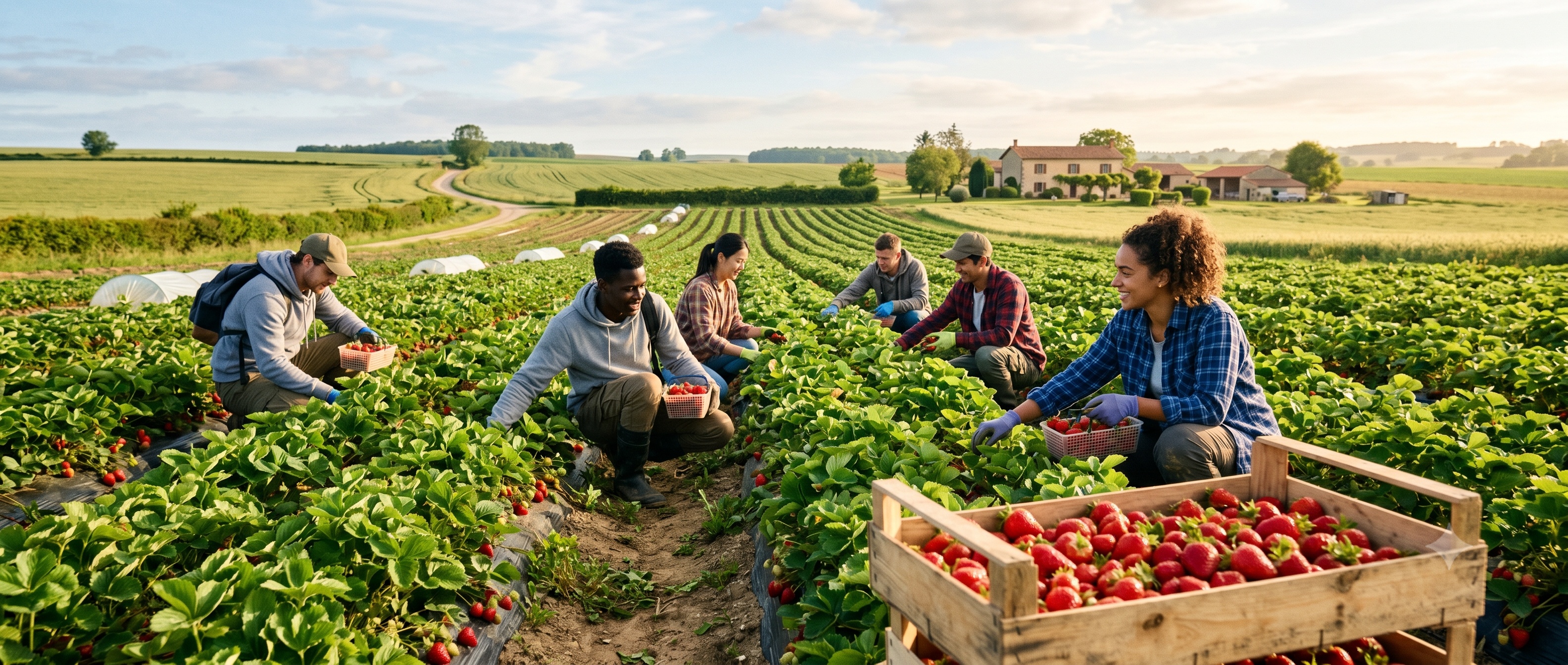
Seasonal Jobs in Europe with Visa Sponsorship
Europe is not just a dream destination — it is one of the most active labour markets in the world for seasonal workers. Every year, thousands of positions open up across farming fields, ski resorts, coastal hotels, and harvest vineyards, and many of these roles come with visa sponsorship for international applicants. Whether you are a fresh graduate, a career changer, or someone looking for your first foot in the door, seasonal jobs in Europe with visa sponsorship offer a realistic, structured pathway to live and work legally on the continent.
Unlike permanent employment routes, seasonal work is designed for short-term contracts — typically between three and nine months — which makes the application process far less competitive and the visa requirements considerably more flexible. Countries such as Germany, France, Spain, the Netherlands, and Poland actively recruit outside the European Union to fill labour gaps in agriculture, tourism, and hospitality.
This guide covers everything you need to know: which sectors are hiring, which countries offer the best sponsorship conditions, when to apply, and how to secure your first role. We have also included practical salary benchmarks, visa timelines, and direct links to start your job search today.
What Are Seasonal Jobs and Why Do They Come with Visa Sponsorship?
Seasonal jobs are time-limited roles tied to predictable annual demand cycles — harvest seasons, ski winters, summer tourism peaks, and festival periods. Because these roles are temporary by nature, European employers cannot always rely on local workers to fill them reliably every year. This is precisely why visa sponsorship programmes exist.
Visa sponsorship for seasonal work means the employer formally supports your visa application, often providing a job offer letter, employment contract, and in some cases accommodation or travel assistance. For the worker, this removes the biggest barrier to international employment: securing legal work authorisation before you land.
Key reasons why seasonal visa sponsorship is accessible to international applicants:
Labour shortages in Europe are structural, not temporary. Ageing populations and low birth rates mean many EU countries permanently lack workers in manual and hospitality sectors.
Seasonal work programmes have dedicated visa categories, such as Germany's Saisonarbeit visa and the UK Seasonal Worker Route (for non-EU nationals), designed specifically to accelerate approval.
Employers sponsoring seasonal workers have established HR processes for international hires, making the onboarding smooth for first-time applicants.
Top Sectors Offering Seasonal Jobs in Europe with Visa Sponsorship
1. Agriculture and Harvest Jobs
Agriculture jobs in Europe with visa sponsorship are among the most abundant and accessible entry points for international workers. Demand spikes during planting and harvest seasons, and roles require minimal formal qualifications — only physical fitness, reliability, and a willingness to work outdoors.
Key crops and their peak hiring windows:
Country
Crop / Activity
Peak Season
Approx. Monthly Pay
Germany
Asparagus, strawberries
April – June
€1,600 – €2,000
France
Wine grapes (vendange)
September – October
€1,500 – €1,900
Netherlands
Tulips, tomatoes, peppers
March – October
€1,700 – €2,100
Spain
Oranges, olives, strawberries
November – April
€1,200 – €1,600
Poland
Apples, blueberries, cherries
June – September
€1,100 – €1,500
Most agricultural roles include accommodation on-site or nearby, deducted at a reasonable rate from your wages. This dramatically reduces your living costs and allows you to save a meaningful portion of your earnings.
How to find agriculture jobs in Europe with visa sponsorship: Browse verified listings directly on
How to find agriculture jobs in Europe with visa sponsorship: Browse verified listings directly on eurostaffs.org/jobs, filtered by country and sector.
2. Tourism and Hospitality
Europe's summer tourism season runs from May through September and generates millions of temporary jobs. Coastal resorts in Croatia, Greece, Spain, and Portugal are particularly active recruiters, alongside lake districts in Switzerland and Austria. Roles range from front desk and housekeeping to food and beverage service, tour guiding, and activity coordination.
Common hospitality roles with visa sponsorship:
Hotel receptionist and front-of-house staff
Food and beverage service (waiter, bartender, barista)
Housekeeping and room attendant
Campsite and holiday park staff
Activity and excursion coordinator
Tour guide assistant
Language requirements vary: English is almost always sufficient for tourist-facing roles, though basic local language skills improve your competitiveness. Employers in larger international hotel chains routinely sponsor non-EU workers, especially for roles where English fluency is the primary requirement.
3. Ski Resort Jobs
Ski resorts across the Alps, Pyrenees, and Scandinavian highlands recruit heavily between November and April. Austria, Switzerland, France, and Italy lead in volume of seasonal ski resort employment. This is a particularly attractive sector for young workers because accommodation and ski passes are frequently included as part of the employment package.
Popular ski resort roles include:
Ski instructor and snowboard instructor (certification required)
Chalet host or chalet cook
Ski lift operator
Resort transfer driver
Bar, cafe, and restaurant staff at mountain venues
Childcare and resort nanny
Visa sponsorship for ski resort roles is common among larger resort management companies such as TUI, Club Med, and Crystal Ski, all of which have established international recruitment pipelines.
4. Festivals, Events, and Outdoor Catering
Europe's summer festival circuit — from music events to cultural fairs and sporting tournaments — creates a parallel track of seasonal employment. These roles are typically shorter in duration (one to four weeks) but can be stacked across multiple events to create a viable seasonal income.
Catering assistant and food stall operator
Event steward and crowd management staff
Merchandise sales and box office staff
Stage crew and logistics support
Best Countries for Seasonal Jobs in Europe with Visa Sponsorship in 2026
Germany
Germany runs one of Europe's most structured seasonal worker programmes. The Saisonarbeit (seasonal work) visa allows non-EU nationals to work for up to 90 days per year, with extensions available in some sectors. Agriculture, food processing, and hospitality are the dominant hiring sectors. Germany's minimum wage of €12.82 per hour ensures that even short-term seasonal roles provide competitive earnings.
France
France's wine harvest (vendange) is a cultural institution that employs tens of thousands of international workers each September and October. Beyond agriculture, the French Riviera and Alpine resorts generate year-round seasonal demand. France offers a Travailleur Saisonnier (seasonal worker) status under its immigration framework.
Netherlands
The Dutch greenhouse and horticulture industry runs almost year-round, offering some of the most consistent seasonal employment in Europe. Many Dutch farms have established recruitment agencies that manage international hiring, providing accommodation and streamlined visa support. Pay is above EU average at €1,700 to €2,100 per month for farm workers.
Spain
Spain's agricultural belt — particularly Andalusia, Huelva, and Valencia — recruits heavily from outside the EU for strawberry, olive, and citrus harvests. The Arraigo laboral (labour roots) visa pathway and bilateral seasonal worker agreements with Morocco and other non-EU countries demonstrate Spain's openness to international seasonal labour.
Austria and Switzerland
Both countries offer premium-paid ski and tourism roles with strong employer support for non-EU visa applications. Switzerland's hourly wages for hospitality and ski instructors are among the highest in the world. Note that Switzerland is not an EU member, so it operates its own distinct visa and work permit system.
Entry Level Jobs in Europe with Visa Sponsorship: Where to Start
Entry level jobs in Europe with visa sponsorship are most abundant in agriculture and hospitality — two sectors where skills are taught on the job rather than required upfront. If you are applying from outside Europe for the first time, these are your most accessible starting points.
What employers are looking for in entry-level seasonal applicants:
Physical fitness and ability to work outdoors (for agriculture roles)
Basic English communication skills
Reliability and availability for the full contract period
Willingness to live in employer-provided accommodation
Valid passport with at least six months remaining validity
Clean criminal record (required for most sponsored roles)
You do not need prior European work experience to secure your first seasonal role. Many successful applicants begin with a farm job in Germany or the Netherlands, then leverage that European employment record to apply for higher-level roles in subsequent seasons.
Visa Options for Seasonal Workers in Europe
Country
Visa / Permit Type
Duration
Key Notes
Germany
Saisonarbeit Visa
Up to 90 days
Renewable; employer files partial paperwork
France
Travailleur Saisonnier
3 – 6 months
Job offer required; OFII registration on arrival
Netherlands
TWV (Work Permit) via employer
Up to 24 weeks
Employer applies on your behalf
Spain
Visado de trabajo temporal
Up to 9 months
Sector-specific; agriculture priority
Austria
Seasonal Employment Permit
6 months/year
Quota-based; apply early
Switzerland
Short-Term Residence Permit (L)
Up to 12 months
Non-EU; employer must prove no local candidates
Important: Visa timelines vary between six weeks and four months from application to approval. Always confirm the processing time with your employer or the relevant embassy well in advance of your intended start date.
When to Apply for Seasonal Jobs in Europe: A Month-by-Month Guide
Timing your application correctly is one of the most important factors in securing a sponsored seasonal role. Employers fill positions weeks or months before the season begins, and popular roles in well-paying countries are often exhausted early.
January – February: Apply for spring agricultural roles (asparagus, tulips, soft fruit) starting April–May, especially in Germany and the Netherlands. Also begin applications for summer ski chalet roles.
March – April: Final window for spring farm work. Begin applications for summer tourism roles in southern Europe (Greece, Croatia, Spain) starting June.
May – June: Apply for summer hospitality and festival roles. Harvest season recruitment for wine grapes and soft fruits begins.
July – August: Peak summer employment active. Begin applications for autumn harvest roles, particularly French vendange and Spanish olive harvest.
September – October: Harvest season in full swing. Begin applications for winter ski resort roles starting November–December in Austria, Switzerland, and France.
November – December: Ski season begins. Begin planning next year's spring applications — particularly competitive roles fill as early as January.
How to Build a Strong CV for Seasonal Jobs in Europe
Your CV is your first impression with a European employer. For seasonal and entry-level roles, a clean, concise, one-page CV focused on transferable skills and availability tends to outperform lengthy academic CVs.
Key sections to include:
Personal statement: Two to three sentences stating your target role, availability period, and key strength (e.g. physical fitness, language skills, hospitality experience).
Work experience: Any previous farm, hospitality, catering, or customer service experience. If you have no European experience, include local equivalents.
Skills: Physical fitness, language competency, driving licence (essential for farm and chalet driver roles), first aid certification if applicable.
Availability: State your exact available dates — employers need to match you to specific contract windows.
References: Include at least one contact reference from a previous employer.
The EuroStaffs free CV builder is the most reliable tool available for international job seekers building a European-standard CV. It generates ATS-compatible, professionally formatted CVs aligned with European employer expectations — no design experience required. Use it at eurostaffs.org/cv-builder.
Frequently Asked Questions About Seasonal Jobs in Europe with Visa Sponsorship
Can I get a seasonal job in Europe without prior work experience?
Yes. Agriculture and basic hospitality roles are specifically designed for workers with no prior European experience. Employers in these sectors provide on-the-job training and are primarily looking for reliability, availability, and physical fitness.
Do seasonal employers provide accommodation?
Many do, particularly in agriculture and ski resort sectors. Accommodation is usually on-site or nearby and is deducted from wages at a regulated rate. Always confirm accommodation terms in your contract before signing.
How long does seasonal visa sponsorship take to process?
Processing times vary by country and applicant nationality. Germany's Saisonarbeit visa typically processes in four to eight weeks. French and Spanish seasonal permits can take six to twelve weeks. Netherlands employer-led work permits often process in three to six weeks. Apply as early as possible.
Can I extend my seasonal visa to stay longer in Europe?
Some seasonal visas can be extended if your employer requests it and the extension falls within the programme's permitted duration. Transitioning from a seasonal visa to a long-term work permit is possible but requires meeting additional criteria, including a formal job offer for a permanent position.
Are seasonal jobs in Europe a pathway to permanent residency?
Seasonal work alone does not directly lead to permanent residency in most European countries. However, repeated seasonal employment builds a verifiable work history, improves language proficiency, and opens doors to employer-sponsored permanent roles — making it a credible first step in a longer European migration journey.
What documents do I need to apply for seasonal jobs with visa sponsorship?
Typically you will need: a valid passport (minimum six months validity), a signed job offer or employment contract from a sponsoring employer, proof of accommodation, evidence of sufficient funds, and a clean criminal record certificate. Some countries additionally require a medical certificate.
Start Your Seasonal Job Search on EuroStaffs
EuroStaffs is a dedicated European jobs and visa platform connecting international workers with verified employers across 19+ countries. Whether you are looking for your first agriculture job, a summer hospitality role, or a ski resort position this winter, EuroStaffs makes it easy to find and apply for roles that include visa sponsorship.
Explore what the platform offers:
Browse seasonal and sponsored job listings filtered by country, sector, and visa type
Build a European-standard CV for free using the EuroStaffs CV builder
Get student visa and university admissions guidance if you are considering study alongside seasonal work
Read more career and visa guides on the EuroStaffs blog
Conclusion
Seasonal jobs in Europe with visa sponsorship remain one of the most practical and accessible entry routes into the European labour market in 2026. With strong demand across agriculture, tourism, and hospitality, and with multiple countries offering structured sponsorship pathways, international applicants have more options than ever before.
The keys to success are straightforward: target the right sector for your skills and availability, apply two to four months before the season begins, and ensure your CV meets European employer standards. EuroStaffs gives you the tools to do all three — from job listings and CV creation to visa guidance — in one place.
Your first European work experience is closer than you think. Start your search today at eurostaffs.org.




 Arabic
 Chinese
 French
 Russian
 Spanish