

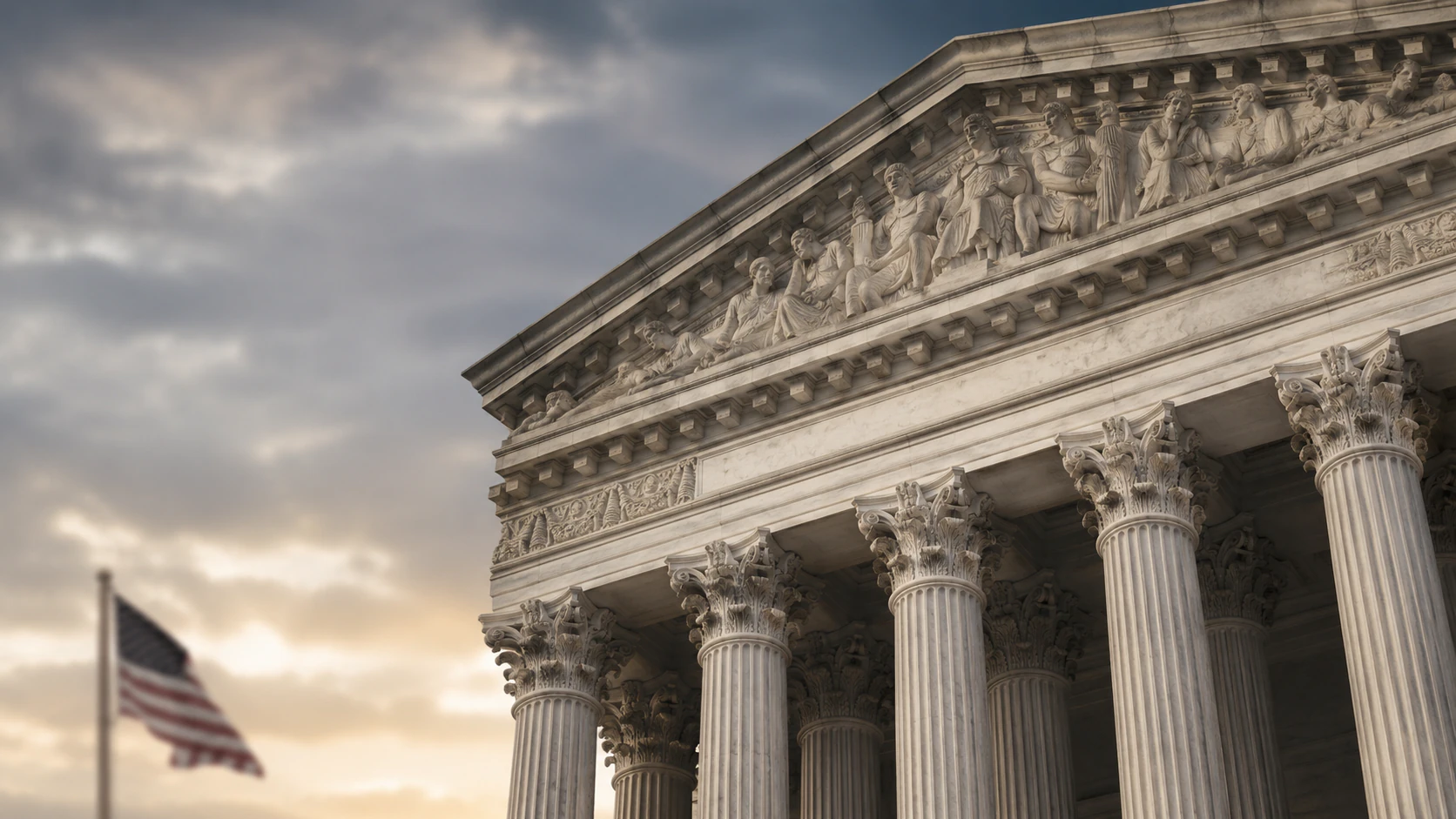
Birthright Citizenship 2026: What the Supreme Court's Ruling Actually Changes
For eighteen months, hundreds of thousands of families across the United States lived with a genuine question mark hanging over their newborns' futures. Would a baby born on US soil to parents on a temporary visa, or without legal status, actually be a US citizen? On June 30, 2026, the Supreme Court finally answered that question — and the answer was a firm yes.
At EuroStaffs, we've had clients ask about this on and off since early 2025, usually in the same anxious tone: "If my baby is born in America while I'm on a work visa, will they actually get citizenship?" For a year and a half, the honest answer was "probably, but it's genuinely uncertain." As of this ruling, that uncertainty is gone. This article breaks down exactly what the birthright citizenship 2026 decision says, how we got here, and what it means for anyone planning a birth, a move, or a visa application involving the United States. If you're also trying to make sense of this year's other major changes, we've covered the US visa ban and country restrictions in a separate article.
How This Case Started
The story begins on January 20, 2025, the day Donald Trump was sworn in for his second term. Within hours, he signed Executive Order 14160, titled "Protecting the Meaning and Value of American Citizenship." The order attempted to reinterpret the Fourteenth Amendment's Citizenship Clause, arguing that children born in the US to parents who were undocumented or only temporarily present were not "subject to the jurisdiction" of the United States, and therefore not entitled to automatic citizenship.
This was a direct challenge to more than 150 years of settled law. The Fourteenth Amendment, ratified in 1868, states that all persons born in the United States and subject to its jurisdiction are citizens — full stop. The Supreme Court had already reinforced this principle in 1898, in the landmark case United States v. Wong Kim Ark, which confirmed that a child born on US soil to non-citizen parents was, in fact, a citizen.
The order never actually went into effect. Federal judges in Maryland, Massachusetts, Washington, and New Hampshire moved quickly to block it, and separate legal battles unfolded over the following year — first over whether individual courts could issue nationwide injunctions at all, and then over whether the order itself was constitutional.
"This case dragged on far longer than most of our clients expected," one of our immigration-focused consultants noted. "People wanted a yes-or-no answer in early 2025. Instead they got eighteen months of overlapping court battles before anything was settled for good."
The Supreme Court's Decision, in Plain Language
The case that finally resolved the question was Trump v. Barbara, argued before the Supreme Court on April 1, 2026, and decided on June 30, 2026. In a 6-3 ruling written by Chief Justice John Roberts, the Court struck down the executive order entirely.
The majority opinion traced the history of birthright citizenship from English common law through the ratification of the Fourteenth Amendment and its 1898 confirmation in Wong Kim Ark. Roberts wrote that children born in the US to parents who are unlawfully or temporarily present satisfy both elements of the Citizenship Clause — birth on US soil and subjection to US jurisdiction — and are therefore citizens from the moment they are born.
The ruling was not unanimous, and the reasoning behind it wasn't perfectly uniform even among the justices who agreed with the outcome. Justice Brett Kavanaugh reached the same conclusion — that the executive order was invalid — but based his opinion on federal statute rather than the Constitution itself, suggesting Congress could theoretically legislate exceptions in the future, something it has not done. Justices Clarence Thomas and Neil Gorsuch dissented, arguing the majority's historical account was flawed.
"The 6-3 headline number hides a more layered story," our team observed while reviewing the opinion. "On the core constitutional question, it was actually a narrower 5-4 split. That detail matters if you're trying to gauge how settled this really is."
Why This Case Took So Long to Resolve
Part of the delay had nothing to do with birthright citizenship directly. In June 2025, the Supreme Court ruled in a related case, Trump v. CASA, that federal district courts generally cannot issue nationwide "universal" injunctions — court orders blocking a policy everywhere in the country rather than just for the specific plaintiffs involved. That decision reshaped how lower courts could respond to the birthright citizenship order and pushed the underlying constitutional question toward a full Supreme Court hearing rather than being resolved through a single district court ruling.
Once oral arguments were scheduled for April 2026, the case drew unusual attention — including President Trump himself attending arguments in person, a rare move for a sitting president. The final ruling came almost exactly three months later.
What the Ruling Means in Practice
For any child born in the United States, regardless of the immigration status of their parents, citizenship is automatic and guaranteed under the Constitution as it has always been understood. This applies whether the parents are on a work visa, a student visa, a tourist visa, or have no legal status at all. The only long-standing exceptions remain narrow: children of foreign diplomats, and children born in American Samoa, who are considered US nationals rather than citizens under a separate historical arrangement.
No further action is required from families. Hospitals, vital records offices, and passport agencies continue to operate exactly as they did before the executive order was ever signed, because the order never took legal effect during the entire period it was being challenged.
For families currently in the US on temporary visas — H-1B, F-1, J-1, or similar categories — this ruling removes what had become a genuinely stressful variable in family planning decisions. "We had clients delaying pregnancy planning because of this exact uncertainty," one consultant told us. "That's not a small thing to ask a family to put on hold."
Reactions and What Comes Next
President Trump publicly criticized the ruling shortly after it was announced, calling on Congress to pursue legislation to end birthright citizenship going forward. Given Justice Kavanaugh's opinion left open the theoretical possibility of statutory exceptions, this is not a purely symbolic request — though most legal observers consider a constitutional amendment the only route capable of overriding the Fourteenth Amendment itself, and amendments require supermajorities that are very difficult to achieve in the current political environment.
Public opinion has not been on the side of ending the practice. Polling conducted in April 2026 found a substantial majority of Americans opposed to eliminating birthright citizenship, with only about a third in favor. Whether this translates into any near-term legislative push remains to be seen, but it does suggest limited political appetite for revisiting the issue immediately.
It's worth being clear-eyed here: this ruling settles the constitutional question decisively, but it does not mean the broader debate around birthright citizenship disappears from political conversation. Anyone assuming this is now permanently closed to any future challenge is overstating things — anyone assuming it changes nothing today is understating what actually happened. The practical reality, as of this ruling, is that birthright citizenship stands exactly as it has for over a century.
What This Means If You're Planning a Move to the US
If you are considering a work visa, a student visa, or any other pathway to the United States, and family planning is part of your longer-term thinking, this ruling removes a source of genuine uncertainty that existed for the past year and a half. A child born in the US during a visa-based stay is a US citizen at birth, with all the rights that come with that status, including the ability to sponsor family members for immigration in the future once they reach the appropriate age.
This does not change anything about the parents' own visa status. A US-citizen child does not automatically confer any immigration benefit on parents who are on temporary or unauthorized status — that remains a separate legal question governed by entirely different rules, and one where our team frequently sees confusion. Families sometimes assume having a citizen child changes their own visa timeline; it generally does not, at least not in any immediate sense.
We recently spoke with a client on an H-1B visa whose second child was born in the US in early 2026, right in the middle of the legal uncertainty around this case. Their first question wasn't about their own visa — it was whether their newborn's citizenship was actually secure given everything they'd read online. At the time, we could only tell them the law as it stood was still in their favor, but that the case was unresolved. Now, for any family in a similar position, the answer is unambiguous.
Key Takeaways
The Supreme Court's June 2026 ruling in Trump v. Barbara reaffirms that any child born on US soil is a US citizen at birth, regardless of their parents' immigration status, continuing an unbroken legal principle dating back to the Fourteenth Amendment's ratification in 1868 and its confirmation in the 1898 Wong Kim Ark decision. The 2025 executive order attempting to change this never took legal effect and has now been struck down for good by a 6-3 majority, though the constitutional reasoning itself reflected a narrower 5-4 split among the justices. President Trump has called for congressional action, but any change to birthright citizenship as guaranteed by the Constitution would likely require a constitutional amendment — a high bar that current public opinion does not support.
For families currently navigating US visas, or planning a move, this is one less variable to worry about. The rules around birthright citizenship have not changed; they have simply been confirmed.
How the US Compares to Other Countries
One detail that got lost in a lot of the coverage is that the United States was never actually alone in guaranteeing birthright citizenship — despite some political rhetoric suggesting otherwise. Several dozen countries around the world grant unconditional jus soli citizenship, meaning citizenship based purely on place of birth. Most of these are in the Americas, including Canada, Brazil, and Mexico, alongside the United States.
This matters for context because the debate in the US was never really about whether birthright citizenship is a globally unusual policy — it isn't. Many countries that once had unconditional birthright citizenship, particularly in Europe and parts of Asia, have shifted toward conditional models over past decades, typically requiring at least one parent to hold citizenship or legal residency. The US, along with most of the Americas, never made that shift, and this ruling confirms it isn't going to happen through executive action either.
"Clients sometimes assume the US was doing something unusual by having birthright citizenship at all," one of our consultants pointed out. "It's actually one of the more common models globally, especially in this hemisphere. What was unusual was trying to end it through an executive order rather than a constitutional process."
What Legal Experts Said About the Broader Stakes
Beyond the immediate legal question, researchers had flagged what ending birthright citizenship might actually accomplish, and the findings complicate the policy's stated goals. A joint 2025 analysis from the Migration Policy Institute and Pennsylvania State University's Population Research Institute projected that eliminating automatic citizenship for children of undocumented parents could actually increase the undocumented population by an estimated 2.7 million people by 2045 — the opposite of what proponents of the executive order argued it would achieve. The logic is straightforward: a child denied citizenship at birth doesn't disappear from the country; they simply grow up without legal status themselves, creating a second generation of undocumented residents where none existed before.
This research didn't factor directly into the Court's constitutional reasoning, but it shaped a lot of the public debate around the case, and it's worth understanding if you're trying to follow why this issue generated as much attention as it did.
Frequently Asked Questions
Does this ruling mean anything changes for children already born before June 30, 2026? No. Because the executive order never took legal effect at any point — it was blocked by federal courts from the start — nothing changes retroactively. Every child born in the US throughout this entire period was, and remains, a citizen at birth.
Can Congress still pass a law limiting birthright citizenship in the future? Justice Kavanaugh's concurring opinion suggested Congress could theoretically legislate around the statutory language, separate from the constitutional question. However, most legal scholars believe any law conflicting with the Fourteenth Amendment itself would still be unconstitutional, meaning a constitutional amendment — requiring two-thirds approval in both chambers of Congress plus ratification by three-quarters of states — would likely be the only durable path to changing the underlying guarantee.
Does having a US-citizen child help parents get a green card faster? Not directly, and not soon. A US-citizen child can sponsor a parent for a green card only once the child turns 21. It does not accelerate a parent's existing visa process or provide any immediate immigration benefit.
Is this ruling final, or can it still be appealed? Supreme Court decisions are final and are not subject to further appeal. Trump v. Barbara is now the controlling precedent on this question, alongside Wong Kim Ark.
Does this affect people on the 39-country travel ban or 75-country visa freeze we've written about separately? No — this ruling is unrelated to those policies. Birthright citizenship is a constitutional question about children born on US soil, while the travel ban and visa freeze concern entry and visa issuance for people applying from abroad. A family affected by either of those restrictions is unaffected by this ruling with respect to a child born in the US.
How EuroStaffs Can Help
Immigration law moves fast, and rulings like this one show exactly why relying on outdated information — or headlines from eighteen months ago — can lead to real anxiety over decisions that don't need to be difficult. Whether you're applying for a work visa, planning a family move to the US, or simply trying to understand how a Supreme Court ruling affects your specific situation, our team stays on top of these changes so you don't have to piece it together from scattered news articles.
If you have questions about how this ruling — or any other recent immigration development — applies to your family's plans, our consultants are ready to walk through your specific case before you make any decisions. You can also explore our visa and immigration advisory services for ongoing support with your application.
Constitutional questions can take years to settle. Your family's plans shouldn't have to wait that long for clarity.



 Arabic
 Chinese
 French
 Russian
 Spanish