

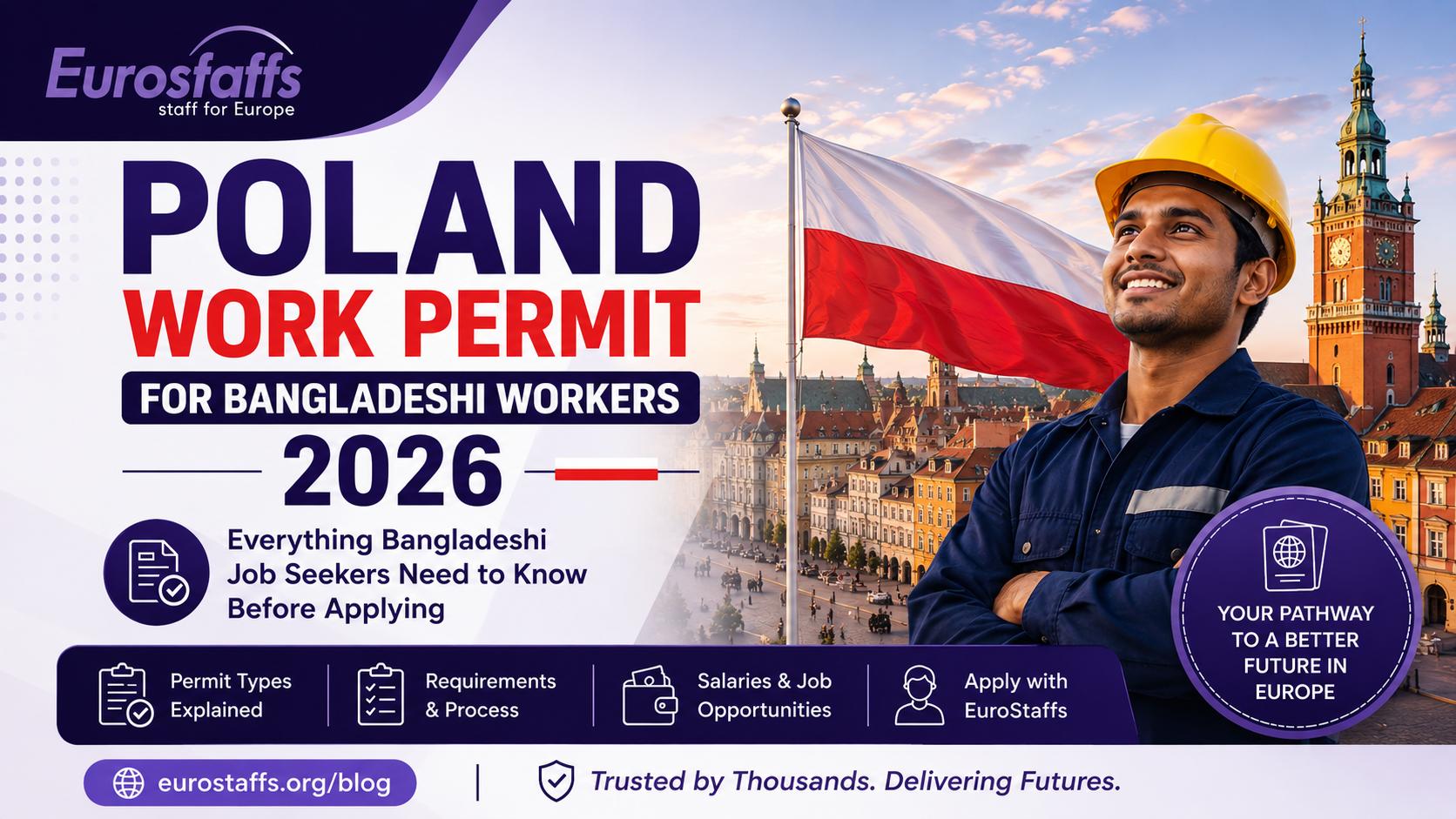
Poland Work Permit for Bangladeshi Workers 2026
Everything Bangladeshi Job Seekers Need to Know Before Applying
A Poland work permit for Bangladeshi workers is no longer a long shot. It is, for a growing number of factory hands, warehouse pickers, welders, and IT graduates, the most realistic route into a European paycheck. Poland's factories are short-staffed, its warehouses are short-staffed, and its government has spent the better part of two years rewriting the rules to make hiring from outside the EU faster, not slower.
The problem most Bangladeshi job seekers run into is not a lack of demand. It is a lack of clarity. Recruitment groups on Facebook mix outdated fees with rumours about permit types that no longer exist, and agents charge for paperwork that is, in most cases, the employer's legal responsibility. That confusion is exactly what causes good candidates to lose months, or lose money to the wrong middleman.
This guide breaks the process down the way it actually works in 2026: which permit applies to your situation, what your employer is required to submit, what you are required to submit, and what a realistic timeline and salary actually look like once you land. Nothing here is generic advice lifted from a brochure. For country-specific comparisons, our career guides on the EuroStaffs blog cover similar permit routes across Germany, the Netherlands, and Sweden.
By the end, you should know exactly which permit type fits your profile, what a legitimate job offer from Poland looks like, and how EuroStaffs can help you move from application to airport without the guesswork.
Why Poland Is Becoming a Top Destination for Bangladeshi Workers
A Labour Market That Cannot Fill Itself
Poland's unemployment rate has been sitting at roughly 3 to 4 percent through 2026, a figure most European economies would treat as full employment. That sounds like good news until you realise what it means for employers: there simply are not enough Polish workers left to hire. Analysts project the country's labour shortage could reach close to 1.5 million workers this year alone, and nearly six in ten Polish employers reported struggling to fill open roles in the past twelve months.
This is not a temporary dip caused by one bad hiring season. Poland's population is ageing, its birth rate has been falling for over a decade, and younger Poles are increasingly choosing jobs in Germany and the Netherlands over factory floors at home. That gap has to be filled by someone, and increasingly, that someone is arriving from South Asia.
Where Bangladeshi Workers Are Already Finding Jobs
Warehousing and logistics tell the story clearly. Roughly one in five foreign work permits issued in Poland now goes to someone entering the logistics sector, and more than 225,000 warehouse jobs in the country are currently held by non-Polish citizens. Ukrainians, Belarusians, and Georgians still make up the largest groups, but workers from India, Nepal, Bangladesh, and Pakistan follow close behind, and their numbers are rising every quarter.
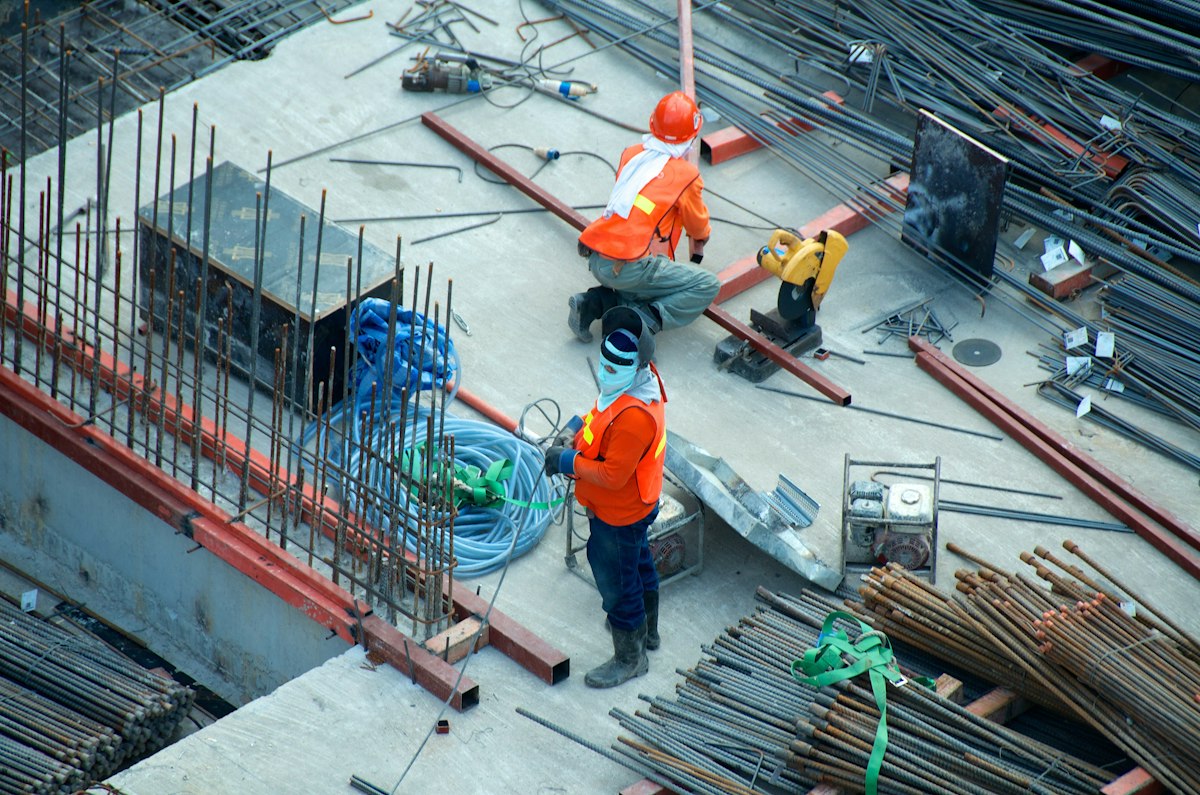
Manufacturing is the other big door. Factories in the Silesia region and the Lodz Special Economic Zone now run production lines where Bengali, Tagalog, and Telugu are spoken as often as Polish. Assembly line work, CNC machine operation, welding, and quality control roles are the ones being advertised most aggressively to recruitment agencies working South Asian markets.
What This Means for You in 2026
None of this guarantees an easy application. It does mean the odds have shifted in your favour compared to five years ago, when Bangladeshi migration to Poland was still a niche path with fewer than 3,000 legal residents nationwide. Today, entire recruitment corridors exist specifically to move workers from Dhaka and Chattogram into Polish factories and warehouses, and the legal framework has been simplified to keep pace.
"The demand is real, but so is the paperwork trap," says a Warsaw-based recruitment consultant who places South Asian workers with manufacturing clients. "Half the delays I see have nothing to do with the worker. They come from an employer who filed the wrong permit type." That single distinction, getting the permit type right from the start, is where the next section matters most.
Understanding the Poland Work Permit System
Type A Work Permit - The Standard Route
For the overwhelming majority of Bangladeshi applicants, the permit you want is Type A. This is the permit issued when a Polish employer, with a registered office inside Poland, hires you directly under an employment contract or a civil law contract. It covers the factory, warehouse, construction, and hospitality roles that make up most of the job offers reaching Bangladesh right now. All Type A applications are now filed through the official government portal praca.gov.pl.
One change worth knowing before you apply: since June 2025, employers no longer have to pass a labour market test to prove no Polish citizen was available for the role. Local authorities can still restrict certain occupations, but for most manual and semi-skilled positions, that bureaucratic hurdle is gone. This is not about the process becoming a formality, it is about the burden of proof shifting away from your future employer.
Type S Seasonal Permit - For Short-Term Work
If the job offer in front of you is for agriculture, horticulture, or seasonal hospitality work, you are likely looking at a Type S permit instead. It covers up to nine months of employment within a calendar year and comes with a lower application fee than the standard route, currently around 100 PLN compared to 440 PLN for Type A.
Type S is a genuine entry point for first-time applicants who want European work experience without committing to a multi-year relocation. It is also, realistically, less stable. Seasonal contracts end when the season ends, and renewing one does not automatically build toward permanent residence the way a Type A contract can.
EU Blue Card - For Skilled Professionals
Bangladeshi IT professionals, engineers, and other degree holders should look past Type A entirely and aim for the EU Blue Card, governed by the EU Blue Card Directive. It requires a university degree or five years of equivalent professional experience, a confirmed job offer of at least six months, and a gross annual salary of roughly 120,000 to 140,000 PLN, about 1.5 times Poland's average wage.
The trade-off for meeting that bar is real convenience. Blue Card applicants are exempt from any labour market test regardless of occupation, and the card itself is valid for up to two years, renewable, with a faster path toward long-term EU residence than the standard work permit route offers.
Documents and Requirements for the Poland Work Permit
What Your Employer Must Prepare
Your Polish employer carries most of the legal weight here, and that is by design. They must file the work permit application through the government's praca.gov.pl portal, upload a signed copy of your employment contract before you start work, and provide a sworn Polish translation of that contract if it was drafted in English or Bengali. Paper submissions have been phased out almost entirely, so an employer still asking you to courier physical documents in 2026 is a warning sign, not a sign of thoroughness.
They also need to confirm, in writing, that your pay will not fall below the minimum wage or the relevant collective agreement rate for your occupation. This detail matters more than it looks. A legitimate offer letter will state a specific gross salary figure, not a vague range that changes once you land.
What You Must Prepare
On your side, expect to gather a valid passport with at least six months of remaining validity, a completed visa application through the e-konsulat system, a recent passport photo meeting Polish specifications, proof of the visa fee payment, and travel medical insurance covering at least EUR 30,000, unless you already qualify for Polish public health coverage through your employer.
You will also need proof that you can financially support yourself during the early weeks in Poland, typically shown through bank statements or an income declaration, along with confirmed travel itinerary details once your visa appointment is booked. None of this is unusual by European visa standards, but missing even one document is the single most common reason an otherwise approved application sits in limbo for extra weeks.
Common Mistakes That Delay Applications
The most frequent error is applicants signing a job offer before confirming the employer is actually registered to sponsor a Type A permit. A foreign recruitment company without a Polish-registered entity cannot legally appear as your named employer, no matter how convincing their offer letter looks.
The second is timing. Because visa appointments, permit processing, and consular decisions now run almost entirely online, delays tend to come from incomplete digital submissions rather than lost paperwork. Double-checking that every uploaded document matches the format the Voivodeship office and the consulate expect saves far more time than rushing the initial application.
Step-by-Step: How to Apply for a Poland Work Permit from Bangladesh
Step 1: Secure a Verified Job Offer
Everything starts with a legitimate offer from a Polish company with a registered office in the country. This is where most Bangladeshi applicants either save months or lose them. Verifying the employer's registration and the recruiter's legitimacy before signing anything is not optional caution, it is the single step that determines whether the rest of this process even applies to you. A European-standard CV built with our free CV builder makes it easier for verified employers to shortlist you in the first place.
EuroStaffs lists verified Poland job openings from employers who are already set up to sponsor Type A permits, which removes this first, riskiest step from your plate entirely.
Step 2: Employer Files the Work Permit
Once you accept an offer, your employer submits the work permit application to the relevant Voivodeship office through praca.gov.pl. This is entirely their responsibility and their cost, not yours. Processing generally moves faster now that digital filing is mandatory, though exact timelines still vary by region and by how complete the initial submission is.
This is also the stage where your employer uploads your signed contract and, if needed, its sworn Polish translation. Keep a copy of everything they submit on your end too. It will save you time later if the consulate has questions.
Step 3: Visa Application at the Polish Embassy or Consulate
With the work permit approved, you apply for either a Type D national visa for longer stays or, less commonly, a Schengen Type C visa for stays under 90 days. This is done through the e-konsulat visa application system followed by an in-person appointment where you submit your passport, photo, insurance proof, and financial documentation.
Book this appointment as early as your permit approval allows. Consular slots in Dhaka fill up, and a delay here is one of the few parts of the process genuinely outside your employer's control.
Step 4: Arrival, Registration, and Residence Card
Landing in Poland is not the finish line. Within your first weeks, you will typically need to register your address, apply for a temporary residence card known locally as the Karta Pobytu, and confirm your health insurance status through ZUS if you are employed. The residence card application fee runs around 440 PLN for a single applicant.
This stage is administrative rather than difficult, but it does require you to actually show up at the right office with the right documents. Employers who regularly sponsor foreign workers usually walk new hires through this in their first week. If yours does not mention it at all, ask.
Salaries, Costs, and What to Expect on the Ground
Realistic Salary Ranges by Sector
General warehouse and manufacturing roles typically start close to Poland's minimum wage, with average reported pay across sectors hovering around 3,490 PLN per month before overtime. Skilled trade positions, welding, CNC operation, electrical work, pay noticeably above that floor, and EU Blue Card roles in IT and engineering clear well over double it once the salary threshold requirement is factored in.
"Don't take the first number in the offer letter at face value," one placement adviser working with Bangladeshi factory hires put it bluntly. "Ask whether it's gross or net, and ask what deductions come out before you see it." That single question separates a workable offer from a disappointing one after the first payslip arrives.
Fees and Hidden Costs to Budget For
Government fees themselves are modest. A Type A permit costs 440 PLN, Type S runs about 100 PLN, and the temporary residence card adds another 440 PLN. What catches new arrivals off guard is everything the fee schedule does not cover: your flight, the mandatory EUR 30,000 travel insurance policy, initial accommodation before your first paycheck clears, and, in many recruitment corridors, an agency service fee that should be disclosed upfront, not discovered halfway through the process.
This is not about scaring anyone off the idea. It is about budgeting for the real number rather than the smallest number someone quoted you to close the deal.
Life as a Bangladeshi Worker in Poland
The Bangladeshi community in Poland is still small by European standards, growing from a few hundred residents a decade ago to a few thousand today, concentrated mostly around Warsaw and the industrial zones near Lodz and Silesia. That means less of an established support network compared to countries like Italy or the UK, but it also means employers hiring Bangladeshi workers tend to invest more in onboarding, simply because each hire represents a meaningful addition to a still-small workforce.
Basic Polish language skills are not legally required for most manual roles, but workers who pick up even conversational Polish within the first six months consistently report faster promotions and fewer misunderstandings with supervisors. It is a practical investment, not a bureaucratic one.
Frequently Asked Questions
Can I get a Poland work permit without a job offer first?
No. Every route covered in this guide, Type A, Type S, and the EU Blue Card, requires a confirmed job offer or employment contract from a Polish-registered employer before any permit application can be filed.
How long does the Poland work permit process take from Bangladesh?
There is no fixed national timeline, since it depends on the Voivodeship office handling your employer's application and how quickly your consular visa appointment is scheduled in Dhaka. Complete, correctly filed applications generally move faster than the rumours suggest.
Do I need to speak Polish to work in Poland?
For most manufacturing, warehouse, and construction roles, no. Basic English or even Bengali-speaking supervisors are common on factory floors with large South Asian workforces, though learning conversational Polish improves your day-to-day experience significantly.
Is the labour market test still required in 2026?
For most occupations, no. It was removed for standard Type A applications starting June 2025. Some restricted occupations on regional shortage lists may still involve additional scrutiny, but the blanket requirement is gone.
How can EuroStaffs help me find a legitimate Poland job offer?
EuroStaffs verifies employer registration before listing Poland-based openings, connects you with our CV builder to prepare a European-standard application, and gives you a single place to track jobs, visa guidance, and university admissions support if study is part of your longer-term plan.
Conclusion
A Poland work permit for Bangladeshi workers is one of the more realistic European entry points available right now, not because the process is effortless, but because the labour shortage driving it is structural, not seasonal. Getting the permit type right, verifying your employer before signing anything, and budgeting for the real costs, not the advertised minimum, are the three decisions that separate a smooth relocation from a stressful one.
None of that requires guesswork if you start from a verified job listing rather than a forwarded WhatsApp message. Browse verified Poland job openings on EuroStaffs today, build a European-standard CV with our free CV builder, and move forward with an application that is actually built to be approved.
The best time to check whether you qualify was six months ago. The second best time is today.


 Arabic
 Chinese
 French
 Russian
 Spanish