


Austria stands as one of the most prosperous, economically stable, and technologically advanced member states of the European Union. Positioned at the very crossroads of Western and Central Europe, the Alpine nation combines world-leading living standards, high purchasing power, comprehensive universal healthcare, and progressive social infrastructure. However, like many developed European nations, Austria faces an acute demographic deficit and profound structural labor shortages across software engineering, electrical and mechanical engineering, specialized healthcare, skilled technical crafts, and infrastructure management.
To proactively address these labor shortages and attract top-tier international talent from third countries — including qualified candidates from Bangladesh — the Austrian Federal Government reformed the Red-White-Red Card (Rot-Weiß-Rot-Karte). Administered jointly under the Austrian Act Governing the Employment of Foreigners (Ausländerbeschäftigungsgesetz - AuslBG) and the Settlement and Residence Act (Niederlassungs- und Aufenthaltsgesetz - NAG), this combined residence and employment title grants qualified non-EU nationals lawful entry, professional employment, and an accelerated roadmap toward permanent residency and European citizenship.
Table of Contents
- 1. What is the Austrian Red-White-Red (RWR) Card?
- 2. Core Categories of the Red-White-Red Card Scheme
- 3. Austria's 2026 Nationwide Shortage Occupations (Mangelberufe)
- 4. The AMS Points System: Detailed Scoring Calculator
- 5. Mandatory Salary Benchmarks and Kollektivvertrag Regulations
- 6. Step-by-Step Application Process for Bangladeshi Citizens
- 7. Transitioning to Red-White-Red Card Plus & Permanent Settlement
- 8. Spouse and Family Reunification Privileges
- 9. Crucial Warnings: Avoiding Middlemen and Bogus Job Offers
- 10. Frequently Asked Questions (FAQ)
- 11. Verified European Career Guidance with EuroStaffs
1. What is the Austrian Red-White-Red (RWR) Card?
The Red-White-Red Card is a flexible, transparent, points-based work and residence permit modeled on modern merit-based migration systems. Named after the historic red-white-red colors of the Austrian national flag, the permit functions as a single unified legal document (Kombinierter Aufenthaltstitel) that combines:
- Lawful Residence Authorization: The legal right to reside in the Republic of Austria for up to 24 months.
- Authorized Labor Market Access: Full statutory authorization to work for a specific sponsoring employer who has satisfied national labor clearance requirements.
- Schengen Zone Mobility: Freedom to travel across the 29 countries of the Schengen Area without an additional visa for up to 90 days in any 180-day window.
Every application is evaluated in coordinated partnership between two statutory bodies: the Austrian immigration authority (either the local Municipal Department Magistratsabteilung 35 - MA 35 in Vienna or the relevant District Administrative Authority Bezirkshauptmannschaft - BH in federal provinces) and the Austrian Public Employment Service (Arbeitsmarktservice - AMS), which carries out statutory labor market checks and points evaluations.
2. Core Categories of the Red-White-Red Card Scheme
Austria's points-based framework is categorized into distinct tracks, each tailored to specific qualification profiles:
A. Skilled Workers in Shortage Occupations (Fachkräfte in Mangelberufen)
This is the most popular and accessible route for qualified Bangladeshi professionals and technicians. Applicants must have completed formal vocational training or an academic degree corresponding to an officially gazetted Austrian shortage occupation (Mangelberuf) and score a minimum of 55 points out of 100.
B. Very Highly Qualified Workers (Besonders Hochqualifizierte)
Targeted at top researchers, PhD holders, senior corporate executives, and distinguished scientists. Candidates who achieve at least 70 points out of 100 on the criteria scale are eligible to apply for a 6-month Jobseeker Visa (Visum D zur Arbeitsplatzsuche) from the competent Austrian consular post, allowing them to search for high-level employment inside Austria.
C. Other Key Workers (Sonstige Schlüsselkräfte)
Designed for professionals whose professions do not appear on the shortage list, but who possess specialized post-secondary degrees or extensive enterprise experience. Sponsoring employers must satisfy the formal statutory AMS Labor Market Test (Ersatzkraftverfahren) proving no suitable Austrian or EU citizen could be matched with the position.
D. Graduates of Austrian Higher Education Institutions
International students who successfully graduate from an Austrian public university or Fachhochschule (university of applied sciences) with a Bachelor's, Master's, or PhD degree are granted an automatic 12-month jobseeker residence permit. If they secure employment commensurate with their academic level, they obtain the RWR card exempt from the points system.
3. Austria's 2026 Nationwide Shortage Occupations (Mangelberufe)
Every calendar year, the Austrian Federal Ministry of Labour and Economy publishes the official Nationwide Shortage List (Bundesweite Mangelberufsliste). When a candidate applies within one of these registered codes, the sponsoring company is exempt from labor market testing, and points thresholds are streamlined.
| Shortage Sector | Specific In-Demand Job Titles | Typical Gross Monthly Salary Range | Key Academic/Vocational Prerequisites |
|---|---|---|---|
| Information Technology (IT) | Software Developers, DevOps Engineers, Cloud Architects, Cybersecurity Specialists, SAP Consultants | €3,800 – €5,600 | B.Sc. in Computer Science/SWE or equivalent 3+ years verifiable commercial experience |
| Electrical & Mechanical Engineering | Power Systems Engineers, Automation Specialists, Mechatronics Technicians, Industrial Machine Designers | €3,500 – €5,200 | Degree in Electrical/Mechanical Engineering or recognized polytechnic diploma |
| Skilled Industrial Crafts | CNC Programmers & Machinists, Certified TIG/MIG Welders, Industrial Electricians, Toolmakers | €2,800 – €3,900 | Certified technical diploma, Trade testing certification, BTEB vocational diploma |
| Healthcare & Medicine | Registered General Nurses, Medical Imaging Technologists, Physiotherapists | €3,200 – €4,400 | B.Sc. Nursing, professional registration, German B1/B2 certificate (Nostrifizierung process) |
| Construction & Civil Engineering | Civil Site Engineers, Quantity Surveyors, HVAC Technicians, Structural Concrete Specialists | €3,200 – €4,800 | Civil engineering degree, polytechnic diploma, OSHA/NEBOSH safety credentials |
| Culinary & Hospitality | Specialty Cuisine Chefs (Indian/Asian/Continental), Pastry Chefs, Restaurant Floor Supervisors | €2,500 – €3,600 | Diploma in Culinary Arts/Hotel Management, 3+ years starred hotel experience |
4. The AMS Points System: Detailed Scoring Calculator
Under the Skilled Workers in Shortage Occupations scheme, candidates must achieve a minimum of 55 out of 100 possible points across four core metric categories:
1. Qualifications & Formal Training (Maximum: 30 Points)
- Completed vocational training in an Austrian shortage occupation: 20 points
- General university qualification for entry (High School / College graduation): 25 points
- Completion of a minimum 3-year academic university study program: 30 points
2. Subject-Specific Work Experience (Maximum: 20 Points)
- Two points awarded per year of verifiable professional experience: up to 10 points
- Four points awarded per year of experience in a shortage occupation: up to 20 points (e.g., 5 years of verified shortage experience = maximum 20 points).
3. Language Proficiency (Maximum: 15 Points)
Austria recognizes both German (ÖSD, Goethe-Institut) and English language certificates (IELTS, TOEFL):
- German Level A1: 5 points | German Level A2: 10 points | German Level B1: 15 points
- English Level B1: 5 points | English Level B2 or higher (IELTS 6.0+): 10 points
4. Age Metric (Maximum: 15 Points)
- Applicants under 30 years of age: 15 points
- Applicants between 30 and 39 years of age: 10 points
- Applicants 40 years of age or older: 0 points
5. Bonus Innovation / Startup Factor (Maximum: 20 Points)
Awarded for recognized patents, specialized international publications, or verified scientific distinctions.
5. Mandatory Salary Benchmarks and Kollektivvertrag Regulations
One of the finest legal protections in Austria is the principle of equal remuneration. Austrian labor law does not determine minimum wages through arbitrary unilateral decrees; instead, compensation is regulated strictly through industry-specific Collective Bargaining Agreements (Kollektivverträge) negotiated between trade unions and employer federations.
- No Sub-Minimum Wages: Foreign workers must receive identical compensation to Austrian citizens in the equivalent role. Sponsoring an international employee below the statutory collective baseline constitutes an immediate legal violation.
- 14 Monthly Salaries per Year: Under Austrian standard labor contracts, employees receive 14 paychecks per year rather than 12. The 13th salary (Urlaubszuschuss - holiday bonus paid in summer) and 14th salary (Weihnachtsgeld - Christmas bonus paid in winter) are taxed at significantly reduced concessionary rates.
- Statutory Working Hours: Standard full-time employment is defined as 38.5 to 40 hours per week, with statutory 50% to 100% overtime supplements, mandatory paid annual vacation (25 working days minimum), and paid sick leave.
6. Step-by-Step Application Process for Bangladeshi Citizens
Securing an Austrian Red-White-Red Card from Bangladesh follows an orderly, verifiable multi-step procedural sequence:
- Securing a Binding Austrian Job Offer: Obtain a formal Employment Contract (Arbeitsvertrag) or Employer Declaration (Arbeitgebererklärung) from an active Austrian registered company specifying title, salary, working hours, and workplace address.
- Academic and Professional Document Legalization: All Bangladeshi academic certificates, university transcripts, police clearance certificates, and marriage certificates must be attested by the Ministry of Foreign Affairs (MOFA) Dhaka and subsequently legalized by the competent Austrian diplomatic mission.
- File Submission: Applications can be submitted in two ways:
- Option 1 (Fastest): The Austrian employer submits the complete dossier directly inside Austria to the local immigration authority (MA 35 or Bezirkshauptmannschaft).
- Option 2: The candidate files in person through the Austrian consular representation (via Austrian Embassy consular processing and VFS Dhaka/New Delhi).
- AMS Assessment: The immigration office forwards the file to the Public Employment Service (AMS), which evaluates the applicant's credentials against the points criteria and confirms Collective Agreement compliance within 4 to 8 weeks.
- Visa D Issuance: Upon positive determination, the Austrian Embassy issues an entry Visa Category D allowing the candidate to travel legally to Austria.
- Biometrics and Card Collection: Upon arrival in Austria, the worker registers their local residential address (Meldezettel), completes biometric collection, and receives the physical plastic Red-White-Red Card.
7. Transitioning to Red-White-Red Card Plus & Permanent Settlement
The standard Red-White-Red Card is initially issued for 24 months and binds the holder to the sponsoring employer. However, the path to absolute labor freedom is exceptionally clear:
- Red-White-Red Card Plus (RWR Card Plus): After completing 21 months of lawful employment within the 24-month validity period, the worker is entitled to convert their title into a Red-White-Red Card Plus. This card grants 100% free labor market access — enabling the holder to change employers, switch industries, or pursue freelance opportunities anywhere in Austria without further AMS clearance.
- EU Long-Term Resident Permit: After five years of uninterrupted legal residence and completion of Module 2 of the Integration Agreement (German language proficiency at Level B1), workers can obtain the prestigious Daueraufenthalt – EU title, granting permanent residency across Europe.
- Austrian Citizenship: Eligible individuals can apply for full Austrian naturalization and an Austrian European Union passport after 6 to 10 years of compliant residence.
8. Spouse and Family Reunification Privileges
Unlike lower-tier temporary worker schemes in non-EU jurisdictions that restrict family life, holders of the Austrian Red-White-Red Card enjoy immediate statutory family reunification rights:
- Immediate Accompanying Entry: Spouses (married partners) and minor unmarried children (under 18) can apply for their residence permits simultaneously with the principal applicant.
- Direct RWR Card Plus for Spouses: Dependents receive a Red-White-Red Card Plus immediately upon arrival, granting them unrestricted legal rights to work for any employer in Austria without waiting periods or labor tests.
- Free Education & Child Benefits: Dependent children attend Austria's world-class public school system completely free of charge, and families are entitled to monthly Austrian federal family allowances (Familienbeihilfe).
9. Crucial Warnings: Avoiding Middlemen and Bogus Job Offers
Essential Fraud Prevention Protocols for Bangladeshi Candidates
The growing popularity of European migration has unfortunately attracted predatory brokers in Bangladesh who manufacture fabricated Austrian documents. Protect yourself by adhering to these ironclad principles:
- Austrian Companies Never Use Gmail or WhatsApp for Official Hiring: Legitimate Austrian firms maintain verifiable corporate domains, commercial register entries (Firmenbuchnummer - FN), and verified VAT IDs (UID-Nummer).
- Work Permits Cannot Be "Bought": The Austrian government does not sell work permits. Applications without a verified Austrian employer registered with AMS are completely fraudulent.
- Never Pay Millions in Cash to Unverified Middlemen: Official government filing fees for the Red-White-Red Card total approximately €160 – €200 paid directly to official government bodies.
10. Frequently Asked Questions (FAQ)
Q1: Is German language proficiency compulsory to apply for the Red-White-Red Card?
No, German is not mandatory if you can reach the required point threshold (55 or 70 points) through education, age, work experience, and English proficiency (IELTS). In sectors like IT, multinational finance, and engineering, English is widely spoken in Austrian corporate workspaces. However, learning German to at least A2/B1 level significantly improves points scores and is required later for permanent residency.
Q2: How long does the Austrian AMS approval process take?
Once a complete dossier is filed by the employer inside Austria or via consular channels, the Austrian Public Employment Service (AMS) is statutorily mandated to complete its labor and points assessment within 4 to 8 weeks. Total consular processing usually takes between 2 to 4 months.
Q3: What is the minimum salary required for the Red-White-Red Card in 2026?
For Skilled Workers in Shortage Occupations, there is no fixed arbitrary national salary floor; the wage must simply match or exceed the statutory minimum wage prescribed by the relevant Austrian Collective Bargaining Agreement (Kollektivvertrag) for the specific sector and experience bracket. For general Key Workers, the gross monthly threshold is approximately €3,000 – €3,600.
Q4: Can I travel to other European countries with an Austrian Red-White-Red Card?
Yes. The Red-White-Red Card is a full biometric Schengen residence title. It permits unrestricted tourist and personal travel across all 29 Schengen member states for up to 90 days in any 180-day period without needing additional visas.
Q5: Can I change my employer while holding a Red-White-Red Card?
During the initial 21 to 24 months, your card is tied to your sponsoring employer. Changing employers requires submitting an amended application to AMS for approval. After 21 months of qualifying employment, you transition to the Red-White-Red Card Plus, giving you complete freedom to change employers across Austria without any restrictions.
Q6: Can my spouse work in Austria if I hold an RWR Card?
Yes! Spouses of Red-White-Red Card holders receive a Red-White-Red Card Plus immediately upon arrival. This grants them full, unrestricted access to the Austrian labor market with no labor market testing or employer binding.
Q7: Are polytechnic diplomas from Bangladesh recognized for technical shortage occupations?
Yes, 4-year engineering and technical diplomas issued by the Bangladesh Technical Education Board (BTEB) can be recognized for technical shortage occupations (such as electrical, mechanical, and CNC trades) when accompanied by certified course syllabi and authenticated by MOFA Dhaka.
Q8: How does the new biometric EU Entry/Exit System (EES) affect travel to Austria?
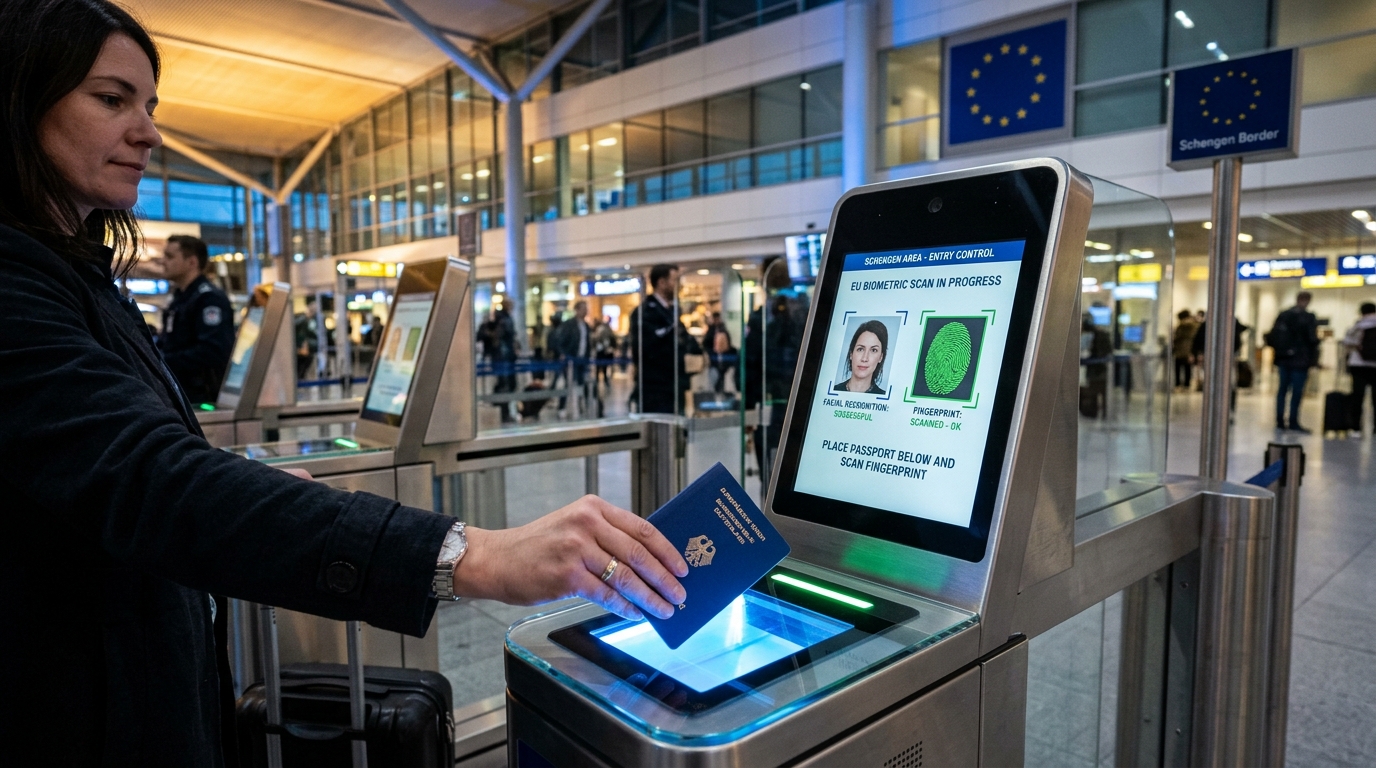
At Vienna International Airport (Flughafen Wien) and other Austrian border control posts, non-EU travelers undergo digital biometric scanning (facial image and 4 fingerprints). As a resident cardholder, your electronic data is registered seamlessly, bypassing manual passport ink stamps.
11. Verified European Career Guidance with EuroStaffs
Austria's elite economy provides unparalleled opportunities for Bangladeshi professionals seeking high incomes, safe family living, and European mobility. Navigating AMS points evaluations, employer sponsorship, certified translations, and consular protocols requires seasoned expertise.
EuroStaffs is committed to guiding candidates through every phase of the Austrian migration journey:
- Profile Points Audit: Detailed assessment of your age, academic degrees, and work history against the official Austrian AMS points criteria.
- Europass & Cover Letter Optimization: Crafting Austrian-standard CVs and motivation portfolios tailored to Austrian hiring conventions.
- Employer Verification & Documentation: Ensuring your employment contract, job description, and Kollektivvertrag compliance meet strict Austrian labor standards.
- Consular & Legalization Support: Step-by-step assistance with MOFA Dhaka attestations, certified translations, health insurance, and embassy submission.
Connect with EuroStaffs Official European Advisory
Corporate Office: EuroStaffs, House-422 (Ground Floor), Road No. 30, New DOHS, Mohakhali, Dhaka-1206, Bangladesh.
Official WhatsApp Consultation: +880 1775-712640
Official Email: [email protected] | Website: https://eurostaffs.org
Office Hours: Saturday – Thursday (10:00 AM – 6:30 PM BST). In-person consultation by advance appointment.



 Arabic
 Chinese
 French
 Russian
 Spanish