

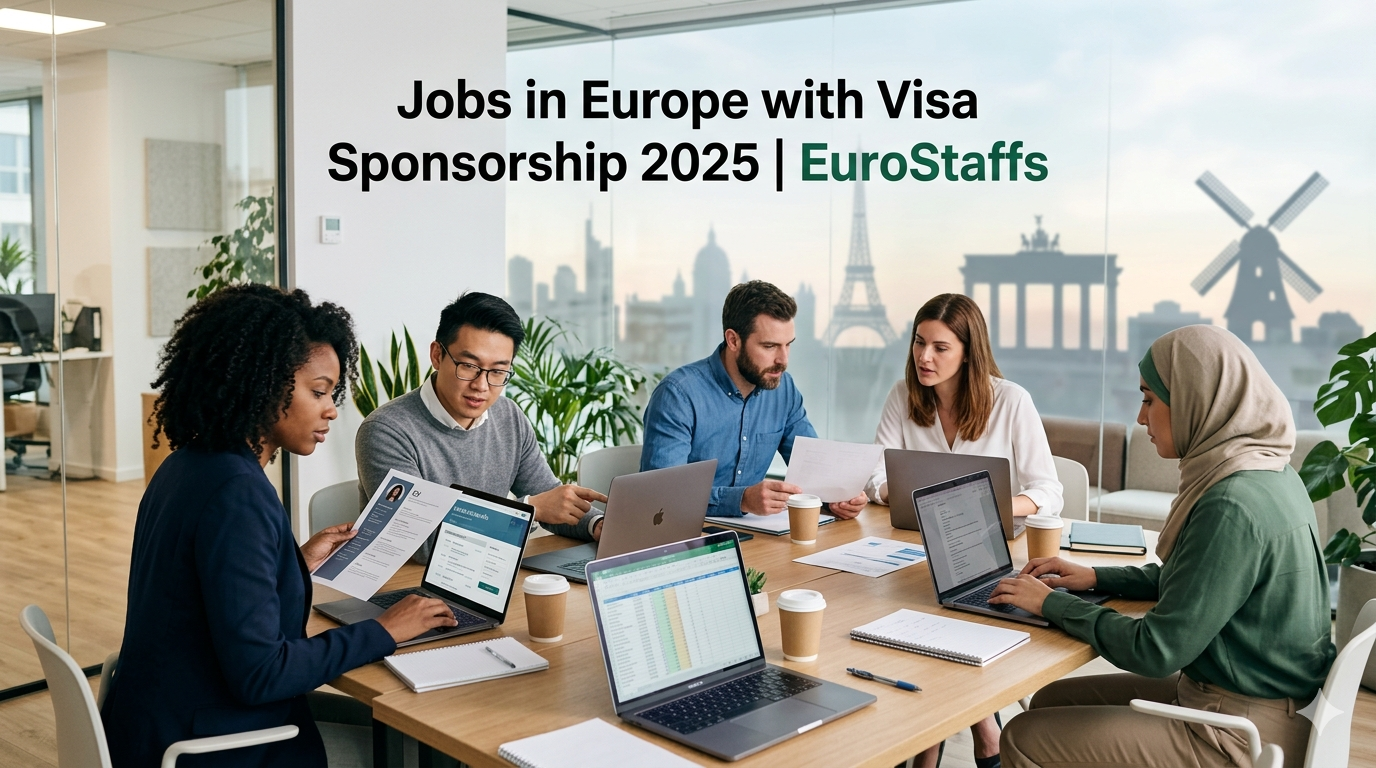
Finding jobs in Europe with visa sponsorship has never been more within reach for international job seekers. Europe is actively recruiting skilled and semi-skilled workers from across the globe to fill critical labour gaps in healthcare, construction, technology, hospitality, and agriculture. Whether you are from Bangladesh, India, the Philippines, Nigeria, or anywhere else in the world, European employers are ready to sponsor your work visa if you meet the right criteria. This guide walks you through everything you need to know, from understanding the Europe job application process to formatting your Europass CV, finding genuine visa sponsorship jobs, and meeting Europe job application requirements so you can start your career abroad with confidence.
Why Europe Is Actively Offering Visa Sponsorship in 2025
Europe is facing a demographic shift. Birth rates across Germany, the Netherlands, France, and Scandinavia have dropped significantly over the past two decades, creating a labour shortage that domestic workers alone cannot fill. According to European Commission projections, the EU needs millions of additional workers in sectors like nursing, engineering, hospitality, and skilled trades over the next five years.
This is good news for international job seekers. Governments have responded by expanding visa sponsorship programs, lowering language requirements for certain job categories, and fast-tracking permits for in-demand occupations. Countries like Germany have introduced the Skilled Immigration Act, the Netherlands expanded its highly skilled migrant program, and Poland continues to welcome workers from neighbouring regions and beyond.
If you have relevant qualifications, a valid job offer, and a properly formatted application, securing a sponsored job in Europe in 2025 is a realistic and achievable goal.
Top Countries Offering Visa Sponsorship Jobs in Europe
Not every European country has the same sponsorship opportunities. Below is a breakdown of the most active hiring nations:
Understanding the Europe Job Application Process Step by Step
Many applicants fail not because they lack qualifications but because they do not follow the correct Europe job application process. Here is a structured walkthrough:
Step 1: Research and Identify Target Jobs
Start by identifying which country and sector aligns with your skills and experience. Use EuroStaffs to browse verified visa sponsorship jobs across 19+ European countries. Filter by location, salary, and job type to find the best match.
Step 2: Prepare Your Europass CV
The Europass CV format is the standard professional resume format accepted across all European Union countries. Employers and immigration authorities often request it specifically. Your Europass CV should include a professional photo, personal details, work experience (reverse chronological), education, language skills with CEFR levels, and digital competencies. EuroStaffs offers a completely free CV builder at
EuroStaffs offers a completely free CV builder at eurostaffs.org/resume-builder where you can create a fully Europass-compliant CV in minutes, download it as a PDF, and send it directly to employers.
Step 3: Write a Targeted Cover Letter
European employers expect a concise, professional cover letter of no more than one page. Address the hiring manager by name when possible. Mention the specific role, why you are interested in that country, and two or three key achievements that match the job description. Avoid generic templates.
Step 4: Gather Your Supporting Documents
Before applying, prepare the following documents:
Certified copies of educational certificates and transcripts
Professional licences or trade qualifications (e.g., nursing licence, engineering degree)
Language test certificates (IELTS, TOEFL, Goethe-Institut, DELF, etc.)
Reference letters from previous employers
A valid passport with at least 18 months of remaining validity
Police clearance certificate from your home country
Medical certificate (required by some countries)
Step 5: Apply Directly or Through a Verified Platform
Apply directly through the employer's official website or through a verified platform like EuroStaffs Jobs. Avoid unverified agents or agencies that charge advance fees, as these are often scams. Legitimate employers and platforms never charge job seekers to apply for or secure a position.
Step 6: Attend the Interview
Most European employers conduct initial interviews via video call (Zoom, Teams, or Google Meet). Dress professionally, prepare answers using the STAR method (Situation, Task, Action, Result), and be ready to discuss salary expectations honestly. If you pass the interview, the employer will typically initiate the visa sponsorship process on your behalf.
Step 7: Visa and Work Permit Application
Once you receive a formal job offer, your employer will submit a sponsorship request to the relevant immigration authority. After approval, you apply for the work visa at the European embassy or consulate in your home country. Processing times vary from two weeks to three months depending on the country and visa type.
Europass CV Format: What You Need to Know
The Europass CV format is standardised across the EU and recognised by thousands of employers in all 27 member states plus EEA countries. Here are the key formatting rules:
Use A4 page size (210 x 297 mm)
Font should be clean and readable, such as Arial or Calibri, size 10-12pt
Work experience listed in reverse chronological order
Include exact employment dates (Month/Year to Month/Year)
Language skills listed with CEFR level (A1 to C2)
Digital competencies section using the DigComp framework
Professional photo in the top-right corner (not required in all countries but recommended)
Maximum two pages for most applications; three pages only for senior roles
Rather than downloading a static template and filling it in manually, use the EuroStaffs free CV builder to generate a fully formatted, ATS-compatible Europass CV in minutes. It is completely free and does not require registration to get started.
Europe Job Application Requirements by Country
Each European country has its own set of requirements for foreign workers. Below is a summary of core requirements across the most popular destinations:
How to Spot Visa Sponsorship Job Scams
As demand for overseas jobs grows, so does the number of fraudulent offers targeting vulnerable job seekers. Protect yourself by watching for these red flags:
Any job that requires you to pay a fee upfront to secure employment
Job offers sent via WhatsApp or Telegram from unofficial accounts
Salaries that seem unrealistically high for the role described
Employers who ask for your passport or financial details before you have signed a contract
Agencies with no verifiable address, registration number, or company website
Always use verified platforms like EuroStaffs that vet employers before listing their vacancies. Every job listing on EuroStaffs is reviewed to ensure it comes from a legitimate, registered employer operating in Europe.
Frequently Asked Questions
Q1: Can I get a job in Europe without speaking the local language?
Yes, in many cases. Countries like the Netherlands, Sweden, Ireland, and Denmark have a large number of employers who operate in English, particularly in the technology, finance, and logistics sectors. However, learning even basic phrases in the local language significantly improves your chances and is highly recommended.
Q2: How long does it take to get a visa sponsorship job in Europe?
The full process, from job application to visa approval, typically takes between two and six months. Germany and the Netherlands tend to process work visas faster, while some other countries may take longer depending on administrative backlogs.
Q3: Do I need a job offer before applying for a European work visa?
In most European countries, yes. The standard route requires a confirmed job offer from a registered employer before you can apply for a work visa. Some countries, like Portugal and Germany, do offer job seeker visas that allow you to enter and look for work, but you will still need a job offer to convert to a work permit.
Q4: Is the Europass CV format mandatory?
It is not legally mandatory, but it is very strongly recommended. Many European employers and immigration portals specifically request the Europass format because it makes it easy to assess qualifications across different educational systems. Using it gives you an advantage over applicants who submit non-standard CVs.
Q5: Are there visa sponsorship jobs in Europe for unskilled workers?
Yes. Countries like Poland, Germany, the Czech Republic, and Romania actively recruit for unskilled and semi-skilled roles in agriculture, food processing, cleaning, warehouse operations, and construction. These roles often come with work permits and basic accommodation included.
Start Your European Job Search on EuroStaffs Today
EuroStaffs is your trusted partner for finding genuine visa sponsorship jobs in Europe. We operate across 19+ countries, work with verified employers, and provide free tools to help you every step of the way, including our free CV builder, detailed career blogs, and guidance on student visas and university admissions in Europe.
Do not wait. Browse thousands of verified Europe jobs with visa sponsorship right now, build your Europass CV in minutes, and take the first step toward the career and life you deserve in Europe.




 Arabic
 Chinese
 French
 Russian
 Spanish