

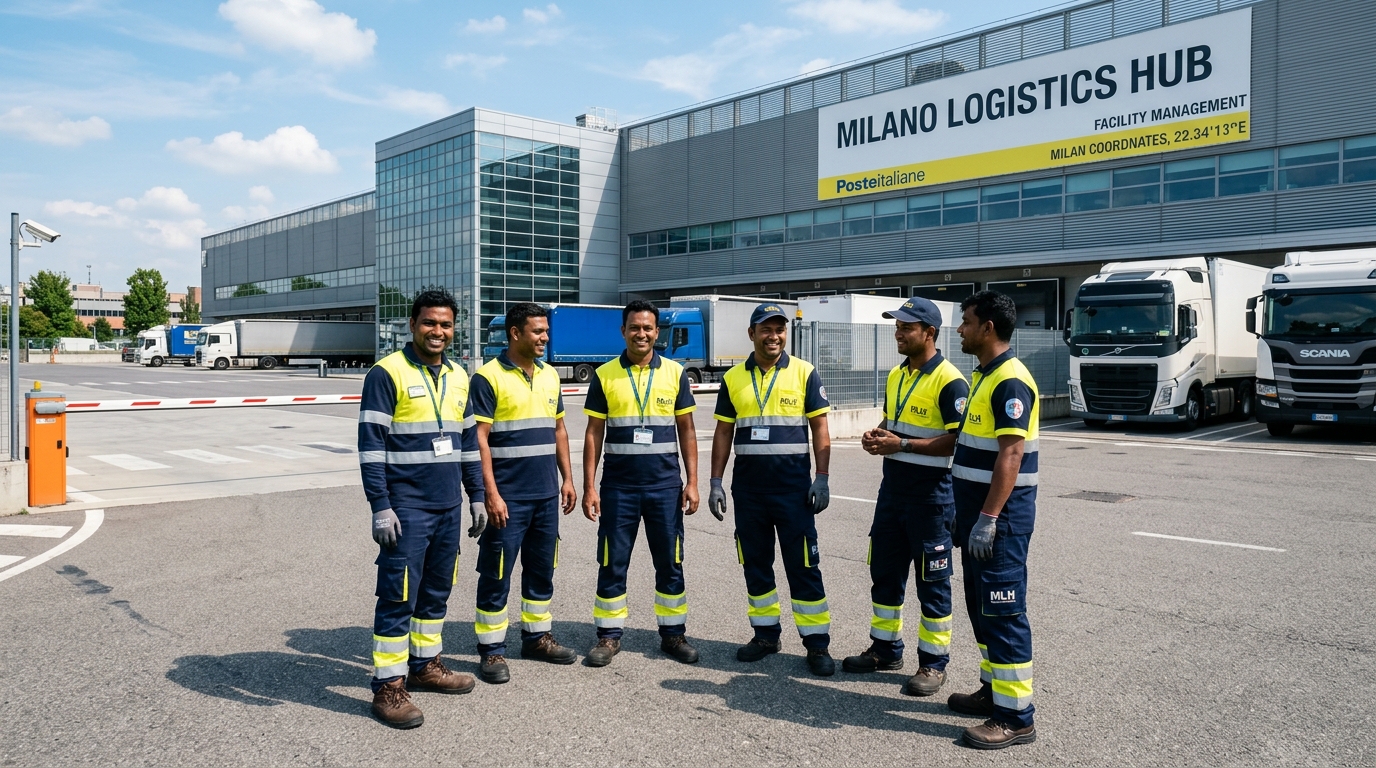
Every year, thousands of job seekers from Dhaka, Sylhet, Noakhali, and Brahmanbaria dream of landing a legal job in Italy. Yet, confusion surrounding the Italian government employment quota makes candidates vulnerable to unscrupulous brokers who charge astronomical sums for forged papers. Securing an Italy work visa for Bangladeshi workers in 2026 requires understanding the actual legal framework: the annual foreign labor quota known as Decreto Flussi, the official work authorization called Nulla Osta, and the consular steps at the Embassy of Italy in Dhaka.
Italy continues to experience severe labor shortages in agriculture, logistics, construction, road transport, and seasonal tourism. Because Italian businesses cannot fill these posts locally, the government approves official quotas every year for non-EU citizens. The system operates on strict legal rules. You cannot walk into an embassy in Dhaka and ask for a work permit on your own. The initial legal steps happen entirely in Italy, initiated by a genuine Italian employer.
Here is the reality: fake Nulla Osta documents circulate widely across Bangladeshi recruitment agencies. Unofficial middlemen print fabricated clearance letters and ask for millions of Taka before an application is even registered in Rome. Understanding how Italian immigration authorities handle work authorization protects you from losing your hard-earned family savings.
What Is Decreto Flussi and How Does It Work in 2026?
The term Decreto Flussi translates literally to "Flow Decree." It is the official Italian decree signed by the Prime Minister and published in the Official Gazette (Gazzetta Ufficiale) setting the exact ceiling for how many foreign non-EU workers can legally enter Italy for employment each calendar year.
Under the multi-year planning framework, Italy divided its entry allocations into three specific categories:
- Subordinate Non-Seasonal Employment (Lavoro Subordinato Non Stagionale): Full-time, long-term employment contracts in sectors like freight transport, heavy construction, industrial manufacturing, and elderly care.
- Seasonal Employment (Lavoro Stagionale): Fixed-term employment contracts lasting between 20 days and 9 months, primarily concentrated in agricultural harvesting (fruit, tomato, and olive picking) and the hotel/hospitality industry.
- Autonomous & Self-Employment (Lavoro Autonomo): Highly specialized professionals, corporate directors, and entrepreneurs with substantial capital.
For Bangladeshi candidates, agricultural seasonal contracts and warehouse/transport logistics represent the highest volume of approvals. Bangladesh regularly features on the list of bilateral cooperation countries, which grants its citizens dedicated allocations under seasonal farming and industrial tracks.
"The biggest misconception in Bangladesh is that anyone can file for a work permit directly from home. Every legitimate work permit starts when an Italian business owner logs into the Ministry of Interior portal using their SPID digital identity and proves to the local labor office that no domestic worker is available."
— Marco Ferri, Labor Law Attorney and Immigration Specialist, Bologna
Types of Italian Work Permits for Bangladeshi Citizens
Italian employment permits differ substantially in duration, renewal rights, and conversion potential:
| Permit Track | Target Job Categories | Contract Length | Permit Extension / Conversion |
|---|---|---|---|
| Seasonal Work (Stagionale) | Agriculture, fruit picking, summer tourism, hotel support | 3 to 9 Months | Convertible to non-seasonal after completing season with same employer |
| Standard Subordinate (Non Stagionale) | Logistics, road transport (drivers), mechanical assembly, construction | 1 to 2 Years | Renewable; leads to 5-year Long-Term EU Residence (Permesso di Soggiorno UE) |
| Specialized & Technical (Fuori Quota) | Engineers, specialized technicians, senior nursing professionals | Multi-Year Contract | Independent of annual quota caps; immediate family reunification rights |
If you enter on a seasonal permit, Italian immigration law permits your employer to apply for conversion into a standard non-seasonal residence permit (Permesso per Lavoro Subordinato) once you finish your seasonal period, provided the company agrees to offer you a permanent labor agreement.
Step-by-Step Application Process for Italy Work Visa
To successfully obtain your visa, your application must pass through four distinct milestones:
Step 1: Labor Market Clearance and Employer Filing (Italy)
Before submitting any paperwork to immigration, your hiring employer in Italy must file a notification with the local employment agency (Centro per l'Impiego) verifying that no Italian citizen or registered EU resident applied for the job. Once cleared, the employer submits the formal hiring request online through the Ministry of Interior's dedicated portal during the official "Click Days."
Step 2: Issuance of the Nulla Osta (Sportello Unico)
The Immigration Single Desk (Sportello Unico per l'Immigrazione - SUI) at the local Prefettura reviews the company's financial balance sheets, tax returns, and worker housing arrangements. If approved, the Prefettura issues the electronic Nulla Osta (No Impediment Certificate) and sends a digital copy directly to the Italian Embassy in Dhaka.
Step 3: Document Legalization and Visa Filing in Dhaka
Once you receive the digital copy of the Nulla Osta from your employer, you must prepare your documentation for the Embassy of Italy in Dhaka. This includes:
- Original valid Bangladeshi passport (minimum 15 months remaining validity).
- Official Nulla Osta barcode verification page.
- Employment contract signed by your Italian sponsor.
- Police Clearance Certificate attested by the Ministry of Foreign Affairs (MOFA) in Dhaka.
- Health fitness certificates and medical clearance.
You then book your biometric appointment at the authorized visa application center in Dhaka or Chattogram to submit your fingerprints and original passport for the Long-Stay Employment Visa (Type D / Lavoro Subordinato).
Step 4: Arrival in Italy and Residence Card (Permesso di Soggiorno)
After your Type D visa is stamped, you travel to Italy. Within 8 working days of landing, you must visit the local Sportello Unico with your employer to sign the Residence Contract (Contratto di Soggiorno) and submit your postal application kit for the official biometric residence card (Permesso di Soggiorno) at the local Questura (Police Headquarters).
"Never accept a scanned copy of a Nulla Osta without checking the telematics verification number. Genuine clearances are recorded on the Italian Ministry of Interior system, and embassy officers in Dhaka confirm the server entry before affixing any visa sticker."
— Tariqul Alam, Senior European Mobility Analyst, Dhaka
Official Minimum Wages and Worker Rights in Italy
Unlike countries with a single statutory national minimum wage, Italy relies on National Collective Bargaining Agreements (Contratti Collettivi Nazionali di Lavoro - CCNL) negotiated between trade unions and employer federations. These agreements set legally binding minimum salary floors for every industry.
- Agriculture and Farming: Standard gross pay ranges from €1,150 to €1,400 per month based on the provincial agrarian agreement, with overtime pay mandated for harvesting spikes.
- Logistics and Warehousing: Starting base pay under the CCNL Logistica e Trasporti ranges from €1,450 to €1,750 gross per month, alongside mandatory 13th and 14th month holiday bonuses (Tredicesima e Quattordicesima).
- Construction and Renovation: Typical wages under the CCNL Edilizia range from €1,500 to €1,850 gross per month, backed by mandatory health coverage through the Cassa Edile.
All legal foreign workers in Italy are entitled to national public health care (Iscrizione SSN), emergency medical treatment, and state retirement pension contributions paid to INPS (Istituto Nazionale della Previdenza Sociale).
How to Spot Fake Nulla Osta Scams in Bangladesh
Fraud is the single greatest risk facing Bangladeshi job seekers. Keep these three verification rules in mind:
- Check the Electronic Protocol Code: Real Nulla Osta certificates carry an official protocol registration number issued by the Ministry of Interior. Any document lacking a verifiable protocol number is counterfeit.
- Employers Bear Filing Costs: The Italian government filing fee for an employer submitting a work permit application is minimal (€16 revenue stamp plus administrative fees). If an agency asks you for 10 to 15 Lakh Taka upfront for "government processing," it is fraudulent.
- Embassy Cross-Checking: The Italian Embassy in Dhaka does not process visa stickers based on paper printouts brought by applicants unless the identical digital file is already present on the embassy's secure internal database from Rome.
Building a Compliant European Profile with EuroStaffs
EuroStaffs connects qualified Bangladeshi talent with genuine, verified European employers across 19 countries. If you plan to work in Italy or other Schengen nations, standardizing your resume into the official European Europass format is the essential first step.
Use the EuroStaffs Europass Resume Builder to generate a professional CV that European hiring managers and immigration departments recognize, or browse verified live vacancies directly on the EuroStaffs European Jobs Portal.



 Arabic
 Chinese
 French
 Russian
 Spanish