

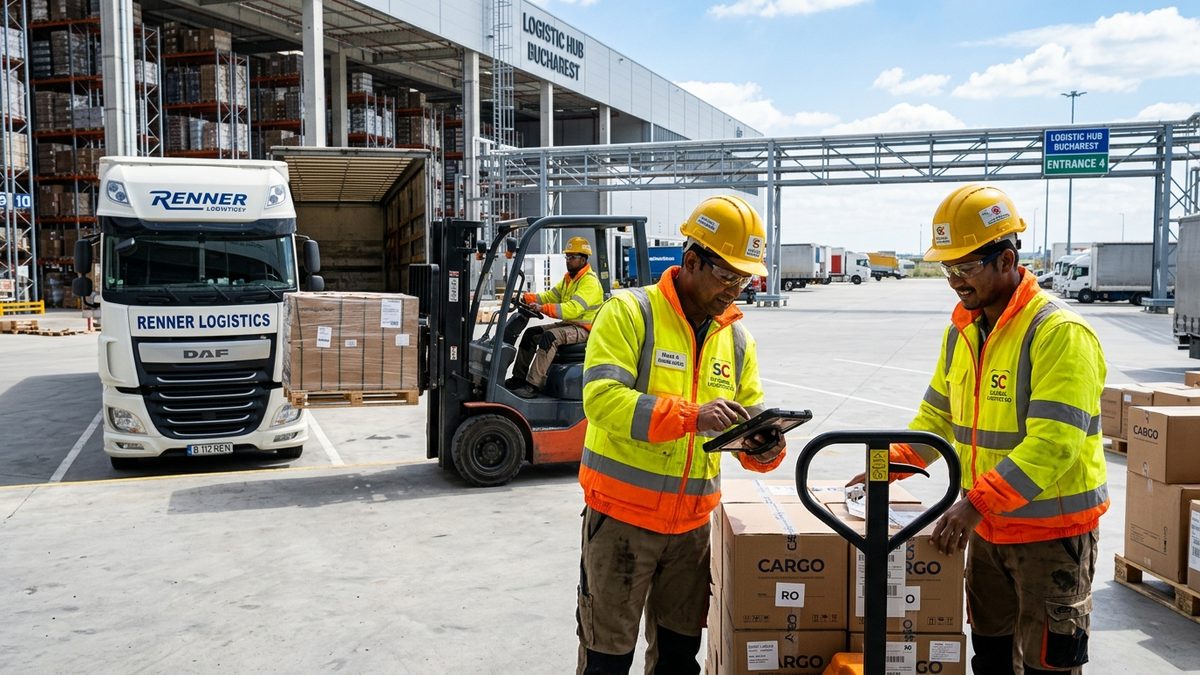
Getting a legal job in Europe without paying millions of Taka to unlicensed brokers sounds almost unreal to most job seekers in Bangladesh. Yet, for tens of thousands of factory workers, construction hands, logistics pickers, and kitchen staff, a Romania work permit for Bangladeshi workers has become the most accessible and legitimate doorway into the European workforce.
Romania faces massive labour shortages across its commercial and manufacturing sectors. Because local workers continue moving westward to Germany, France, and Italy, Romanian employers rely heavily on skilled and semi-skilled international workers to keep assembly lines rolling, warehouses shipping, and construction projects on schedule. For 2026, the Romanian government established an annual contingent quota of 100,000 newly admitted non-EU workers under its official employment framework.
The problem is rarely the lack of vacancies. The real problem is misinformation. Unregistered agencies across Dhaka, Sylhet, and Chattogram spread wild rumours about fake appointment dates, promise instant European residency, and demand astronomical sums for standard government paperwork that Romanian employers are legally required to fund themselves. This clear handbook details how the legal employment path operates in 2026: who applies, what documents you need, actual salary expectations, embassy steps, and how to verify legitimate job offers.
Understanding the Romanian Work Permit (Aviz de Angajare)
One critical misconception trips up first-time applicants: you cannot apply for a Romanian work permit by yourself from Bangladesh. The work permit—officially called Aviz de Angajare (Employment Authorization)—must be applied for and secured inside Romania by your licensed Romanian employer through the General Inspectorate for Immigration (Inspectoratul General pentru Imigrări – IGI).
Under Romanian Law (Government Ordinance no. 25/2014 on foreign employment), an employer can only obtain an Aviz de Angajare on your behalf if they prove four mandatory conditions:
- No Romanian or EU worker is available: The employer must first advertise the vacancy through the National Agency for Employment (ANOFM). If no local citizen fills the role, ANOFM issues a clearance certificate (Adeverință).
- Clean tax and compliance records: The hiring company must have settled all state taxes, hold no history of labour infractions, and operate an active physical facility.
- Relevant qualifications: The foreign candidate must demonstrate basic educational background, certified work experience, or vocational diplomas matching the job description.
- Sufficient quota allocation: The application must fall within the annual foreign worker ceiling set by the government (100,000 work permits approved for 2026).
"The biggest trap for Bangladeshi applicants is paying money before an employer even submits the Aviz application. A genuine Romanian employer covers the IGI processing fee and legal submissions because they need manpower. If an agent asks you for cash before showing an official registration receipt from IGI, step back immediately."
— Mihai Stan, Senior Immigration & Workforce Consultant, Bucharest
Types of Work Permits Available for Non-EU Citizens
The Romanian immigration department categorizes foreign work authorization into specific tracks. Depending on your job category, your employer will file for one of the following permits:
| Permit Type | Target Workers | Key Requirements | Initial Validity |
|---|---|---|---|
| Permanent Worker (Lucrător Permanent) | Factory staff, warehouse operators, construction workers, drivers, hospitality staff | Full-time labour contract (Contract Individual de Muncă), minimum statutory wage | 1 Year (Renewable) |
| Highly Skilled Worker (Lucrător Înalt Calificat) | Software engineers, industrial architects, project managers, medical personnel | Recognized university degree (3+ years), salary at least twice the national gross average | 2 Years (EU Blue Card path) |
| Seasonal Worker (Lucrător Sezonier) | Agricultural harvesting, fruit picking, summer tourism staff | Short-term contracts, employer-provided verified lodging | Up to 6 Months per 12-month period |
| Cross-Border / ICT Worker | Intra-company transferees from multinational corporations | Proof of at least 6 months prior employment with the parent group | Up to 3 Years |
For roughly 85% of candidates arriving from Bangladesh, the Permanent Worker (Lucrător Permanent) category is the standard route. It enables you to work legally for 40 hours per week, receive mandatory national health insurance, and renew your single residence permit (Permis de Ședere) annually.
Realistic Salary & Earning Potential in Romania (2026)
Let's speak frankly about money. Romania is not Switzerland or Norway. It does not pay €4,000 a month to entry-level warehouse packers. Anyone telling you that you will earn 4 to 5 Lakh Taka every month doing basic physical labour in Romania is scamming you.
Romania operates under strict statutory wage regulations. As of 2026, the national minimum gross wage (Salariul de Bază Minim Brut pe Țară Garantat în Plată) stands at 3,700 RON per month (~€745). For employees working in the construction sector, minimum wage legislation guarantees an even higher base rate of 4,582 RON gross per month.
Here is what standard take-home earnings actually look like after taxes, health deductions, and common overtime:
- Factory & Logistics Workers: Net monthly take-home between 2,400 RON to 3,200 RON (€480 – €645). Most employers provide free hostel-style accommodation and meal tickets (Tichete de Masă) worth approximately 30 to 40 RON per workday.
- Construction Specialists (Masons, Welders, Carpenters): Net take-home between 3,500 RON to 5,000 RON (€700 – €1,000), depending on technical skill, site bonuses, and overtime shifts.
- Long-Haul & Delivery Drivers (Category C/CE): Net earnings starting from 4,500 RON to 7,500 RON (€900 – €1,500), particularly for international logistics routes across Eastern and Central Europe.
- IT, Software & Engineering Professionals: Net monthly compensation ranging from 8,000 RON to 18,000+ RON (€1,600 – €3,600+).
When accommodation and daily lunches are covered by your employer—which is standard contract practice for foreign blue-collar workers in Romania—a Bangladeshi employee can comfortably remit between 45,000 to 75,000 BDT back home each month during their first year, with room to increase as language skills and technical proficiency improve.
Document Checklist: What Bangladeshi Workers Must Prepare
While your employer handles bureaucratic filings with IGI in Bucharest or Cluj-Napoca, your responsibility in Bangladesh is preparing spotless personal documentation. Any discrepancy in names, birthdates, or police reports will cause immediate rejection during embassy scrutiny.
Required Documents from the Candidate:
- Original Passport: Machine-readable or e-Passport with at least 18 months of remaining validity and at least 3 blank pages.
- Police Clearance Certificate: Issued by the Bangladesh Police, attested by the Ministry of Foreign Affairs (MOFA) in Dhaka, and translated into English. The certificate must be less than 6 months old.
- Educational & Experience Certificates: SSC/HSC diplomas, technical training certificates (BMET/TTC/BTEB), or employer testimonial letters proving practical competency in the nominated trade.
- Medical Fitness Certificate: Issued by an authorized clinical laboratory confirming negative screenings for infectious diseases (HIV, Hepatitis B/C, Tuberculosis via chest X-ray).
- Biometric Passport Photographs: 4 standard European visa photographs (35mm x 45mm, white background, no eyeglasses).
- Professional Europass CV: Formatted precisely to European Union standards. You can generate a validated copy instantly through the EuroStaffs Free Europass CV Builder.
Documents Received from the Romanian Employer:
- Original Aviz de Angajare stamped and signed by the Inspectoratul General pentru Imigrări (IGI).
- Signed Individual Employment Contract (Contract Individual de Muncă) detailing salary, job duties, daily working hours, and accommodation arrangements.
- Company registration extract (Certificat Constatator) from the Romanian Trade Registry (ONRC).
- Proof of compliant accommodation for the foreign worker.
Step-by-Step Application Process (From Dhaka to Bucharest)
Navigating the legal pathway involves five distinct phases. Knowing what comes next saves you from unnecessary panic while waiting for diplomatic clearances.
Phase 1: Securing a Verified Job Offer
You cannot move forward without an employer who is willing to sponsor your immigration. Beware of unregistered social media middlemen claiming they have "thousands of ready work permits in stock." Legitimate vacancies are filed per individual candidate. Explore verified European employer vacancies directly on the EuroStaffs Job Portal or apply directly to verified Romanian industrial contractors.
Phase 2: Employer Applies for Aviz de Angajare at IGI
Once you sign your preliminary offer letter, your employer submits the complete file to the local IGI immigration branch in Romania. The official statutory processing window for an Aviz de Angajare is 30 to 45 business days. In high-demand counties like Bucharest, Ilfov, or Timiș, backlogs can stretch this stage to 60–90 days.
Phase 3: Submitting the D/AM Long-Stay Visa Application
Once the original Aviz de Angajare is issued, your employer couriers the document to you in Bangladesh. You must then register your visa file online through the official Romanian Ministry of Foreign Affairs electronic portal at eviza.mae.ro.
You will apply for the Long-Stay Visa for Employment (symbol D/AM). After initial electronic validation by the consular department, you will receive an official appointment for physical document submission, interview, and biometric scanning.
"Always verify that your online eVisa file matches your Aviz de Angajare character by character. If your job code on the work permit says 'Warehouse Packer (COR 933302)' but your visa application mentions 'General Labourer', the consular officer will return your passport without a visa."
— Rafiqul Hasan, Case Documentation Officer, EuroStaffs
Phase 4: Embassy Interview & Visa Stamping
Depending on diplomatic allocations, Bangladeshi applicants complete their biometric verification through designated consular channels or the Embassy of Romania accredited for Bangladesh. The consular visa fee for a D/AM long-stay visa is €120 (payable in local currency according to consular bank instructions). Visa evaluation typically takes between 15 to 30 days after in-person biometric enrollment.
Phase 5: Arrival in Romania & Residence Permit (Permis de Ședere)
Upon receiving your stamped D/AM visa, you can book your air ticket to Romania. The entry visa is valid for 90 days. Within 30 days of touchdown at Bucharest Henri Coandă Airport (OTP), your employer will schedule your appointment at the local IGI office to register your biometric fingerprinting and receive your plastic Permis de Ședere (Single Work and Residence Permit card).
How to Identify and Avoid Romanian Visa Scams
The sudden surge in interest in Eastern Europe has created a boom in fraudulent visa schemes targeting rural families in Bangladesh. Keep these warning signs pinned in your mind:
- The "Express 15-Day Work Permit": No Romanian authority issues an Aviz de Angajare in 15 days. Anyone promising a permit within two weeks is selling a falsified Photoshop printout.
- Direct Payment into Personal bKash or Nagad Accounts: Legitimate recruitment partners utilize formal corporate bank accounts, contractual agreements, and government-regulated service vouchers.
- Unverifiable IGI Document Numbers: Every Aviz de Angajare contains a unique registration barcode, county code, and filing registry number that can be validated directly through the IGI electronic database.
- Claims of "Schengen Visa Free Roaming": While Romania officially joined the Schengen Area for air and sea borders in March 2024, a national employment visa (Type D) is tied strictly to legal work within Romania. Leaving your Romanian employer to work illegally in France or Germany violates EU laws and leads to immediate deportation and a 5-year SIS entry ban across Europe.
Frequently Asked Questions (FAQ)
1. How long does the entire Romania work permit process take from Bangladesh?
Under normal conditions in 2026, the entire process takes between 4 to 6 months. This timeline includes obtaining the ANOFM clearance (2-3 weeks), IGI Aviz de Angajare issuance (6-10 weeks), eVisa pre-validation (3-4 weeks), and consular biometric interview and visa stamping (3-4 weeks).
2. Can I change my employer after arriving in Romania?
Yes, but with legal restrictions. Romanian law allows foreign employees to change employers after completing 12 months with their initial sponsor. If you wish to switch jobs earlier, your current employer must provide a formal release letter (Acord de Încetare), and your new company must apply for a brand new Aviz de Angajare at IGI.
3. Do I need to speak Romanian or English to get the visa?
For industrial, construction, and agricultural jobs, fluent Romanian is not mandatory. Basic conversational English or the ability to understand simple work instructions is sufficient. For skilled customer service, IT, and administrative roles, professional English proficiency is required.
4. Can I bring my family or spouse to Romania on a work permit?
Foreign workers on a standard permanent worker permit can apply for family reunification (Reîntregirea Familiei) after holding their residence permit for at least one year, provided they have adequate housing and stable income meeting Romanian legal standards.
5. How does EuroStaffs support Bangladeshi job seekers applying for Romania?
EuroStaffs connects verified European employers with skilled candidates across Bangladesh. From building professional European-standard Europass CVs to vetting job orders and verifying IGI permit authenticity, EuroStaffs eliminates fraudulent middleman markups. Browse active opportunities on our Europe Job Portal to take your first legal step.



 Arabic
 Chinese
 French
 Russian
 Spanish