


Jobs in Europe with Visa Sponsorship: 2026 Guide
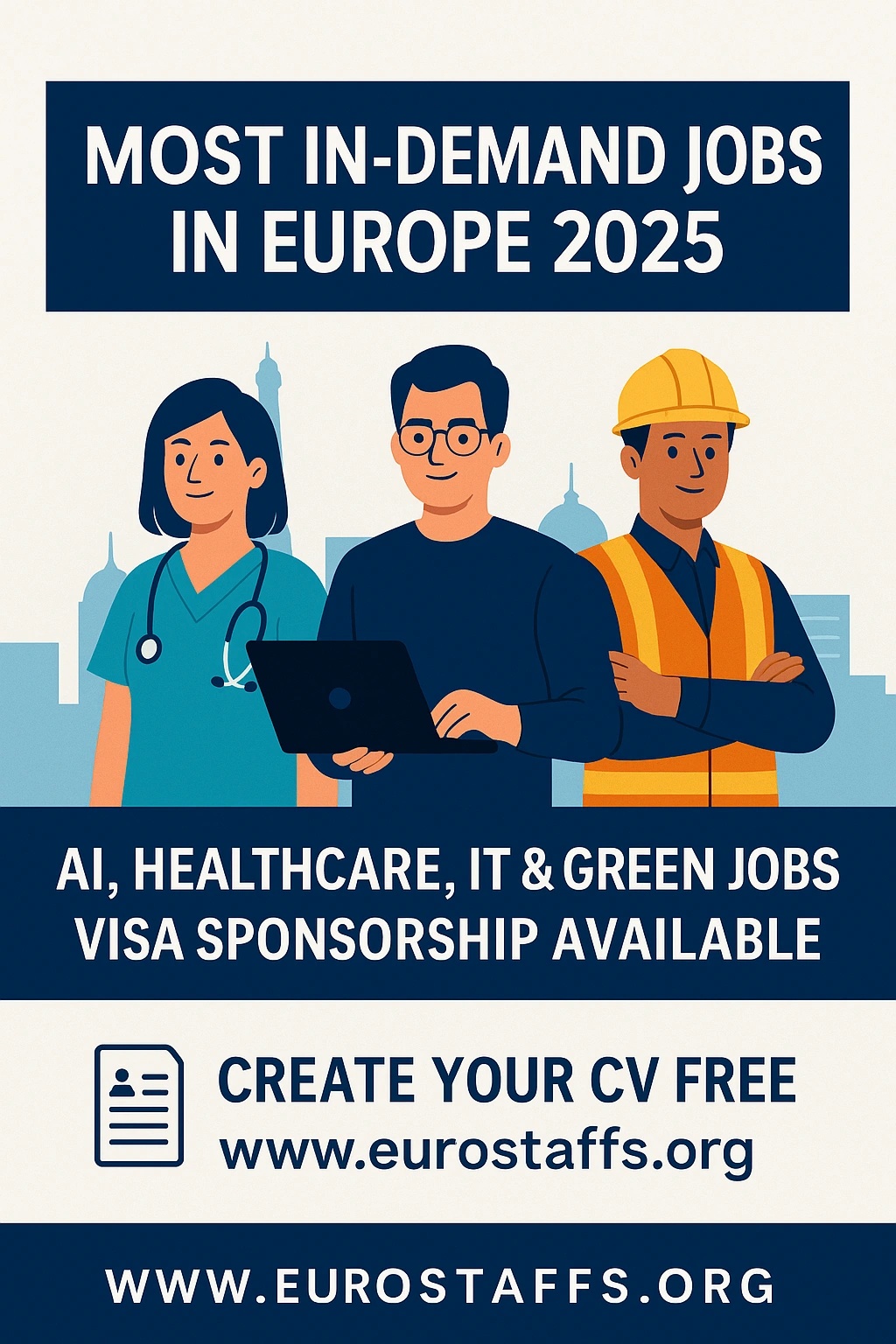
Ask any Bangladeshi jobseeker what stops them from applying to a European employer, and the answer is rarely a lack of skill. It's the visa. Most people assume sponsorship is reserved for a handful of tech companies in Berlin or Amsterdam, and everyone else is left scrolling job boards that quietly ignore applicants who need a work permit. That assumption is outdated. Europe's labour shortage has become structural rather than seasonal, and employers across construction, healthcare, hospitality, logistics, and IT are actively sponsoring foreign workers because there simply aren't enough local candidates to fill the roles.
This guide breaks down where the real sponsored opportunities are, which sectors are hiring in 2026, and how to build an application that survives the first filter — the one where most candidates get rejected before a human even reads their CV. Whether you're a nurse in Dhaka or a welder in Chattogram, the path exists. It just isn't advertised the way most people expect.
Why Bangladeshi Professionals Are Looking at Europe in 2026
The pull toward Europe isn't new, but the shape of it has changed. A decade ago, most outbound migration from Bangladesh went toward the Gulf states on short-term labour contracts. Today, more candidates are asking about long-term European placements — ones that come with residency pathways, family reunification options, and wages that aren't tied to a single employer's discretion.
Part of this shift is demand-driven. According to the European Labour Authority's most recent EURES shortage report, structural shortages now persist in 42 of the 50 occupations EURES tracks across the EU, and researchers describe the gap as structural rather than cyclical. That is not a temporary post-pandemic blip. It spans digital roles, green-energy trades, healthcare, hospitality, and advanced manufacturing — sectors where Bangladeshi workers already have transferable experience.
"Employers used to sponsor visas as a last resort. Now it's often the first line in the hiring plan, because the local pipeline simply isn't there," says a European recruitment consultant EuroStaffs has worked with on employer partnerships.
This isn't about desperation on either side. It's about matching a real shortage with real, qualified people — and Bangladesh has both the workforce and, increasingly, the English-language and technical training to compete.
What "Visa Sponsorship" Actually Means for Job Seekers
The phrase gets thrown around loosely, so it's worth being precise. Visa sponsorship means an employer formally commits to hiring you before your work visa is issued — often by providing a signed job offer, a labour market test result (where required), or direct sponsorship documentation that your embassy or consulate needs to process the application.
This is not about a company promising to "help" with paperwork after you arrive. That distinction matters more than most people realise, because plenty of job posts use "visa support" language loosely, without any real commitment behind it. Genuine sponsorship means:
- A written, signed job offer tied to a specific role and salary
- Employer-side documentation submitted directly to immigration authorities
- In several countries, proof that the role meets a minimum salary threshold (used to fast-track applications like Germany's EU Blue Card)
Anyone offering a "guaranteed visa" without an actual job offer attached is not offering sponsorship — that's a red flag worth remembering before we get to the scams section further down.
Which European Countries Are Sponsoring the Most Workers Right Now
Not every EU country hires at the same pace, and the destinations worth prioritising in 2026 are the ones with both labour shortages and accessible sponsorship routes.
Germany
Germany remains the single largest sponsor of foreign labour in the EU. Industry analysis puts the country at more than 163 officially classified shortage or bottleneck occupations as of 2025–2026, concentrated in healthcare, IT, engineering, construction, skilled trades, education, and logistics. The EU Blue Card remains the fastest route for skilled applicants, with a reduced salary threshold for shortage occupations specifically.
Netherlands
The Dutch highly skilled migrant scheme continues to be one of the more employer-friendly sponsorship routes in Europe, particularly for IT, engineering, and finance roles based in Amsterdam, Rotterdam, and Eindhoven.
Poland
Poland has quietly become one of the most active sponsors of manual and semi-skilled labour from South Asia, particularly in construction, manufacturing, and warehousing, where local labour supply has not kept pace with EU-funded infrastructure growth.
Malta and the Baltic States
Smaller but consistently understaffed, these markets sponsor heavily in hospitality, customer service, and logistics — often with faster processing times than the larger economies.
Industries Actively Hiring Foreign Workers With Sponsorship
Construction and Skilled Trades
Construction is arguably the most urgent case. The European Construction Industry Federation estimates a deficit of roughly 2.1 million construction workers across EU member states in 2026, a shortfall that has widened every year since 2020. Electricians, scaffolders, formwork carpenters, and HVAC technicians are named among the hardest roles to fill. For Bangladeshi tradespeople with verifiable experience, this sector currently offers some of the most realistic sponsorship odds in Europe.
Healthcare and Nursing
Generalist doctors, nursing professionals, and care workers appear on shortage lists in nearly every EU country. Language certification (usually B1 or B2 in the host country's language) is typically required before or shortly after arrival, but sponsorship pathways are well established, especially in Germany and the Netherlands.
IT and Technology
Software developers, cybersecurity specialists, and data professionals remain in demand, though competition here is more global. A strong portfolio and demonstrable project experience matter more than in most other sectors.
Hospitality and Logistics
Hotels, warehouses, and food-service operators across Western and Southern Europe sponsor seasonal and permanent staff, particularly in regions with strong tourism cycles or e-commerce fulfilment hubs.
"The candidates who get sponsored fastest aren't always the most qualified on paper — they're the ones whose CV answers the employer's actual staffing problem in the first ten seconds," notes a hiring manager who reviews applications for a mid-sized German logistics firm.
How to Find Legitimate Jobs in Europe with Visa Sponsorship
Generic job boards are a poor starting point, because most don't let you filter for sponsorship at all. A more effective approach:
- Search sector-specific portals that aggregate verified sponsored listings rather than scraping generic postings.
- Go directly to employer career pages in shortage sectors — many large German and Dutch employers list sponsorship eligibility explicitly.
- Use a platform built for cross-border applicants, where listings are already filtered by visa eligibility instead of making you guess. EuroStaffs aggregates verified visa-sponsored roles across 19+ European countries specifically for this reason, so candidates aren't wasting applications on employers who won't sponsor.
- Cross-check company registration before submitting personal documents — a legitimate sponsor will have a verifiable business registration and an HR contact, not just a messaging app number.
Building an Application That Gets Noticed
A European employer sponsoring a work visa is taking on extra cost and paperwork, so your application has to make the decision easy for them. Three things consistently separate sponsored candidates from rejected ones:
A CV formatted for European hiring standards. Bangladeshi CV conventions (photo, personal details, lengthy objective statements) often clash with what German or Dutch recruiters expect. A free tool like the EuroStaffs CV Builder formats applications to match European norms automatically, which removes one of the most common, avoidable rejection reasons.
Evidence, not adjectives. "Hardworking" and "dedicated" mean nothing to a recruiter scanning fifty applications. Specific numbers — projects completed, certifications held, years on a specific machine or system — do the convincing.
A cover note that names the shortage. Referencing the specific labour gap you're filling (for example, citing Germany's bottleneck-profession list for your trade) signals that you understand the market, not just that you want to leave Bangladesh.
One EuroStaffs user, a mechanical technician from Narayanganj, had applied to more than thirty roles over eight months with no response. After rebuilding his CV using European formatting and applying only to pre-filtered sponsored postings in Poland's manufacturing sector, he received two interview requests within three weeks and accepted an offer the following month. The technical skills hadn't changed — the presentation and targeting had.
Common Mistakes That Cost Candidates the Visa
- Applying to "visa support" listings without a real job offer attached. This wastes months chasing nothing.
- Paying upfront fees to "recruitment agents" who guarantee placement. Legitimate sponsorship never requires the candidate to pay the employer or a recruiter for the job itself.
- Submitting a Bangladesh-style CV with a photo and irrelevant personal details, which some European HR systems flag or simply skip.
- Ignoring language requirements until after applying, rather than starting basic language preparation early, which several employers weigh even when English is the working language.
- Applying broadly instead of matching shortage occupations, which lowers response rates significantly compared to targeted applications.
Frequently Asked Questions
Is it really possible to get a European job offer without already being in Europe? Yes. Most sponsored roles are filled by candidates applying from their home country. The employer sponsors the visa specifically because you are not yet in the country.
Do I need to speak the local language to get sponsored? Not always. IT and some corporate roles operate in English, especially in the Netherlands and parts of Germany. Healthcare and customer-facing roles usually require at least basic host-language proficiency.
How long does visa sponsorship usually take? It varies by country and occupation, but skilled-worker visas tied to shortage occupations (such as Germany's EU Blue Card fast-track) are generally processed faster than standard work permits.
Is the EuroStaffs CV Builder actually free? Yes, the CV Builder at eurostaffs.org/cv-builder is free to use, with no hidden charges for creating or downloading a CV.
Can students use EuroStaffs for university admissions as well as jobs? Yes. EuroStaffs also supports university admissions and student visa applications for Europe, alongside its job listings.
The opportunity is real, but it rewards preparation over hope. Europe's shortage occupations aren't a marketing phrase — they're documented, tracked, and growing across construction, healthcare, IT, and logistics, and employers are sponsoring foreign workers because they need to, not as a favour. What separates candidates who get hired from those who don't is rarely talent. It's whether their application is built the way European employers actually screen for, and whether they're applying to roles where sponsorship is genuine rather than implied.
Start by building a European-standard CV for free at eurostaffs.org/cv-builder, then browse verified visa-sponsored listings at eurostaffs.org/jobs to apply directly to employers who are hiring now.
Europe isn't waiting for the perfect candidate — it's waiting for the right application.



 Arabic
 Chinese
 French
 Russian
 Spanish