

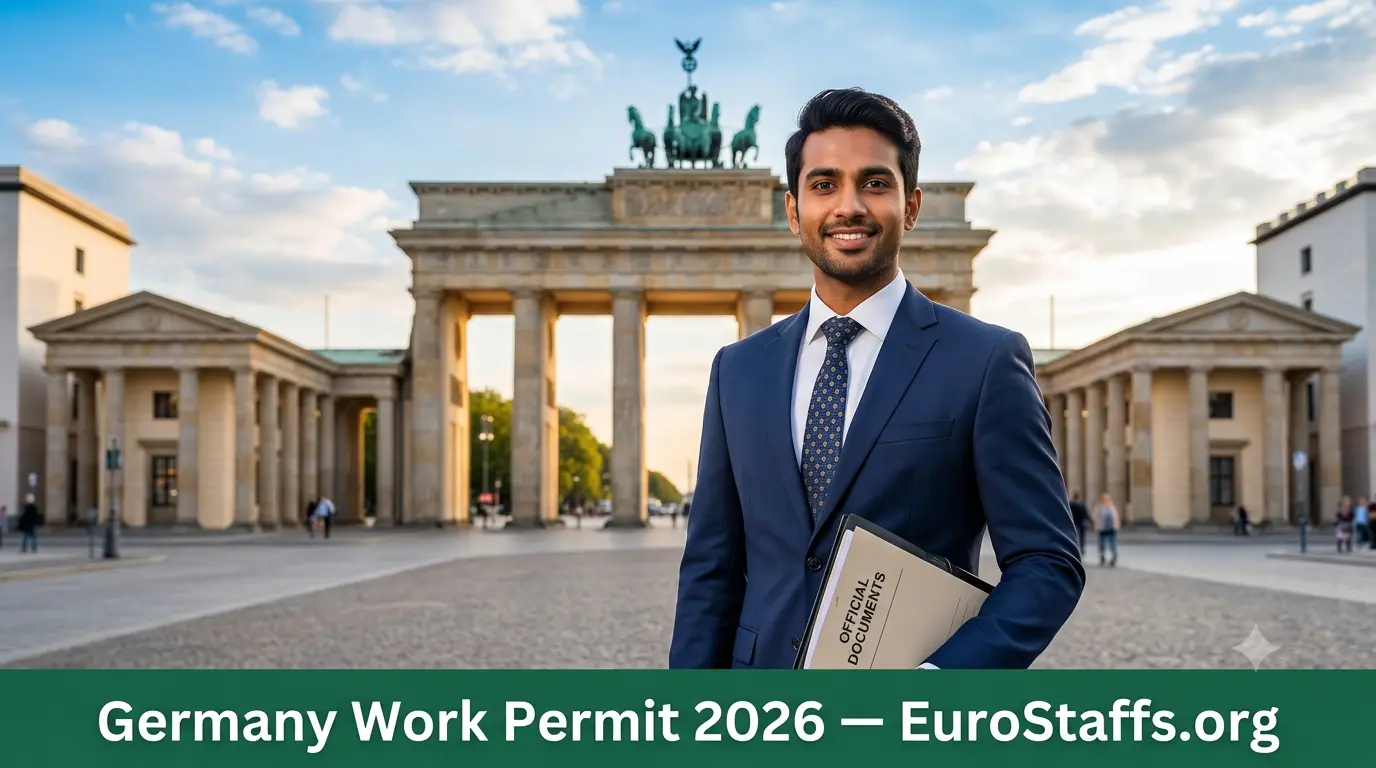
How to Get a Work Permit in Germany for Bangladeshi Workers in 2026
Germany is one of the most sought-after destinations for Bangladeshi professionals looking to build a better career in Europe. With a strong economy, excellent wages, and high living standards, Germany continues to attract thousands of skilled workers from Bangladesh every year. In 2026, Germany's labor market remains open to foreign talent, and the country has introduced several new pathways to make immigration easier for skilled workers. If you are a Bangladeshi professional dreaming of working in Germany, this comprehensive guide will walk you through every step of obtaining a Germany work permit. From understanding visa types to gathering documents and applying through the right channels, EuroStaffs is here to support you at every stage of your journey. You can also use our free CV builder at eurostaffs.org/cv-builder to create a professional resume that meets German employer standards.
Why Germany Is a Top Choice for Bangladeshi Workers
Germany has one of the largest economies in the world and consistently faces a shortage of skilled workers across multiple industries. This demand creates excellent opportunities for Bangladeshi professionals with the right qualifications and experience. The average monthly salary in Germany ranges from EUR 2,500 to EUR 5,000 depending on the industry and role. Healthcare, engineering, IT, construction, hospitality, and manufacturing are among the most in-demand sectors. Germany also offers a clear path to permanent residency and eventually citizenship, making it an ideal long-term destination. The country has a strong social security system, free or subsidized education for children, and excellent healthcare facilities. Many Bangladeshi workers have already built successful careers and settled permanently in Germany, proving that this path is both achievable and rewarding.
Types of Germany Work Permits Available in 2026
Germany offers several types of work permits depending on your qualifications, skills, and the nature of your employment. Understanding which permit applies to your situation is the first and most important step in the application process.
The EU Blue Card is one of the most popular options for highly qualified professionals. It is designed for workers with a university degree and a job offer in Germany with a minimum annual salary of EUR 45,300 (or EUR 41,041 for shortage occupations such as IT, engineering, and healthcare). The EU Blue Card allows you to bring your family, access the German labor market freely, and apply for permanent residency after just 21 to 33 months.
The Skilled Worker Visa (Fachkraeftezuwanderungsgesetz) was introduced under the Skilled Immigration Act and allows qualified workers with vocational training or a university degree to work in Germany. Your qualification must be recognized as equivalent to a German qualification by the relevant German authority.
The Job Seeker Visa allows qualified professionals to enter Germany for up to six months to search for a job. During this time, you can attend interviews, network with employers, and secure a job offer before converting your visa to a work permit.
The Opportunity Card (Chancenkarte) introduced in 2024 and active in 2026 is a points-based system that allows workers to enter Germany to look for work even without a prior job offer. Points are awarded based on qualifications, language skills, professional experience, and age.
Apprenticeship Visa (Ausbildung) is available for those who want to complete a vocational training program in Germany. This is a great option for younger Bangladeshi workers who want to gain German qualifications and then transition to full-time employment.
Step-by-Step Process to Apply for a Germany Work Permit from Bangladesh
Applying for a Germany work permit involves several stages and requires careful preparation. Follow these steps to maximize your chances of a successful application.
Step 1: Get Your Qualifications RecognizedThe first and most critical step is to have your Bangladeshi educational and professional qualifications recognized in Germany. You can check if your qualification is recognized using the 'anabin' database or the NARIC system. If recognition is required, apply through the relevant German authority or professional body. This process can take three to four months, so start early.
Step 2: Secure a Job OfferFor most work permit categories, you will need a confirmed job offer from a German employer before applying. You can search for Germany jobs on EuroStaffs at eurostaffs.org/jobs, where hundreds of verified job listings from German employers are available for Bangladeshi applicants. Make sure your job offer is in writing and includes your salary, job title, and start date.
Step 3: Prepare Your DocumentsGather all required documents well in advance. The standard document checklist includes a valid passport (with at least six months validity), a completed visa application form, a biometric photograph, your employment contract, proof of qualification recognition, language proficiency certificate (A1 to B2 level depending on the role), CV in German format (use the free EuroStaffs CV builder at eurostaffs.org/cv-builder), health insurance proof, and bank statements showing financial stability.
Step 4: Book an Appointment at the German EmbassySubmit your application at the German Embassy in Dhaka. Appointments can be booked online through the embassy website. Due to high demand, book your appointment as early as possible, ideally two to three months in advance.
Step 5: Attend the Visa InterviewAttend your embassy appointment with all original documents and certified copies. Be prepared to answer questions about your qualifications, job offer, employer, and plans in Germany. Answer clearly, honestly, and confidently.
Step 6: Wait for ProcessingGermany work permit processing typically takes four to twelve weeks. Processing time may vary depending on your permit type and embassy workload. Track your application status through the embassy portal.
Step 7: Travel to Germany and RegisterOnce your visa is approved, book your flight and travel to Germany. Within two weeks of arrival, register your address at the local Einwohnermeldeamt (residents registration office). You will also need to open a German bank account and obtain your tax identification number.
Document Checklist for Germany Work Permit (Bangladesh Applicants)
Having the correct documents prepared in advance is one of the biggest factors in a successful visa application. Below is a comprehensive checklist for Bangladeshi applicants applying for a Germany work permit in 2026.
Valid national passport (minimum 6 months validity beyond your intended stay)Two recent biometric passport photographs (35mm x 45mm, white background)Completed and signed visa application form (National Visa - Type D)Original employment contract signed by German employerProof of academic qualification (Bachelor's degree, Master's degree, or vocational training certificate)Qualification recognition certificate from the relevant German authorityGerman language certificate (Goethe-Institut A1 minimum, B1 or B2 preferred for most roles)Professional CV in German or English format (create yours free at eurostaffs.org/cv-builder)Cover letter explaining your purpose and backgroundBank statements for the last three to six months (showing financial stability)Health insurance coverage (valid in Germany)Police clearance certificate from Bangladesh PoliceAccommodation proof in Germany (employer letter or rental agreement)For EU Blue Card: proof of minimum salary threshold (EUR 45,300 annually)
Germany Language Requirements for Bangladeshi Workers
Language is a critical factor in obtaining a Germany work permit and succeeding in the German job market. The level of German required depends on your job type and employer.
For most blue-collar and hospitality roles, a minimum of A2 to B1 German is required. Healthcare workers such as nurses and doctors need B2 to C1 level proficiency as they must communicate directly with patients. IT and engineering professionals may work in English-speaking international companies, although basic German (A1 to A2) is still recommended for daily life.
You can learn German in Bangladesh through the Goethe-Institut in Dhaka, which offers certified language courses from A1 to C2 level. Online platforms such as Duolingo, Babbel, and Deutsche Welle also offer free German learning resources. Investing in language learning early significantly increases your chances of securing a job and a visa.
In-Demand Jobs in Germany for Bangladeshi Workers in 2026
Germany's growing labor shortage means that workers from Bangladesh are welcomed across multiple sectors. Here are the top sectors actively recruiting in 2026.
Healthcare and Nursing: Germany needs over 300,000 additional healthcare workers. Nurses, caregivers, and doctors from Bangladesh with recognized qualifications are in extremely high demand. Salaries range from EUR 2,800 to EUR 5,500 per month.
Information Technology: Software developers, data analysts, cybersecurity experts, and IT project managers are among the most recruited professionals. EU Blue Card holders in IT earn above EUR 41,041 annually without needing official recognition in some cases.
Engineering: Mechanical, civil, electrical, and automotive engineers are needed across German manufacturing and infrastructure projects. Average salaries range from EUR 3,500 to EUR 6,000 per month.
Construction and Trade: Electricians, plumbers, welders, and carpenters are in high demand. Vocational training certificates from Bangladesh can be recognized after an equivalency assessment.
Hospitality and Food Service: German hotels and restaurants recruit cooks, kitchen staff, and service professionals from abroad. This sector is particularly accessible for workers with lower formal qualifications.
Teaching and Education: Qualified teachers with relevant degrees and German language skills can find opportunities in international schools and language institutes.
Browse current Germany job listings at eurostaffs.org/jobs to find verified openings matching your profile.
Salary and Living Costs in Germany for Bangladeshi Expats
Understanding the financial realities of living in Germany helps you plan your move effectively.
The minimum wage in Germany in 2026 is EUR 12.82 per hour, which translates to approximately EUR 2,200 per month for a full-time position. Skilled professionals can earn significantly more depending on qualifications and experience.
Monthly living costs in Germany typically range from EUR 1,200 to EUR 2,000 depending on the city. Rent in cities like Munich and Frankfurt is higher (EUR 900 to EUR 1,500 for a one-bedroom apartment) compared to smaller cities like Leipzig or Dortmund (EUR 500 to EUR 800). Germany has a strong public transportation system, which reduces commuting costs significantly. Health insurance is mandatory and is typically split between employer and employee.
Common Reasons for Germany Work Permit Rejection
Understanding the most common reasons for rejection helps you prepare a stronger application.
Incomplete or incorrect documents are the top cause of rejection. Always double-check your checklist and ensure all documents are certified and translated where required.
Unrecognized qualifications remain a major barrier. Without official recognition of your Bangladeshi degree or certificate, your application will be denied.
Insufficient language proficiency can disqualify applicants, especially in healthcare and education sectors.
Salary below the required threshold for EU Blue Card holders will result in automatic rejection.
Providing false or misleading information during the interview or in documents leads to permanent bans.
If your application is rejected, you have the right to appeal or reapply with corrected documents. EuroStaffs advisors at eurostaffs.org/university-admissions can help you review your application and address weaknesses.
How EuroStaffs Helps Bangladeshi Workers Get to Germany
EuroStaffs is a trusted platform serving over 150 professionals across 19+ countries with a mission to connect Bangladeshi talent with European opportunities. Here is how EuroStaffs supports your Germany journey.
Job Search: Our job portal at eurostaffs.org/jobs features verified Germany job listings across multiple sectors including IT, healthcare, engineering, and hospitality.
Free CV Builder: Create a Germany-standard CV in minutes using our free tool at eurostaffs.org/cv-builder. The builder is designed to meet European employer expectations with proper formatting, sections, and keywords.
Visa Guidance: Our blog at eurostaffs.org/blog provides step-by-step visa guides, document checklists, and latest immigration updates for Bangladesh applicants.
University Admissions: If you are considering studying in Germany before working, our university admissions service at eurostaffs.org/university-admissions helps you find the right program and prepare your application.
EuroStaffs is committed to making your European dream a reality through expert guidance, verified opportunities, and ongoing support.
Frequently Asked Questions (FAQ)
Q: Can a Bangladeshi get a work permit in Germany without a job offer?
A: Yes. The Job Seeker Visa and the Opportunity Card (Chancenkarte) allow Bangladeshi workers to enter Germany without a prior job offer to search for work for up to six months.
Q: How long does it take to get a Germany work permit from Bangladesh?
A: The processing time typically ranges from four to twelve weeks after your embassy appointment, depending on the permit type and embassy workload.
Q: Do I need to speak German to work in Germany?
A: It depends on your job. IT and engineering professionals may work in English, but most roles require at least A2 to B1 German. Healthcare workers need B2 to C1.
Q: Is there a minimum salary for the Germany EU Blue Card?
A: Yes. The minimum annual salary is EUR 45,300 for most professions, and EUR 41,041 for shortage occupations such as IT, medicine, and engineering.
Q: Can I bring my family to Germany on a work permit?
A: Yes. Most Germany work permit holders can apply for family reunification after settling in Germany. EU Blue Card holders can bring their family immediately.
Q: How can I find Germany jobs from Bangladesh?
A: You can search verified Germany job listings at eurostaffs.org/jobs. EuroStaffs features hundreds of opportunities across sectors actively recruiting from Bangladesh.
Q: What is the Germany Opportunity Card?
A: The Opportunity Card (Chancenkarte) is a points-based entry visa introduced in 2024 that allows skilled workers to enter Germany to search for work even without a prior job offer.
Getting a Germany work permit as a Bangladeshi worker in 2026 is entirely achievable with the right preparation, the correct documents, and a reliable platform to guide you. Germany's diverse and welcoming labor market continues to create opportunities for skilled and motivated professionals from Bangladesh. Whether you are a nurse, engineer, IT professional, or skilled tradesperson, Germany has a pathway designed for your background.
Start your journey today with EuroStaffs. Search for Germany jobs at eurostaffs.org/jobs, build your professional CV for free at eurostaffs.org/cv-builder, and explore more visa guides at eurostaffs.org/blog. EuroStaffs is your trusted partner for European opportunities.

 Arabic
 Chinese
 French
 Russian
 Spanish