


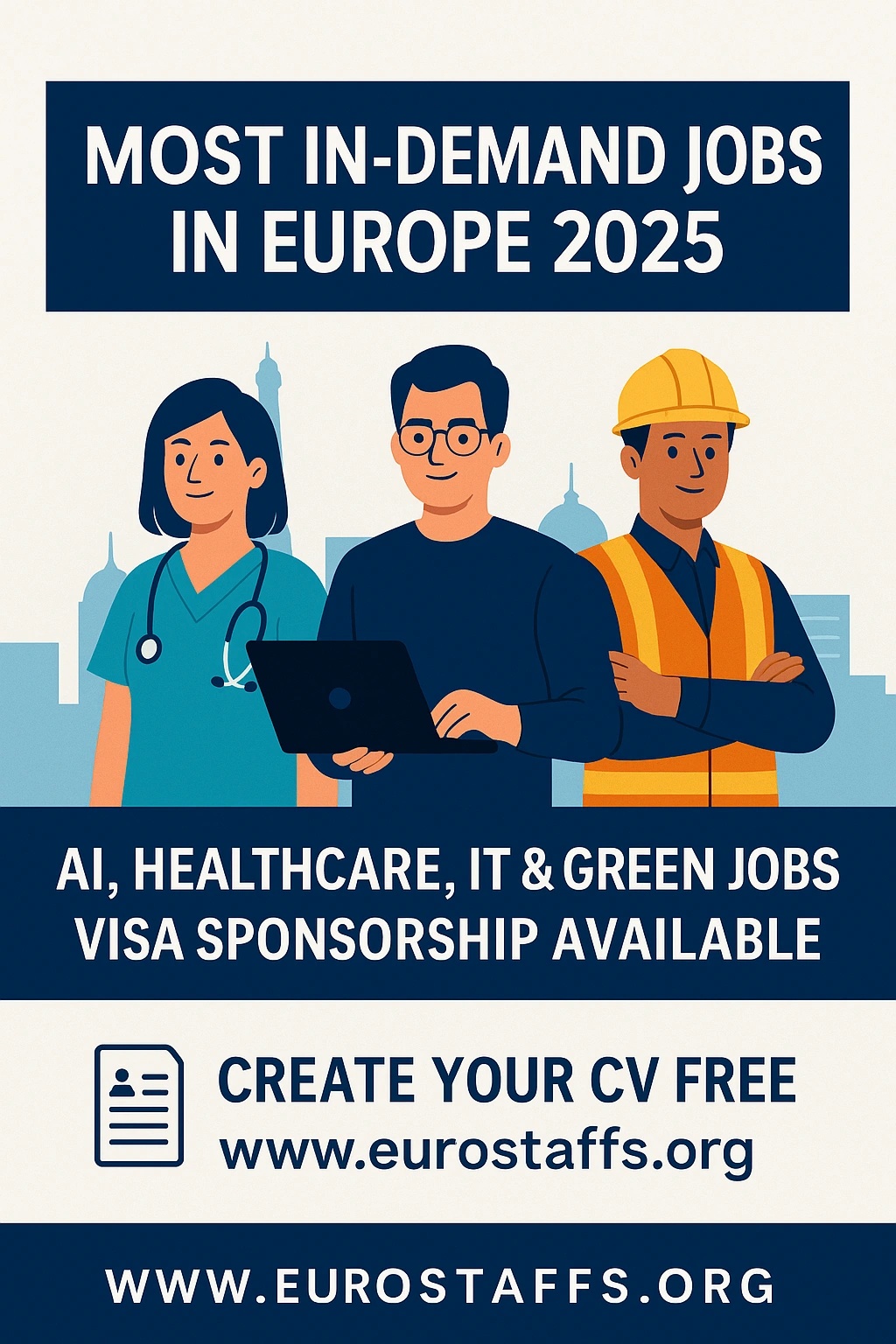
The phrase "free visa jobs in Europe" means something very specific and very real — positions where the employer takes on the cost of sponsoring your work visa, and in some cases covers your airfare and accommodation as well. These are not fantasy job listings. They exist across several sectors in Europe right now, and they are being offered by legitimate companies that need workers urgently enough to remove every financial barrier standing between you and your first day on the job.
That said, this is also one of the most misused phrases in the international jobs space. Scammers frequently use the promise of free visa jobs to collect fees from unsuspecting applicants. Knowing the difference between a genuine employer-paid visa opportunity and a fraudulent listing is one of the most important skills you can develop as an international job seeker.
This guide explains exactly what free visa jobs in Europe look like in practice, which sectors and countries offer them most reliably, how to find and verify genuine listings, and how to apply in a way that gets results. Everything here is grounded in how the European job market actually works in 2026.
Free Visa Jobs in Europe: How to Find Employer-Sponsored Positions
What Does "Free Visa Job in Europe" Actually Mean?
When an employer advertises a free visa job in Europe, it typically means one or more of the following:
The employer pays the work permit application fee. In most European countries, the employer is legally required to file the work permit on behalf of the employee. The associated government filing fees — which can range from €100 to over €1,000 depending on the country — are covered by the employer as part of the hiring process.
The employer covers the employee's visa application fee. In some cases, particularly in sectors with severe worker shortages, the employer also offers to cover or reimburse the cost of the visa application that the employee submits at the embassy in their home country. This is a separate fee from the work permit and typically ranges from €75 to €300.
The employer provides an air ticket. Some employers — particularly in construction, hospitality, agriculture, and heavy transport — go a step further and offer to pay for the employee's flight to Europe. This is most common when the employer is recruiting from a specific country through a structured recruitment drive.
The employer provides accommodation. In industries like seasonal agriculture, hotel work, and some construction projects, employers offer on-site accommodation as part of the employment package. This significantly reduces your initial cost of living and makes the move financially viable even if your starting salary is modest.
It is important to understand that none of these arrangements are charity. European employers who offer these packages do so because the cost of covering your visa and travel is lower than the cost of leaving a position unfilled. Worker shortages in several key sectors have made international recruitment economically necessary.
Which Sectors Offer Free Visa Jobs in Europe Most Reliably
Hotels and Hospitality
The hospitality sector is one of the most consistent sources of free visa jobs in Europe. Hotels ranging from three-star chains to five-star luxury resorts across Spain, Greece, Italy, France, Switzerland, and the United Kingdom regularly recruit internationally and offer visa sponsorship as a standard part of the package. In some cases, particularly in resort destinations and remote hotel locations, accommodation and meals are included as part of the employment terms.
The most in-demand roles in hospitality include chefs and sous chefs, housekeeping supervisors, front desk and reception staff, food and beverage managers, waiters, bartenders, and baristas. Experienced chefs in particular are in very short supply across Western Europe, and employers are willing to go to significant lengths — including covering all visa and travel costs — to secure the right candidate.
Platforms like eurostaffs.org list hotel and hospitality vacancies across 19+ European countries, including positions where visa sponsorship is confirmed by the employer.
Construction and Skilled Trades
Construction is arguably the sector where the "free visa plus air ticket" package is most common. Large construction companies operating across Germany, the Netherlands, Austria, Belgium, and the Nordic countries regularly bring in teams of skilled tradespeople from outside the EU to meet project deadlines. Carpenters, electricians, welders, plumbers, scaffolders, concreters, and general labourers are all actively recruited.
These structured recruitment programmes — often organised through recruitment agencies rather than directly by the employer — frequently cover the full cost of the visa process, the flight, and provide company accommodation or a housing allowance for the first few months. In exchange, employees typically commit to a fixed-term contract, usually between one and three years.
For workers with carpentry skills in particular, Germany, Austria, and Switzerland are highly active markets. The combination of a shortage of trained carpenters domestically and major ongoing construction and renovation projects has made international recruitment standard practice.
Heavy Transport and Logistics
Truck drivers — particularly those qualified to drive heavy goods vehicles (HGV) — are among the most sought-after workers in Europe right now. The shortfall of qualified truck drivers across Germany, the Netherlands, Poland, Sweden, and the United Kingdom has reached critical levels, and logistics companies are actively offering free visa sponsorship, competitive salaries, and in many cases relocation packages to qualified candidates from outside the EU.
If you hold a valid HGV licence or equivalent truck driving qualification from your home country, your chances of finding a free visa job in Europe are very high. The qualification recognition process varies by country — in most EU states, your existing licence will need to be assessed and potentially supplemented with additional training — but many employers will cover the cost of this process as part of the recruitment package.
Seasonal Agriculture
Every year, European countries including Spain, France, Italy, the Netherlands, Germany, and Poland recruit tens of thousands of seasonal agricultural workers from outside the EU to harvest fruits, vegetables, flowers, and other crops. Many of these positions come with accommodation provided on or near the farm, and some employers — particularly larger agricultural operations and recruitment agencies operating structured programmes — cover the cost of the worker's visa and travel.
The work is physically demanding and often seasonal rather than year-round, but it represents one of the most accessible entry points into Europe for workers without formal qualifications. Some seasonal workers who demonstrate reliability and skill are offered year-round contracts and eventual full visa sponsorship in subsequent years.
Healthcare and Caregiving
Hospitals, nursing homes, and home care agencies across Germany, the Netherlands, Sweden, Norway, and the United Kingdom are so severely short of qualified healthcare workers that many now offer comprehensive relocation packages that include full visa sponsorship, sometimes a contribution toward flight costs, and accommodation support during the initial settling-in period.
For nurses, healthcare assistants, and caregivers specifically, Germany has developed some of the most structured international recruitment programmes available anywhere in Europe. The German government has partnered with agencies in the Philippines, Mexico, and several other countries to create streamlined pipelines for qualified healthcare workers — and many of these programmes include language training, visa processing support, and travel cost coverage as part of the package.
Manufacturing and Factory Work
Large manufacturing facilities — particularly in automotive, electronics, food processing, and packaging — across Germany, Czech Republic, Slovakia, Hungary, and Poland regularly recruit production workers, quality control staff, and machine operators from outside the EU. Recruitment agencies that specialise in placing workers in these facilities often advertise free visa positions, and some factories provide worker hostels or subsidised housing.
While salaries in Central European manufacturing tend to be lower than in Western Europe, the cost of living is also significantly lower, and the structured recruitment process makes this one of the more accessible sectors for workers without specialist qualifications.
Top Countries Where Employers Offer Free Visa Jobs
Germany
Germany's severe and well-documented labour shortage has pushed employers in construction, healthcare, logistics, and manufacturing to offer increasingly generous packages to attract international workers. The German government's support for structured international recruitment — through programmes like the Triple Win initiative for healthcare workers — has made employer-paid visa arrangements increasingly common and legitimate.
German employers offering free visa packages typically work through government-registered recruitment agencies, which adds a layer of verification and trust that solo job seekers should look for.
United Kingdom
Despite no longer being part of the EU, the United Kingdom remains a significant destination for visa-sponsored work. The UK's Skilled Worker visa system requires employer sponsorship as standard, and many UK employers in healthcare, hospitality, construction, and technology cover both the visa application costs and, in some cases, the immigration skills charge — a fee that can run to several thousand pounds for longer visa durations. Some UK employers also offer relocation allowances that cover flights and initial accommodation.
Switzerland
Switzerland is not an EU member state and has its own immigration system, but it is one of the highest-paying countries in Europe for skilled workers. Construction companies, hospitality businesses, and healthcare employers in Switzerland regularly recruit internationally and cover visa and relocation costs. The salaries on offer — even for relatively straightforward roles — are significantly higher than in most EU countries.
Netherlands
Dutch employers in agriculture, logistics, technology, and healthcare are active recruiters from outside the EU. The Netherlands has a well-developed recruitment infrastructure for international workers, and many employers work through agencies that handle the full visa process on the worker's behalf at no cost to the employee.
Nordic Countries (Norway, Sweden, Denmark)
The Nordic countries have some of the strongest labor protections in the world, and employers recruiting internationally are required to offer the same terms and conditions as domestic workers. In sectors like construction, healthcare, and maritime industries, employer-paid visa sponsorship is standard, and some employers provide relocation support including flights and temporary housing.
How to Find Genuine Free Visa Jobs in Europe
Use Verified Job Platforms
The most reliable way to find free visa jobs in Europe is to use established, reputable job platforms that verify employer listings. Eurostaffs.org is specifically designed for international job seekers targeting Europe and lists positions across 19+ countries, with clear information about which roles include visa sponsorship. EURES — the European Employment Services portal — is the official EU job mobility platform and only lists legitimate employer vacancies.
Search LinkedIn Company Pages Directly
Rather than relying solely on job board listings, go directly to the LinkedIn pages of major employers in your target sector and country. Look at their recent job postings and recruitment activity. Companies that have a history of hiring internationally will often say so explicitly on their careers pages or in their LinkedIn content. Following these companies and engaging with their posts increases your visibility with their recruitment teams.
Work With Registered Recruitment Agencies
Many free visa job packages — particularly in construction, agriculture, and manufacturing — are arranged through recruitment agencies rather than directly by the employer. Look for agencies that are registered with the relevant national authority in their country of operation. In Germany, for example, legitimate recruitment agencies are registered with the Federal Employment Agency (Bundesagentur für Arbeit). In the Netherlands, reputable agencies carry the NEN 4400 certification. Working with registered agencies provides a layer of protection and significantly reduces the risk of fraud.
Contact Employers Directly
For hospitality, healthcare, and construction in particular, contacting large employers directly through their official websites and careers portals can be highly effective. Larger hotel groups, hospital networks, and construction conglomerates are experienced at international recruitment and will have HR processes in place for visa sponsorship. Send a professional introduction email with your CV attached, clearly stating your relevant experience and your requirement for visa sponsorship.
How to Spot a Free Visa Job Scam
This section is important. The term "free visa jobs in Europe" attracts a disproportionate number of fraudulent listings, and knowing the warning signs could save you significant money and distress.
They ask you to pay any fee. Legitimate employers offering free visa jobs never ask the candidate to pay anything — not for the visa, not for the job application, not for an "administration fee," not for a "security deposit." If anyone asks you to transfer money to secure a free visa job, stop the conversation immediately.
The salary seems unrealistically high for the role. Scam listings often advertise very high salaries for unskilled or semi-skilled positions. While European salaries are generally higher than in South Asia, a cleaning job in Germany does not pay €5,000 per month. Research realistic salary ranges for your target role and location before applying.
The company cannot be verified. Before engaging seriously with any employer, search for them independently. Look for their official website, check their company registration number through the national business registry of their country, search for reviews on platforms like Glassdoor, and look for their presence on LinkedIn. A company that cannot be verified through independent sources should be treated with extreme caution.
The communication is unprofessional. Genuine European employers communicate professionally. Emails from personal Gmail accounts, messages containing grammar errors, pressure to make quick decisions, or requests to communicate through WhatsApp or Telegram rather than official company channels are all warning signs.
They offer the job without an interview. No legitimate employer offers a job — let alone a sponsored international position — without conducting at least one interview. If you receive a job offer without having spoken to anyone at the company, it is almost certainly fraudulent.
How to Apply for Free Visa Jobs in Europe
Step 1 — Build a Strong, European-Standard CV
Your CV is the foundation of every application. It needs to be professional, clearly formatted, and tailored to the expectations of European employers. Include a brief personal profile, a clear work history with dates and responsibilities, your qualifications, and any language skills. Keep it to two pages maximum.
Build your CV for free at eurostaffs.org — the platform is designed to help international job seekers create documents that European employers recognise and trust.
Step 2 — Identify Your Target Sector and Country
Based on your skills and experience, identify which sector and country combination gives you the strongest chance of finding a free visa job. If you are a carpenter, Germany and Austria are your strongest targets. If you are a nurse, Germany and the Netherlands offer the most structured recruitment programmes. If you are an experienced chef, Spain, France, and Switzerland are all active markets.
Step 3 — Apply Through Multiple Channels Simultaneously
Do not rely on a single job board or application method. Apply through eurostaffs.org, EURES, and LinkedIn simultaneously. Contact registered recruitment agencies in your target country. Send direct applications to large employers through their careers portals. The more channels you use, the faster you will find a genuine opportunity.
Step 4 — Be Clear About Your Situation From the Start
When you make contact with an employer or recruiter, be transparent from the beginning. State that you are based in Bangladesh, that you have the relevant qualifications and experience, and that you are seeking a position that includes visa sponsorship. Clarity from the outset filters out employers who are not set up for international hiring and ensures you spend your time on genuine opportunities.
Step 5 — Verify Every Offer Before Committing
Once you receive an offer, do not rush. Verify the company independently before signing anything or making any travel arrangements. Ask for a formal employment contract in writing. Confirm exactly what costs the employer is covering — visa fees, air ticket, accommodation — and get these commitments in writing as part of your contract or a formal offer letter. A legitimate employer will have no problem providing this documentation.
Frequently Asked Questions (FAQ)
Are free visa jobs in Europe real or mostly scams?
Both exist. Genuine free visa jobs are real and available — particularly in healthcare, hospitality, construction, and heavy transport. However, fraudulent listings using this phrase are also common. The key is to verify every employer independently, never pay any fee to secure a job, and use established platforms and registered agencies rather than responding to unsolicited social media messages or WhatsApp groups.
Which European country offers the most free visa jobs?
Germany currently offers the highest volume of employer-sponsored positions that include visa cost coverage, particularly in healthcare, construction, and logistics. The Netherlands, Switzerland, and the UK are also strong markets. The Nordic countries — Norway, Sweden, and Denmark — offer some of the most generous relocation packages in Europe for the right candidates.
Do I need to speak the local language to get a free visa job in Europe?
Not always. In construction, manufacturing, agriculture, and some hospitality roles, the working language is often a mix of the local language and basic English, and employers are sometimes willing to provide language support as part of the relocation package. For healthcare roles in Germany and the Netherlands, language certification (typically B2 level German or Dutch) is usually required before starting work, though some employers fund the language training as part of the recruitment package.
Can a carpenter get a free visa job in Europe?
Yes. Carpenters are in high demand across Germany, Austria, Switzerland, and the Netherlands, and many employers in these countries offer full visa sponsorship and relocation packages including flight costs to secure qualified candidates from abroad. A portfolio of your work, your qualification certificates, and references from previous employers will significantly strengthen your application.
What is the process for a free visa heavy truck driver job in Europe?
For HGV or heavy truck driver positions in Europe, the process typically involves verifying that your existing driving licence meets EU standards or identifying what additional training is required, applying through a logistics company or registered recruitment agency, completing any required driving assessments (often conducted in your home country by the employer's representative), and then having your visa and travel arranged by the employer once you pass. Germany, Poland, the Netherlands, and Sweden are the most active markets for international truck drivers.
How long does it take to start working after applying for a free visa job?
The timeline from application to starting work typically ranges from two to five months, depending on the country and the speed of document processing. The visa application itself usually takes six to twelve weeks once all documents are submitted. Many employers are willing to wait for the right candidate, particularly in sectors with severe shortages.
Is the air ticket really free, or do I have to pay it back?
It depends on the employer and the contract. Some employers cover the air ticket as a genuine benefit with no repayment condition. Others structure it as a loan that is repaid through salary deductions over the first several months of employment. A smaller number of employers include a clawback clause — meaning if you leave within a specified period, you may need to repay some or all of the flight cost. Always read your employment contract carefully and ask the employer to explain any clauses you do not fully understand before signing.
Conclusion
Free visa jobs in Europe are a genuine and growing category of employment opportunity, driven by labour shortages that European employers cannot solve through domestic recruitment alone. Hospitality, construction, healthcare, heavy transport, and agriculture are the sectors where these packages are most commonly available, and countries like Germany, the Netherlands, Switzerland, and the UK are the most active markets.
The keys to finding a legitimate free visa job are using verified platforms and registered agencies, verifying every employer independently, never paying fees to anyone, and being transparent about your situation from the first point of contact. Thousands of workers make this journey successfully every year — and the ones who do prepare their documents carefully, apply through the right channels, and approach the process with patience and professionalism.
Start by building your professional CV for free at eurostaffs.org and explore current employer-sponsored listings across 19+ European countries. Your next opportunity may already be waiting.



 Arabic
 Chinese
 French
 Russian
 Spanish