

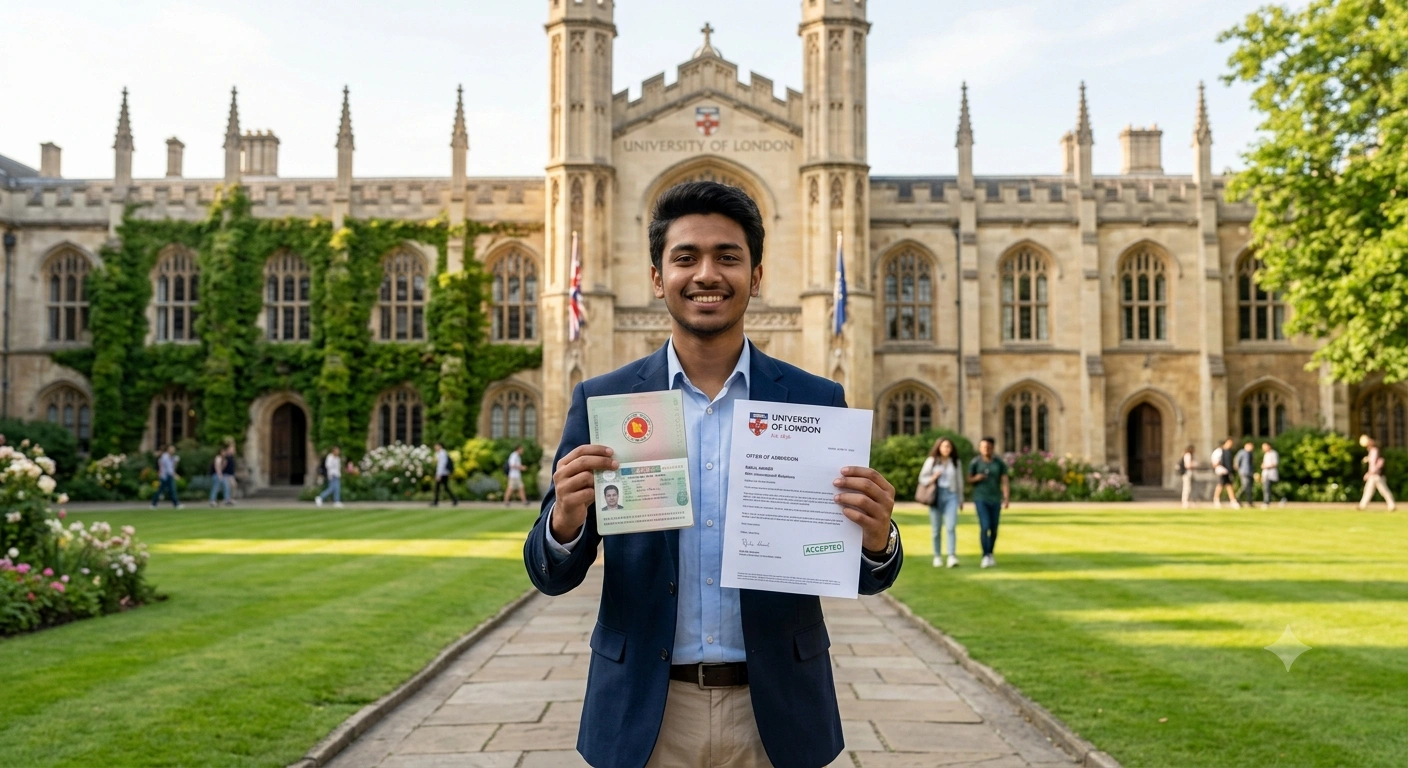
Europe Student Visa 2026: How to Apply, Requirements and Top Countries
Europe has long been one of the most desirable destinations for students from Bangladesh and across Asia who want to build international academic and professional careers. With world-class universities, multicultural environments, and post-study work opportunities, European countries attract hundreds of thousands of international students every year. If you are planning to study in Europe in 2026, understanding the Europe student visa process is the very first step you need to take. This guide covers everything — from visa types and requirements to the best countries for Bangladeshi students — so you can prepare your application with confidence.
At EuroStaffs, we help students navigate every stage of their European journey. Whether you need guidance on university admissions in Europe or want to explore part-time job opportunities while studying, we have the resources to support you every step of the way.
What Is a Europe Student Visa?
A Europe student visa — also known as a study visa or national visa (Type D) — is an official permit issued by a European country that allows international students to enter, live, and study in that country for a period exceeding 90 days. Most European countries that are part of the Schengen Area require a separate national visa rather than a standard Schengen tourist visa for long-term study.
It is important to understand that there is no single unified "Europe student visa." Each country issues its own student visa based on its national immigration rules. However, the general requirements, documentation, and processes share many similarities across EU and European Economic Area (EEA) countries.
Schengen vs. National Student Visa
Schengen Visa (Type C): Valid for short stays up to 90 days. Not suitable for study programs longer than 3 months.
National Visa (Type D): Required for full-degree programs or long-term courses. This is the visa most international students apply for.
Top European Countries for International Students in 2026
Choosing the right country is just as important as choosing the right university. Here is a comparison of the most popular European destinations for international students, including Bangladeshi applicants:
Germany
Germany remains the top choice for international students in Europe, largely because public universities charge little to no tuition fees for most programs. International students can work up to 120 full days or 240 half days per year. The country is home to globally ranked institutions such as TU Munich, Heidelberg University, and Humboldt University Berlin. The Germany student visa requires a confirmed university admission and proof of financial resources, typically through a blocked account (Sperrkonto) of at least EUR 11,208 per year.
Netherlands
The Netherlands is an excellent option for English-medium study, with hundreds of bachelor's and master's programs taught entirely in English. Dutch universities are internationally recognized, and cities like Amsterdam, Eindhoven, and Rotterdam offer vibrant student communities. International students are permitted to work 16 hours per week during the academic year, making part-time income achievable alongside studies.
Ireland
Ireland is the only native English-speaking country in the Schengen Area, making it particularly attractive for students from Bangladesh. Irish universities such as University College Dublin and Trinity College Dublin consistently rank highly. Students can work up to 20 hours per week during term and 40 hours during holidays, giving significant income potential.
Sweden
Sweden offers free tuition for EU students; non-EU students typically pay between EUR 8,000 and EUR 18,000 per year. However, Sweden has generous scholarship programs that can offset these costs. The country is known for progressive education, a strong tech industry, and excellent post-study work opportunities.
Spain
Spain has become an increasingly popular destination for students seeking affordable European education in a warm climate. Public universities charge between EUR 750 and EUR 5,000 per year, and the Spanish student visa allows up to 30 hours of work per week.
Poland
Poland is the most affordable option on this list, with tuition fees starting from EUR 2,000 per year and a relatively straightforward visa process. Poland has a growing number of English-taught programs, particularly in medicine, engineering, and business, making it a smart choice for budget-conscious students.
Europe Student Visa Requirements: What You Need
While specific requirements vary by country, the following documents and criteria apply to almost all European student visa applications from Bangladeshi students:
Academic Requirements
Secondary School Certificate (SSC) and Higher Secondary Certificate (HSC) transcripts and certificates
University degree certificates and transcripts (for postgraduate applicants)
Official university acceptance or admission letter from a recognized European institution
Proof of English language proficiency — typically IELTS (6.0–6.5) or TOEFL (80–100), depending on the institution
Financial Requirements
Bank statements showing sufficient funds to cover tuition and living expenses
Scholarship award letters (if applicable)
Sponsor letters and their bank statements (if a family member or sponsor is funding your studies)
For Germany specifically: a blocked account (Sperrkonto) showing EUR 11,208 minimum
Identity and Travel Documents
Valid passport with at least 12 months remaining validity
Passport-size photographs meeting the host country's specification
Previous travel history (previous Schengen or other visas if applicable)
Health and Insurance
Comprehensive health insurance covering the full duration of your study
Health clearance certificate in some countries
Additional Documents
Completed visa application form (varies by country)
Proof of accommodation in the host country (university dormitory letter or rental agreement)
Personal statement or statement of purpose in some cases
Criminal background check (police clearance certificate from Bangladesh)
Having a professionally prepared CV can also strengthen your overall application profile. Use the EuroStaffs free CV builder to create a well-structured, ATS-friendly CV before you apply.
Step-by-Step: How to Apply for a Europe Student Visa from Bangladesh
The application process may seem complex, but breaking it into clear steps makes it much more manageable. Here is a practical roadmap for Bangladeshi students:
Step 1: Research and Choose Your University
Start by identifying universities and programs that match your academic background and career goals. Platforms like EuroStaffs provide guidance on university admissions and can help you find courses that accept international applicants.
Step 2: Apply for University Admission
Most European universities accept applications through their own portals or national platforms (such as Studienkolleg for Germany). Submit your academic documents, English test scores, and personal statement. Once accepted, you will receive an official letter of acceptance, which is a mandatory document for your visa application.
Step 3: Prepare Your Financial Proof
Open a blocked account if required (Germany), or gather three to six months of bank statements. Your financial documents must clearly show you have sufficient funds for at least the first year of your studies and living expenses.
Step 4: Gather and Authenticate Documents
Collect all required documents. Any documents not in the host country's official language must be translated by a certified translator. Some documents (such as SSC and HSC certificates) may need to be notarized or apostilled.
Step 5: Book Your Visa Appointment
Contact the embassy or consulate of your destination country in Dhaka. Most European embassies in Bangladesh require an in-person appointment for biometrics and document submission. Book your appointment well in advance — popular countries like Germany can have waiting times of 6 to 12 weeks.
Step 6: Attend Your Visa Interview
Be prepared to clearly explain your study plans, funding source, and intention to return to Bangladesh after completing your studies. Present all documents in an organized manner. Remain calm and honest throughout the interview.
Step 7: Wait for the Decision
Processing times range from two weeks to three months depending on the country and volume of applications. Track your application through the embassy portal if available.
Step 8: Prepare for Arrival
Once your visa is approved, arrange your accommodation, purchase health insurance, and book your flight. After arriving, you will need to register with local authorities and apply for a residence permit. Check out EuroStaffs job listings to explore part-time work opportunities near your university city.
Europe Student Visa Cost: What to Budget
Financial planning is a critical part of the student visa process. Here is a breakdown of the typical costs you should budget for:
Note: these figures are approximate and vary by country and individual circumstances. Always check the official embassy website of your destination country for the most current fee schedules.
Scholarships Available for Bangladeshi Students in Europe
Tuition fees and living costs can be significant, but there are many scholarship programs specifically designed for international students from developing countries, including Bangladesh.
DAAD Scholarship (Germany)
The German Academic Exchange Service (DAAD) offers a wide range of scholarships for international students at all academic levels. Bangladeshi students can apply for full funding covering tuition, monthly allowances, travel costs, and health insurance.
Erasmus Mundus Joint Masters
The Erasmus Mundus program funds international students to study at multiple European universities in a single joint degree program. Scholarships cover tuition fees and provide a monthly living allowance.
Orange Knowledge Programme (Netherlands)
The Dutch government offers this scholarship program for mid-career professionals from developing countries, including Bangladesh. It funds short courses and master's programs at Dutch universities.
Swedish Institute Scholarships
The Swedish Institute offers the SI Scholarship for Global Professionals, open to talented applicants from select countries including Bangladesh. It covers tuition, living expenses, travel, and insurance.
Government of Ireland International Education Scholarship
This competitive program offers full scholarships to high-achieving non-EU students, covering tuition and a EUR 10,000 annual stipend for living costs.
Explore all scholarship and university options through the EuroStaffs University Admissions page to find the program that matches your profile.
Common Mistakes to Avoid When Applying
Many student visa applications are delayed or rejected due to avoidable errors. Be aware of these common pitfalls:
Applying too late — always begin your visa process at least three to four months before your intended departure date
Submitting incomplete or unverified documents — double-check every item on the checklist
Providing inconsistent financial information — your bank statements and sponsor letters must be consistent
Choosing the wrong visa type — a tourist or Schengen visa cannot be used for long-term study
Failing to arrange health insurance before applying — many embassies require proof at the time of application
Not registering with local authorities upon arrival — this can lead to legal complications and affect your residence permit
How EuroStaffs Supports Your Study Abroad Journey
EuroStaffs is more than a job platform. We are a complete career and education support ecosystem for students and professionals from Bangladesh and across Asia who want to build their future in Europe.
Through EuroStaffs, you can:
Browse and apply to universities in 19+ European countries through our dedicated admissions support service
Create a professional CV using our free CV builder — optimized for European employers and university applications
Explore part-time and student-friendly job listings in European cities
Get guidance on student visa requirements, documentation, and application timelines
Read up-to-date blog content covering visa policies, scholarship opportunities, and life as a student in Europe
Visit EuroStaffs University Admissions to get started today.
Final Thoughts
Studying in Europe is one of the most transformative decisions a young person from Bangladesh can make. The combination of quality education, cultural exposure, work opportunities, and global career prospects makes it an investment with lifelong returns. The Europe student visa process in 2026 is well-structured, and with the right preparation — choosing the right country, meeting all documentation requirements, and planning finances carefully — your application has every chance of success.
Start your journey today. Build your professional CV with the EuroStaffs free CV builder, explore university programs through our admissions support platform, and browse student-friendly job listings in Europe — all in one place.
Frequently Asked Questions (FAQ Schema)
Q1: What is the Europe student visa for Bangladeshi students?
A Europe student visa (National Visa Type D) is an official permit that allows Bangladeshi students to live and study in a European country for more than 90 days. Each European country issues its own student visa based on national immigration rules, though the general requirements — such as university admission, financial proof, and health insurance — are similar across most countries.
Q2: How much does a Europe student visa cost in 2026?
The visa application fee typically ranges from EUR 75 to EUR 250 depending on the country. Additional costs include health insurance, document translation, English proficiency tests, and proof of funds. For Germany, students must also open a blocked account with a minimum of EUR 11,208.
Q3: Which is the easiest European country for a student visa from Bangladesh?
Poland is generally considered one of the more accessible options for Bangladeshi students due to lower tuition fees (from EUR 2,000/year), a straightforward visa process, and a growing number of English-taught programs. Germany and the Netherlands are also popular choices for students who meet the financial and academic requirements.
Q4: Can I work while studying in Europe on a student visa?
Yes. Most European countries allow international students to work part-time during their studies. For example, Germany allows up to 120 full days per year, Ireland allows 20 hours per week during term, Spain allows up to 30 hours per week, and the Netherlands allows 16 hours per week. Always check the specific work rights attached to your country's student visa.
Q5: How long does it take to process a Europe student visa from Bangladesh?
Processing times typically range from two to twelve weeks depending on the country and the volume of applications at the time. Germany and the Netherlands can take longer during peak admission seasons. It is strongly recommended to begin your visa application at least three to four months before your planned departure.
Q6: Does EuroStaffs help with European university admissions?
Yes. EuroStaffs offers dedicated university admissions support for students looking to study in Europe. The platform also provides a free CV builder, student visa guidance, job listings, and a regularly updated blog with the latest information on studying and working in Europe.

 Arabic
 Chinese
 French
 Russian
 Spanish