

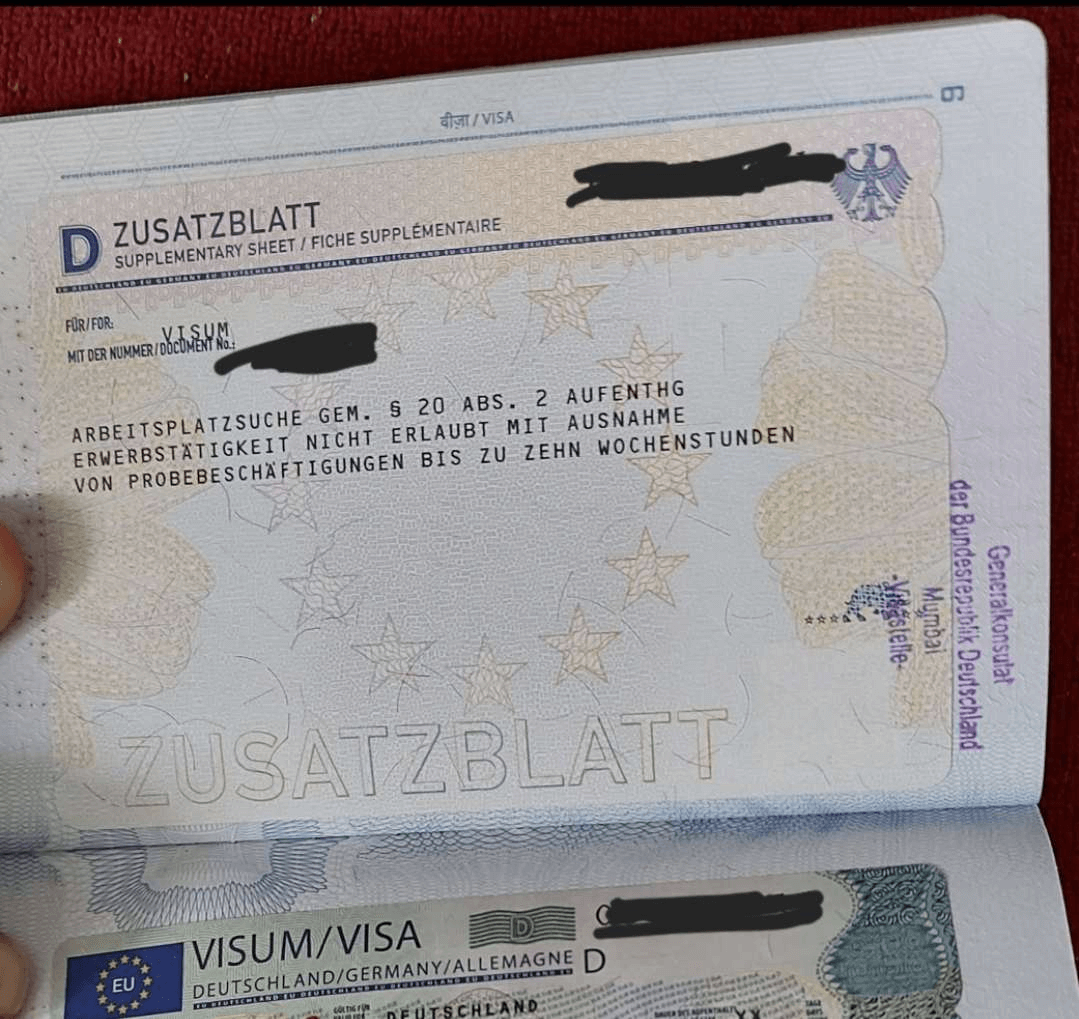
Most people assume you need a job offer before you can move to Europe. That assumption stops a large number of talented workers from ever taking the first step. The truth is that several European countries now offer a dedicated Europe job seeker visa — a legal route that allows you to enter, settle in temporarily, and search for work on the ground rather than from thousands of miles away.
Searching for a job while you are physically present in a country is a fundamentally different experience from applying remotely. You can attend interviews in person, network at professional events, walk into company offices, and make the kind of impression that a video call simply cannot replicate. For many international professionals, the job seeker visa has been the difference between years of failed remote applications and landing a sponsored position within weeks of arriving.
This guide covers every European country that currently offers a job seeker visa or equivalent route, the specific requirements for each, the documents you will need to prepare, and a clear step-by-step process for applying. If you have been waiting for the right moment to make your move to Europe, this may be the visa route you have been looking for.
Europe Job Seeker Visa: Countries, Requirements & How to Apply
What Is a Europe Job Seeker Visa?
A Europe job seeker visa — sometimes called a job search visa or opportunity visa — is a temporary residence permit that allows a non-EU national to enter a European country legally for the specific purpose of looking for employment. It is not a work visa. You cannot work while you hold this visa. Its purpose is to give you a window of time — typically between 60 days and six months depending on the country — to find a job, secure an employment contract, and then convert your status to a standard work visa or residence permit.
Why Does It Exist?
European governments introduced job seeker visas for a practical reason. Employers repeatedly told immigration authorities that the best candidates were losing interest during long-distance hiring processes, and that having access to a physical talent pool made hiring faster and more effective. At the same time, skilled workers from abroad told governments that applying for jobs remotely, without any local network or presence, was nearly impossible in competitive markets. The job seeker visa was designed to solve both problems at once.
Who Is It For?
The job seeker visa is typically aimed at professionals with recognised qualifications — university graduates, vocationally trained workers, and experienced professionals in shortage occupations. The specific eligibility criteria vary by country, but in general, you need to demonstrate that you have the skills and background to realistically find employment within the permitted period.
European Countries Offering a Job Seeker Visa in 2026
Not every European country offers this type of visa. Below is a detailed breakdown of the countries that currently have a formal job seeker visa or a closely equivalent route, along with the specific rules for each.
Germany — Chancenkarte (Opportunity Card)
Germany's job seeker visa has evolved into one of the most structured and accessible in Europe. The original Job Seeker Visa was joined in 2024 by the Chancenkarte — the Opportunity Card — which uses a points-based system to determine eligibility. As of 2026, the Chancenkarte is the primary route for most non-EU professionals looking to enter Germany without a prior job offer.
Duration: Up to one year, with the possibility of extension if employment is found and a work visa application is pending
Points system: You need a minimum of six points from the following categories:
Recognised professional qualification or university degree (4 points) or foreign qualification (3 points)
At least three years of work experience in your field in the last five years (1 point)
German language skills at A1 level or above (1 point per level, up to B2)
English language skills at B2 level or above (1 point)
Age under 35 (1 point)
Previous stay in Germany of at least six months (1 point)
Spouse accompanying you who also has a recognised qualification (1 point)
What you can do on the Chancenkarte: You are permitted to work up to 20 hours per week in any job during your stay, which is a significant advantage. You can also do trial work of up to two weeks with a potential employer to assess whether the role is a good fit before signing a full contract.
Minimum financial requirement: You must demonstrate that you can support yourself financially for the duration of your stay — approximately €1,027 per month, which can be shown through a blocked bank account (Sperrkonto), a letter of guarantee from a German resident, or proof of existing savings.
Language requirement: At least A1 German language proficiency is recommended for the Chancenkarte, though the points system means that strong English skills and other criteria can compensate if your German is limited.
How to apply: Apply at the German embassy or consulate in your home country. You will need your qualification documents, proof of financial means, proof of accommodation in Germany (even a short-term booking is acceptable initially), a valid passport, and your completed application form. Processing typically takes four to twelve weeks.
Portugal — Job Seeker Visa (Visto de Procura de Trabalho)
Portugal offers one of the most welcoming job seeker visa routes in Europe. It is available to nationals of all countries and allows you to stay in Portugal for up to 120 days (extendable to 180 days in some circumstances) while looking for work.
Duration: 120 days, extendable once to a maximum of 180 days
Eligibility requirements:
Valid passport
Proof of sufficient financial means (approximately €760 per month, based on the Portuguese minimum wage)
Proof of accommodation in Portugal (rental agreement, hotel booking, or letter from a host)
Clean criminal record certificate from your home country
Health insurance valid in Portugal
Completed visa application form
What you can do: You cannot work for a Portuguese employer while on this visa. However, you can attend interviews, visit company offices, and engage in remote work for a non-Portuguese employer in some circumstances (check with the Portuguese consulate in your home country for the latest guidance).
Converting to a work visa: Once you have a signed employment contract or a job offer from a Portuguese employer, you can apply to convert your status to a D3 visa (for highly qualified workers) or a general work visa without needing to return to your home country in most cases.
Language requirement: There is no formal language requirement for the visa itself, though having basic Portuguese is a significant practical advantage when job searching in Portugal.
How to apply: Apply at the Portuguese embassy or consulate in your home country. Portugal's immigration authority (AIMA, formerly SEF) processes the applications. Allow four to eight weeks for processing.
Spain — Visa for International Teleworkers and Job Seekers
Spain introduced new visa categories under its International Mobility Law of 2023, and by 2026 these routes are well established. While Spain does not use the specific label "job seeker visa," the combination of the Digital Nomad Visa and the general long-stay visa (Visado de Larga Duración) can serve a similar purpose for professionals with the right profile.
For highly qualified professionals — those with university degrees or vocational training in shortage occupations — Spain's immigration system allows entry and temporary residence while seeking employment, particularly through the EU Blue Card route once employment is secured.
Duration: Up to one year for the initial visa, with renewal options
Key eligibility criteria:
University degree or higher vocational training certificate
At least three years of relevant professional experience
Financial means of at least the Spanish minimum wage (approximately €1,134 per month as of 2026)
Health insurance valid in Spain
Clean criminal record
How to apply: Through the Spanish consulate or embassy in your home country. The process typically takes six to twelve weeks.
Czech Republic — Zivno Visa (Freelance/Job Seeker Route)
The Czech Republic has long been one of the more accessible countries in Central Europe for non-EU workers. While it does not have a dedicated "job seeker visa" in the same way as Germany or Portugal, the Zivno visa — originally designed for self-employed freelancers — is frequently used by skilled professionals to enter the country and explore employment options.
Duration: Up to one year, renewable
Eligibility: Proof of a trade licence (which can be obtained before arrival), financial means, accommodation, and health insurance. The trade licence requirement can be fulfilled with the help of a Czech registered agent before you travel.
Practical use: Many professionals use this route to arrive in the Czech Republic, establish local contacts, and then transition to a standard employment permit once a job is secured. Prague in particular has a strong international job market in IT, finance, and shared services.
Latvia — Job Seeker Visa
Latvia introduced a formal job seeker residence permit specifically aimed at attracting skilled workers to fill gaps in its growing economy. Riga, the capital, has developed a notable fintech and IT sector that actively recruits internationally.
Duration: Up to 90 days
Eligibility: Recognised professional qualification or university degree, financial means, health insurance, and a clean criminal record. Latvia also requires evidence that your skills are relevant to the Latvian job market.
How to apply: Through the Latvian embassy or the Office of Citizenship and Migration Affairs (OCMA) in Latvia.
Other Countries with Relevant Routes
Several other European countries have routes that function similarly to a job seeker visa, even if they are not branded as such:
Austria: The Red-White-Red Card (points-based) requires a job offer, but Austria also allows some visa categories that permit job searching during a temporary stay. Skilled workers in shortage occupations can apply for a job seeker visa variant through the Austrian Public Employment Service (AMS).
Netherlands: While the Netherlands does not have a standalone job seeker visa, its Highly Skilled Migrant programme processes applications extremely quickly once a job offer is in hand. The practical advice for Netherlands-bound job seekers is to secure a job offer remotely and then apply — given the two-week processing times, the Dutch route is often faster than spending months on a job seeker visa in another country.
Sweden: Sweden does not offer a formal job seeker visa, but short-stay Schengen visas of up to 90 days can be used to attend interviews and meet employers. If you secure a job offer during this period, the Swedish work permit can be applied for before you leave.
Requirements Common to Most Europe Job Seeker Visas
While each country has its own specific criteria, the following requirements appear across almost all European job seeker visa applications. Preparing these documents in advance will save you significant time.
Valid Passport
Your passport must be valid for at least six months beyond your intended stay. Most countries also require at least two blank pages for visa stamps.
Proof of Qualifications
University degree certificates, vocational training certificates, and professional qualification documents must be provided. In most cases, these will need to be officially translated into the language of the destination country or into English, and some countries require an apostille stamp to verify authenticity.
Proof of Financial Means
You must demonstrate that you can support yourself financially throughout your stay without working. This is typically shown through bank statements from the past three to six months, a blocked bank account (required in Germany), or a financial guarantee letter from a sponsor. The minimum required amount varies by country but generally ranges from €760 to €1,200 per month.
Proof of Accommodation
You need to show where you will be staying upon arrival. This can be a rental agreement for a flat, a booking confirmation for a serviced apartment or extended-stay hotel, or a letter from a friend or family member in the destination country confirming that you will stay with them.
Health Insurance
Comprehensive health insurance valid in the destination country is required by all European countries for any type of visa. Make sure your policy covers the full duration of your intended stay and meets the minimum coverage requirements of the specific country (typically €30,000 minimum medical coverage for Schengen area countries).
Clean Criminal Record Certificate
A police clearance certificate or criminal record check from your home country is required. This must usually be obtained from your national police authority, translated, and apostilled. Allow at least two to four weeks to obtain this document, as processing times vary by country.
Completed Application Form and Photographs
Each country has its own visa application form, available through the embassy or consulate website. Passport-size photographs meeting the specific dimensions and background colour requirements of the destination country are also required.
Step-by-Step Guide to Applying for a Europe Job Seeker Visa
Step 1 — Choose Your Target Country
Research which country's job seeker visa best matches your profile, qualifications, and target sector. Germany's Chancenkarte is the strongest option for most professionals due to its one-year duration and the ability to work part-time during the search. Portugal is the most straightforward in terms of documentation. Czech Republic is good for IT and business professionals looking for a Central European base.
Consider the following when choosing: language requirements, cost of living during your stay, how active the job market is in your sector, and whether you have any existing contacts or connections in the country.
Step 2 — Prepare Your Documents
Start gathering your documents at least two to three months before your intended travel date. Key items that take the longest to obtain are the criminal record certificate (two to four weeks), document apostilles (one to three weeks), and certified translations (one to two weeks). Do not leave these until the last minute.
Before preparing your documents, check the exact requirements on the official embassy website of your target country. Requirements can change, and the embassy's current guidance is always the definitive source.
Step 3 — Open a Blocked Bank Account or Prepare Financial Proof
For Germany's Chancenkarte specifically, a blocked bank account (Sperrkonto) with a recognised provider such as Fintiba, Coracle, or Expatrio is the most straightforward way to demonstrate financial means. You deposit the required amount (typically around €11,000 to €12,000 for a one-year stay), and the account releases a monthly allowance to you once you arrive. For other countries, three to six months of bank statements showing a sufficient and consistent balance is usually acceptable.
Step 4 — Book Your Embassy Appointment
Contact the embassy or consulate of your target country in Bangladesh as early as possible to book a visa appointment. Embassy appointments for popular destinations can be booked out several weeks in advance. Book as soon as you know you are serious about applying — you can always cancel if your plans change.
Step 5 — Attend Your Appointment and Submit Your Application
At your appointment, present all of your documents in the order requested by the embassy. Be clear, calm, and honest when answering questions. The visa officer's primary concern is that you have genuine intentions to look for work and the financial means to support yourself. Bring both original documents and clean photocopies of everything.
Step 6 — Wait for Processing and Prepare for Departure
Processing times vary from two weeks (rare) to twelve weeks (Germany, Spain). Use this time productively. Update your CV to European standards, research companies and job boards in your target country, connect with recruiters on LinkedIn who specialise in your sector and region, and if relevant, begin basic language learning.
You can build a professional, European-standard CV for free at eurostaffs.org — a platform specifically designed to help international job seekers present their experience in a way that European employers recognise.
Step 7 — Arrive and Begin Your Job Search Immediately
Once your visa is approved and you arrive in your destination country, begin your job search on day one. Register your address with local authorities if required (mandatory in Germany within two weeks of arrival, for example). Set up a local phone number. Open a local bank account if possible. These steps signal to employers that you are genuinely settled and available to start work promptly.
Use job platforms like eurostaffs.org, EURES, LinkedIn, and local job boards relevant to your target country. Attend networking events, industry meetups, and career fairs. Contact recruitment agencies that specialise in your sector.
Step 8 — Convert to a Work Visa Once You Have a Job Offer
Once an employer makes you a formal offer and you have a signed contract, apply immediately for the appropriate work visa or residence permit. In most countries, you can begin this process without leaving — your job seeker visa status allows you to transition in-country. Work with your new employer's HR team, as they will typically have experience in managing this process for international hires.
Tips for a Successful Job Search on a Europe Job Seeker Visa
Start your job search before you arrive. Apply to roles on European job boards while your visa is being processed. Having interviews already lined up when you land dramatically increases your chances of converting within the visa window.
Update your LinkedIn profile and set it to "Open to Work." Many European recruiters use LinkedIn as their primary sourcing tool. A professional profile with your skills, experience, and target location clearly stated will attract inbound messages from recruiters even before you arrive.
Target companies that have experience hiring internationally. Multinational companies, large European corporations, and companies with diverse workforces are much more likely to understand and navigate the visa conversion process quickly. Smaller local businesses may be interested in your profile but unfamiliar with the paperwork.
Be upfront about your visa situation. Tell employers from the first contact that you are currently in the country on a job seeker visa and that you will need them to support a work permit application once an offer is made. Most employers who are willing to hire internationally will not be deterred by this — in fact, your transparency will be appreciated.
Use your time wisely. A 120-day visa passes quickly. Treat your job search like a full-time job. Set daily targets for applications, networking messages, and follow-ups. Keep a spreadsheet tracking every application and conversation.
Frequently Asked Questions (FAQ)
Can I work while on a Europe job seeker visa?
In most countries, no. The job seeker visa is specifically for job searching, not employment. Germany's Chancenkarte is a notable exception — it allows up to 20 hours of work per week and two-week trial work periods with potential employers. Always check the specific rules of the country whose visa you hold, as working without authorisation can result in visa cancellation and future entry bans.
What happens if I do not find a job within the visa period?
If your visa expires without a job offer, you must leave the country. In some cases, an extension is possible if you can demonstrate genuine progress in your job search and continued financial means. Germany, for example, allows an extension of the Chancenkarte if you have active job applications or interview processes under way. However, extensions are not guaranteed, and it is important to manage your timeline carefully.
Can I apply for a Europe job seeker visa from Bangladesh?
Yes. You apply through the embassy or consulate of your target country in Dhaka or the nearest city with a consular facility. Germany, Portugal, and the Czech Republic all have active consular presences in Bangladesh or in nearby countries. Check the official embassy website for the most current appointment availability and requirements.
Is the Europe job seeker visa the same as a Schengen visa?
No. A standard Schengen visa allows you to travel within the Schengen Area for tourism or short business visits for up to 90 days in any 180-day period. A job seeker visa is a specific national visa (issued by one country) that typically allows a longer stay for the specific purpose of job searching. The two are different documents with different purposes and conditions.
How much money do I need to show to qualify?
The required amount varies by country. Germany's Chancenkarte requires approximately €1,027 per month (around €12,000 for a full year), typically held in a blocked account. Portugal requires approximately €760 per month. Spain requires the equivalent of the monthly minimum wage (approximately €1,134 per month as of 2026). In all cases, having more than the minimum strengthens your application.
Can my family accompany me on a job seeker visa?
In most cases, the job seeker visa is issued to the individual applicant only. Family reunification is generally only possible once you have transitioned to a full work visa or residence permit. Germany's Chancenkarte does allow a qualifying spouse to accompany the main applicant in some circumstances — check the latest guidance from the German embassy for details.
Does a job seeker visa lead to permanent residency?
Not directly. The job seeker visa itself does not count toward permanent residency. However, once you convert to a work visa and begin legal employment, your time in the country counts toward the residency and eventual permanent residency requirements. In Germany, five years of continuous legal residence makes you eligible for a permanent settlement permit. In Portugal, five years leads to permanent residency eligibility.
Conclusion
The Europe job seeker visa removes one of the biggest barriers that international professionals face — the need to find a job without being there. By giving you legal presence in a European country for weeks or months, it dramatically increases your chances of building the relationships, attending the interviews, and making the impression that leads to a genuine job offer and a long-term future in Europe.
Germany's Chancenkarte is the most comprehensive option for most professionals in 2026, offering a full year, part-time work rights, and a clear conversion pathway. Portugal is the most straightforward in terms of documentation and process. Whatever country you target, the key is to prepare your documents early, start your job search before you arrive, and treat every day of your visa window as a valuable opportunity.
When you are ready to begin, start by building a professional, European-standard CV at eurostaffs.org — completely free for job seekers. Explore current job listings across 19+ European countries and take the first concrete step toward your European career today.




 Arabic
 Chinese
 French
 Russian
 Spanish